Key Findings
The field of peptide therapeutics has seen significant advancements, yet the predominant need for injectable administration presents a major challenge for patient convenience. However, the successful development of oral semaglutide, a GLP-1 receptor agonist, has unveiled crucial strategies for enhancing peptide oral bioavailability, potentially redefining the future of this therapeutic class.
Technical/Clinical Details
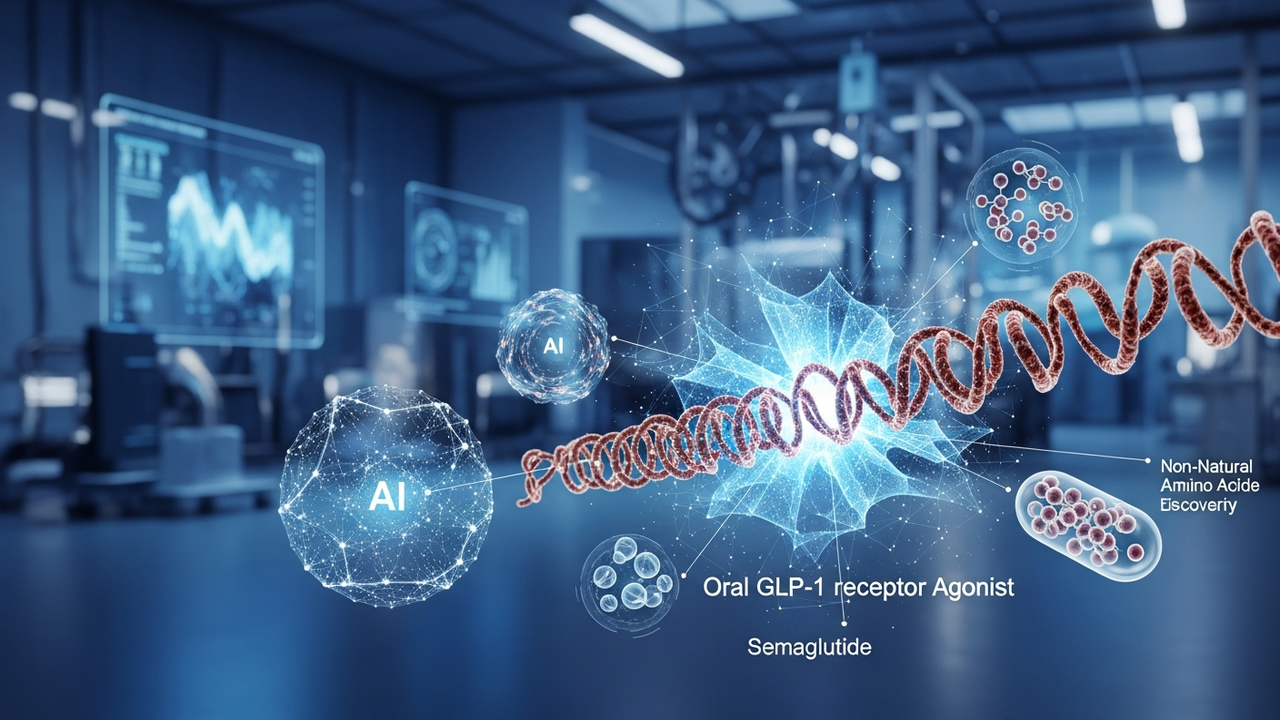
The success of oral semaglutide is primarily attributed to ingenious chemical modifications in its molecular design. Specifically, amino acid substitutions (e.g., altering parts of the amino acid sequence) and fatty acid acylation (e.g., attaching a fatty acid chain to the peptide) dramatically improved its stability and absorption. Fatty acid acylation enhances resistance to enzymatic degradation in the gastrointestinal tract and improves permeability across gastric and intestinal mucosa, thereby facilitating oral absorption. This allows semaglutide to be absorbed intact and to exert its effects for an extended duration, contributing to a prolonged half-life in the body. The insights gained from this success story are accelerating R&D efforts for oral formulations of other peptide drugs. In future peptide drug discovery, AI-driven sequence design will enable rapid development of novel peptides with specific pharmacological actions and desired physicochemical properties (e.g., stability, membrane permeability). Furthermore, incorporating unnatural amino acids, which do not exist naturally, can enhance peptide functionality and stability. The development of stimuli-responsive nanocarrier systems that release drugs in response to biological signals like pH, enzyme activity, or temperature changes is also anticipated as a major breakthrough in oral peptide delivery.
Background & Context
Peptides are highly attractive modalities in drug discovery due to their high specificity and diverse physiological functions. However, their relatively large molecular weight, susceptibility to degradation by digestive enzymes, and low permeability across biological membranes have historically posed a significant barrier to achieving systemic effects via oral administration. Consequently, many peptide drugs require frequent injections, placing a burden on patients. The approval and success of oral semaglutide demonstrated that these barriers can be overcome, sparking a new wave of R&D across the pharmaceutical industry. Currently, numerous research institutions and companies worldwide are developing various technologies to realize oral peptide drugs.
Strategic Significance & Outlook
The evolution of oral peptide delivery technology holds the potential to dramatically improve the quality of life for patients with many chronic conditions requiring long-term treatment, such as diabetes, obesity, osteoporosis, and inflammatory diseases. AI-driven design, the utilization of unnatural amino acids, and the introduction of next-generation nanocarrier systems are set to transform many peptide drugs, currently only administrable via injection, into orally available forms. This is expected to improve treatment adherence and provide more accessible therapeutic options to a broader patient population. Continued advancements in this field will enhance the overall efficiency and innovativeness of drug discovery, contributing significantly to patient-centered healthcare.
Source: https://americanpeptidesociety.org/research/engineering-better-peptides/
Get our weekly technology intelligence — free
Receive an infographic that lets you judge at a glance whether each field’s analysis report is worth reading.
Subscribe Free — Weekly Tech Intelligence
By subscribing, you’ll receive Troy-Technical’s weekly technology intelligence newsletter.
- Your email and selected fields are used only to deliver the newsletter.
- We never share your information with third parties.
- You can unsubscribe anytime via the link in each email.
See our Privacy Policy for details.
Takes about a minute · Unsubscribe anytime