Key Findings
The AI-driven JAM platform has achieved a breakthrough in molecular binding design, moving beyond the limitations of traditional G protein-coupled receptor (GPCR) antibody generation methods. This technology successfully predicts and designs complex molecular binding interactions previously considered intractable, dramatically enhancing hit rates in drug discovery, with fully AI-designed molecules already reaching advanced clinical development stages.
Technical/Clinical Details
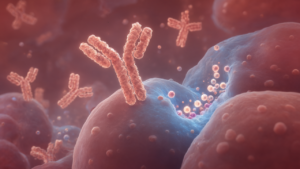
The JAM platform leverages advanced generative AI and machine learning algorithms to predict and design binding patterns between drug molecules and target proteins. In conventional drug discovery, complex multi-transmembrane proteins like GPCRs have been challenging targets for effective antibody or small molecule design due to their structural flexibility and instability in membrane environments. However, JAM has successfully computationally designed high-affinity binders for difficult multi-transmembrane protein targets, including CXCR7 (a chemokine receptor) and Claudin-4 (a tight junction protein). This AI-led design process achieved significantly higher hit rates (the rate of finding promising compound candidates) compared to traditional random screening or structure-based drug discovery approaches. Notably, several AI-discovered drug candidates have already entered clinical trials. Furthermore, the first fully AI-discovered molecule reached Phase IIa clinical trial results in 2025, clearly demonstrating that AI is becoming a core component of drug discovery, not merely an auxiliary tool.
Background & Context
GPCRs, comprising approximately 800 types in the human genome, play central roles in cellular physiological functions and have long been prime drug targets. However, their complex transmembrane structures and multiple active states have presented significant hurdles in drug development. The evolution of AI technology, particularly generative AI and deep learning, offers novel solutions to these challenges, enabling exploration into chemical spaces that were previously inaccessible through human-led drug discovery. By leveraging AI, it becomes possible to rapidly identify and design optimal molecules from vast compound libraries, possessing specific pharmacological effects, safety profiles, and pharmacokinetic properties.
Strategic Significance & Outlook
The advancements in AI-driven molecular binding design are poised to dramatically improve the efficiency and success rates of drug discovery, accelerating the development of therapies for diseases with high unmet medical needs. Technologies like the JAM platform are expected to continue contributing to the discovery of innovative drugs across diverse disease areas, including cancer, neurodegenerative diseases, and autoimmune disorders, while also reducing development timelines and costs. Crucially, the ability to target previously undruggable proteins opens the potential for establishing new therapeutic paradigms. Further clinical success of AI-designed molecules will undoubtedly pave the way for AI drug discovery to become a standard in the pharmaceutical industry. The application of this technology will not only increase the number of new drugs but also enable the realization of safer, more effective, and personalized medicine.
Source: https://track.pharmafocusasia.com/20260630083340216650071
Get our weekly technology intelligence — free
Receive an infographic that lets you judge at a glance whether each field’s analysis report is worth reading.
Subscribe Free — Weekly Tech Intelligence
By subscribing, you’ll receive Troy-Technical’s weekly technology intelligence newsletter.
- Your email and selected fields are used only to deliver the newsletter.
- We never share your information with third parties.
- You can unsubscribe anytime via the link in each email.
See our Privacy Policy for details.
Takes about a minute · Unsubscribe anytime