Key Findings
As detailed in a recent McKinsey report, generative AI and foundation models are fundamentally transforming the biopharmaceutical research and development (R&D) workflow. These advanced AI technologies are re-engineering every facet of the R&D process, from novel molecule discovery and optimization to development strategies, leading to significant leaps in efficiency and innovation.
Technical/Clinical Details
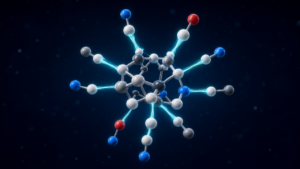
Generative AI and foundation models possess the unique ability to ‘generate’ entirely new molecular structures and design concepts based on patterns and rules learned from data, moving beyond traditional trial-and-error approaches. Specifically, these models can design novel molecules with high binding affinity, excellent selectivity, and favorable safety profiles for target proteins. Furthermore, they can generate experimental hypotheses and propose the most efficient synthetic pathways. This allows researchers to narrow down promising candidates before conducting physical experiments, contributing to reduced development times and costs. The primary strength of generative AI lies in its capacity to explore vast chemical and biological spaces that were previously unreachable by conventional screening methods. In the biopharmaceutical sector, particularly in antibody and protein engineering, generative AI enables de novo (from scratch) sequence generation, facilitating the design of novel antibodies and proteins with specific functions. Diverse applications are underway, including affinity maturation for optimizing binding affinity of existing antibodies, epitope targeting to precisely hit specific antigenic epitopes, and developability optimization to enhance manufacturability and stability.
Background & Context
Biopharmaceutical R&D is a field characterized by high failure rates and immense investment, with the average cost and time for new drug development extending to billions of dollars and over a decade. While AI has long been anticipated to address these challenges, generative AI and large foundation models have only recently reached a practical level, making their potential a reality. AI’s superior ability to analyze data, recognize patterns, and perform predictive modeling beyond human capabilities is now dissolving R&D bottlenecks and enabling more efficient innovation. This allows pharmaceutical companies to deliver treatments for diseases with high unmet medical needs to patients more rapidly.
Strategic Significance & Outlook
The evolution of generative AI and foundation models points towards a future where they establish ‘learning loops’ in biopharmaceutical R&D, highly automating and optimizing the entire process of data collection, analysis, hypothesis generation, experimental design, and results interpretation. This will free researchers to focus on more complex and creative challenges, significantly boosting R&D productivity. In the future, AI is expected to become an indispensable tool not only for small molecules but also for the design and development of diverse biopharmaceutical modalities such as gene therapy, cell therapy, and RNA therapy. This transformation is poised to accelerate new drug development and significantly contribute to the realization of safer, more effective, and personalized treatment options.
Get our weekly technology intelligence — free
Receive an infographic that lets you judge at a glance whether each field’s analysis report is worth reading.
Subscribe Free — Weekly Tech Intelligence
By subscribing, you’ll receive Troy-Technical’s weekly technology intelligence newsletter.
- Your email and selected fields are used only to deliver the newsletter.
- We never share your information with third parties.
- You can unsubscribe anytime via the link in each email.
See our Privacy Policy for details.
Takes about a minute · Unsubscribe anytime