Background
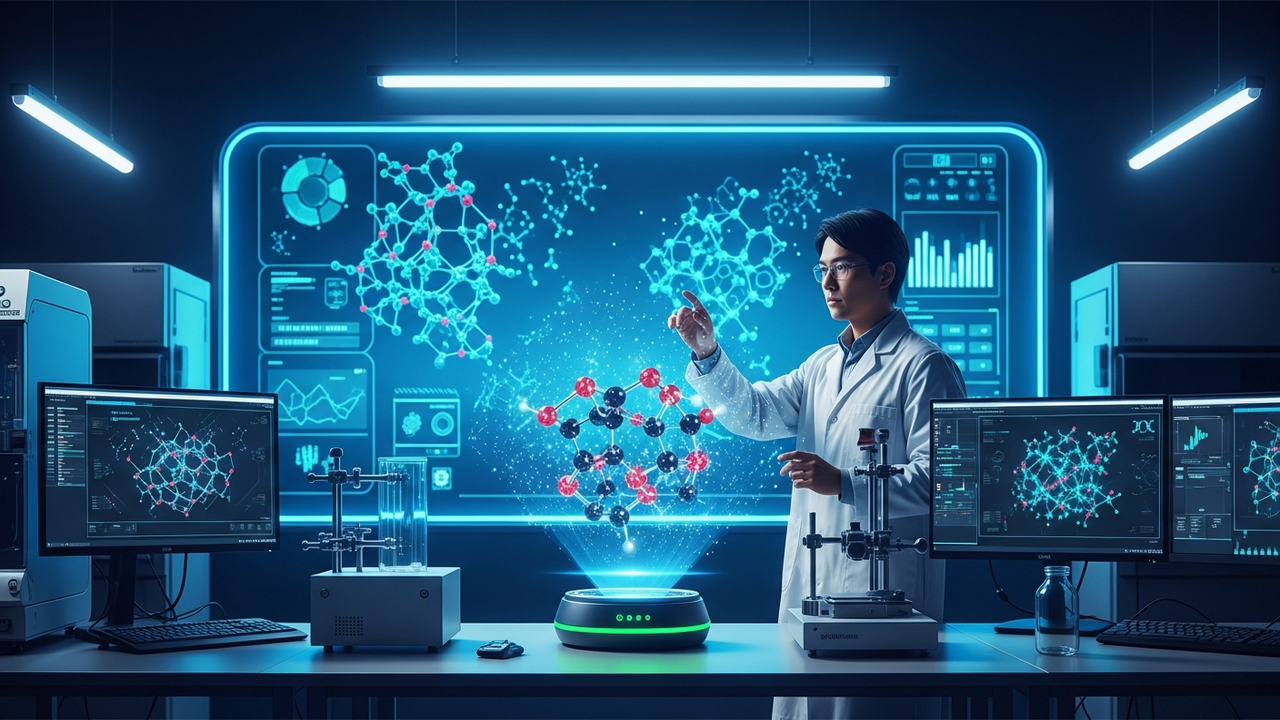
Catalysts are indispensable in numerous sectors of modern society, including the chemical industry, energy conversion, and environmental remediation. However, the discovery and development of new, high-performance catalysts remain a time-consuming and costly process. Advances in AI and materials informatics offer powerful means to overcome these challenges. Digital platforms like DigCat 4.0 are key to enhancing the efficiency of catalysis research and accelerating the creation of innovative catalytic technologies necessary for a sustainable society.
Key Findings
Researchers at Tohoku University have unveiled “DigCat 4.0,” an AI-powered digital catalysis platform poised to usher in a new era of catalyst discovery. This platform integrates experimental data, theoretical calculations, and scientific literature, providing curated, interoperable data and machine learning tools to significantly accelerate the catalyst development cycle. Future iterations are planned to incorporate a closed-loop discovery system featuring autonomous experimentation and robot labs, further advancing the self-driven nature of the discovery process.
Technical Details
DigCat 4.0 is engineered with several key functionalities and technical characteristics:
- Data Integration and Curation: The platform centralizes and manages a wide variety of catalysis-related data. This includes data generated in laboratories, theoretical computational data from quantum chemistry and molecular dynamics simulations, and knowledge extracted from existing scientific literature. All data is standardized and curated for optimal utilization by machine learning models.
- Interoperable Data Framework: Designed for seamless interaction between data from different sources, this framework enables comprehensive analysis of the relationships between catalyst performance, structure, and reaction mechanisms. This approach prevents data silos and facilitates deeper insights.
- Machine Learning Toolkit: Advanced machine learning algorithms are integrated to support the prediction of novel catalyst candidate performance, optimization of reaction pathways, and inverse design (designing catalyst structures from desired properties). This allows for a significantly more efficient exploration compared to traditional trial-and-error methods.
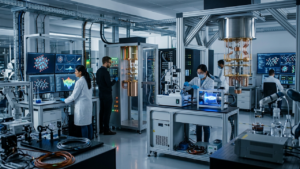
Future versions of DigCat 4.0 are slated to incorporate autonomous experimentation features and robotic laboratories. This will realize a fully autonomous, closed-loop discovery system where AI formulates catalyst design hypotheses, robots execute experiments based on these hypotheses, and results are automatically analyzed and fed back to the AI. This system is expected to drastically reduce catalyst development time, allowing human researchers to focus on more complex challenges.
Strategic Significance & Outlook
DigCat 4.0 is expected to be at the forefront of AI-driven research in catalysis science. The evolution of this platform promises breakthroughs in a wide range of fields, including more environmentally friendly and highly efficient chemical processes, next-generation energy devices like fuel cells and batteries, and CO2 capture technologies. The realization of a closed-loop system, in particular, is anticipated to profoundly transform the future of catalyst development, shortening industrial product development cycles and enabling the market introduction of more competitive technologies.
Get our weekly technology intelligence — free
Receive an infographic that lets you judge at a glance whether each field’s analysis report is worth reading.
Subscribe Free — Weekly Tech Intelligence
By subscribing, you’ll receive Troy-Technical’s weekly technology intelligence newsletter.
- Your email and selected fields are used only to deliver the newsletter.
- We never share your information with third parties.
- You can unsubscribe anytime via the link in each email.
See our Privacy Policy for details.
Takes about a minute · Unsubscribe anytime




Comments