
Key Findings
Remarkable advancements in skin-attachable and implantable sensor technologies are fundamentally altering the landscape of continuous physiological monitoring. Specifically, the development of innovative interface architectures, including elastic substrates, functional hydrogels, and high-performance nanomaterials, has effectively resolved the long-standing challenge of mechanical mismatch between conventional rigid electronics and soft biological tissues. This breakthrough enables sensors to integrate more comfortably and function reliably with the body over extended periods.
Technical and Clinical Details
- Introduction of Elastic Substrates: Replacing rigid, traditional semiconductor materials like silicon, elastic substrates made from polymers and stretchable elastomers have been developed. These allow sensors to conform to skin movements and deformations, ensuring comfort during long-term wear and stable signal acquisition.
- Utilization of Functional Hydrogels: At the interface with biological tissues, functional hydrogels enhance biocompatibility and ensure sensor stability. Their high water retention capacity and ion conductivity contribute to improved electrochemical sensor performance while minimizing tissue irritation.
- High-Performance Nanomaterials: Nanomaterials such as graphene, carbon nanotubes, and metallic nanoparticles significantly boost sensor sensitivity, selectivity, and response speed. These materials offer high surface area-to-volume ratio and superior electrical/optical properties, providing ideal platforms for efficiently detecting trace amounts of biomolecules.
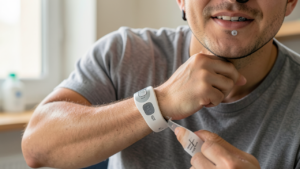
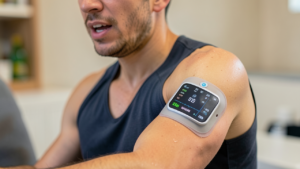
- Metabolic Biomarker Measurement: These technologies, centered around electrochemical biosensors, are particularly effective for continuous measurement of metabolic biomarkers like glucose and lactate. Applications range from blood glucose monitoring in diabetes management to lactate level tracking for athletic performance optimization.
- Addressing Challenges: For long-term implantation or wear, key challenges include biocompatibility (suppressing immune responses), long-term biostability (preventing material degradation), and biofouling (deterioration of sensor performance due to biomolecule adhesion). Research addresses these through surface modification, drug-eluting coatings, and advanced packaging techniques.
Background and Industry Context
The advancement of digital health and precision medicine heavily relies on the ability to continuously collect highly accurate physiological data from individuals. Traditional diagnostic tools are often invasive and provide only snapshot views at specific time points. The development of seamless bio-interface technologies bridges this gap, enabling a comprehensive understanding of a patient’s health status in their daily life. This has the potential to contribute to early disease detection, personalized preventive and therapeutic interventions, and an improved quality of life for patients.
Strategic Significance and Outlook
These advanced skin-attachable and implantable sensors are expected to evolve into multimodal platforms that simultaneously and non-invasively monitor multiple biomarkers. When combined with AI, these sensors will intelligently analyze collected biometric data to provide users with personalized health information and predictive insights. This technology holds promise for diverse applications, including remote patient monitoring for chronic diseases, athlete performance optimization, fall risk prediction for the elderly, and physiological stress monitoring in military and industrial sectors. The continued maturation of bio-interface technology represents a crucial step towards realizing “ubiquitous healthcare,” where individuals can gain deeper insights into and proactively manage their health.
Get our weekly technology intelligence — free
Receive an infographic that lets you judge at a glance whether each field’s analysis report is worth reading.
Subscribe Free — Weekly Tech Intelligence
By subscribing, you’ll receive Troy-Technical’s weekly technology intelligence newsletter.
- Your email and selected fields are used only to deliver the newsletter.
- We never share your information with third parties.
- You can unsubscribe anytime via the link in each email.
See our Privacy Policy for details.
Takes about a minute · Unsubscribe anytime



Comments