Key Findings
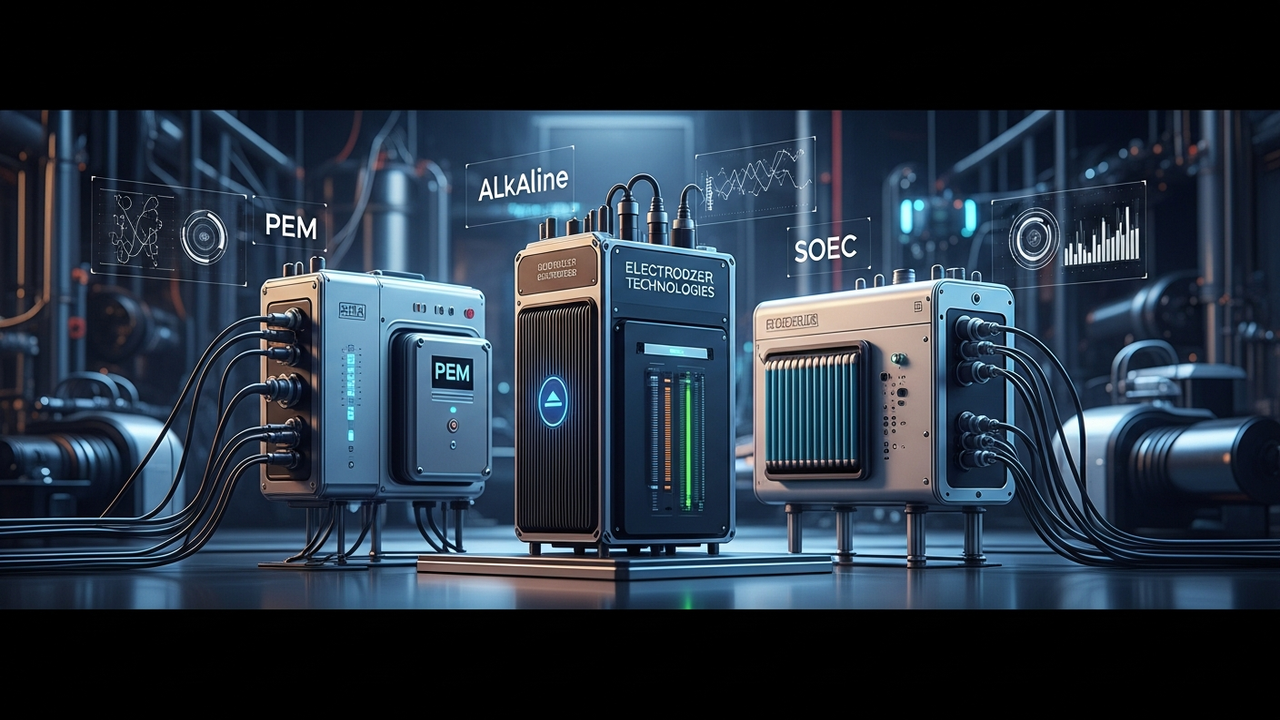
A new electrolyzer technology guide provides a detailed comparative analysis of the three primary technologies crucial for green hydrogen production: PEM (Proton Exchange Membrane), Alkaline (ALK), and SOEC (Solid Oxide Electrolysis Cell). This comparison focuses on each technology’s efficiency, operational range, material requirements, and integration potential into various energy systems, offering critical insights for project developers to select the optimal technology.
Technical / Clinical Details
- PEM Electrolyzers: Characterized by high current density, rapid response times, and a compact design. They are particularly well-suited for direct coupling with highly variable renewable energy sources (wind, solar) due to their quick load-following capabilities. A drawback is their reliance on expensive precious metal catalysts (iridium, platinum), which contributes to higher capital costs.
- Alkaline Electrolyzers (ALK): Represent a mature technology known for relatively lower initial investment costs and longer operational lifetimes. They are ideal for large-scale, baseload hydrogen production and can utilize non-precious metal catalysts, making them less costly in terms of materials compared to PEM. Their response time is not as rapid as PEM.
- SOEC Electrolyzers: Operate at high temperatures (typically 600–800°C) and achieve the highest electrical efficiency by co-utilizing waste heat with electricity. This makes them highly efficient for green hydrogen production when integrated with industrial waste heat sources. Challenges include longer startup times and material degradation issues at high operating temperatures.
Background & Context
The mass production of green hydrogen is indispensable for achieving global decarbonization targets, and the choice of electrolyzer technology directly impacts the economic viability and sustainability of projects. As electrolyzer efficiency improves and costs decrease, understanding the specific characteristics of each technology and selecting the optimal one based on specific applications and regional resource conditions becomes critical. Factors such as energy security, local manufacturing capabilities, and water availability are increasingly strategic considerations in technology selection.
Strategic Significance & Outlook
Each electrolyzer technology presents distinct advantages and challenges, offering superiority in different use cases. PEM will expand its role in flexible integration with renewables, ALK in large-scale stable production, and SOEC in high-efficiency operations leveraging waste heat. The competition and collaboration among these technologies will be key to further reducing hydrogen production costs and accelerating the global development of the green hydrogen economy, facilitating the transition to a sustainable energy future.
Get our weekly technology intelligence — free
Receive an infographic that lets you judge at a glance whether each field’s analysis report is worth reading.
Subscribe Free — Weekly Tech Intelligence
By subscribing, you’ll receive Troy-Technical’s weekly technology intelligence newsletter.
- Your email and selected fields are used only to deliver the newsletter.
- We never share your information with third parties.
- You can unsubscribe anytime via the link in each email.
See our Privacy Policy for details.
Takes about a minute · Unsubscribe anytime





Comments