Background
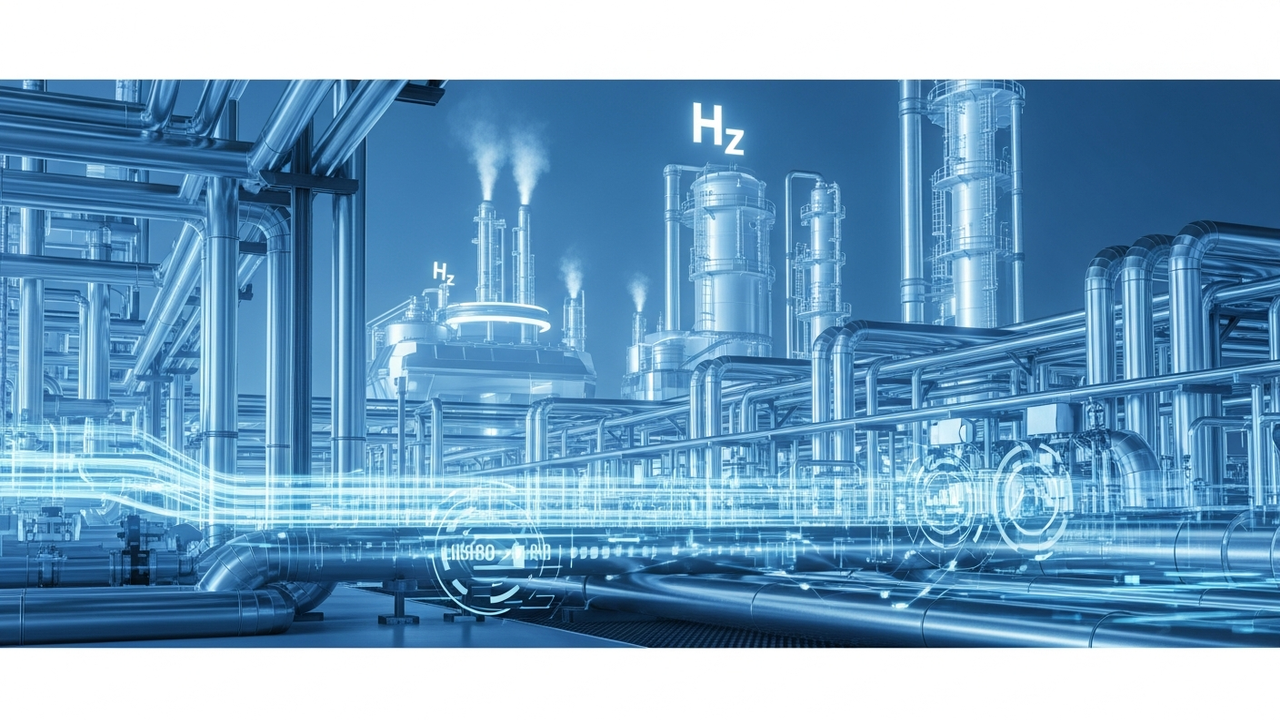
The European chemical industry is navigating a landscape defined by increasingly stringent emissions regulations and ambitious decarbonization mandates. Low-carbon hydrogen has emerged as a cornerstone solution to ensure the long-term sustainability and competitiveness of this vital industrial sector. The significant support from the Flemish government and the European Union further underscores the strategic importance of such large-scale hydrogen initiatives, not only for regional economic revitalization but also for overarching climate change mitigation efforts.
Key Findings
H2BE and chemical giant INEOS have finalized preliminary commercial terms for the off-take of low-carbon hydrogen from H2BE. This landmark agreement represents a critical advancement towards INEOS’s ambitious goal of establishing Europe’s first zero-carbon steam cracker via its ‘Project ONE’ initiative.
H2BE is set to provide low-carbon hydrogen, produced by ENGIE and Equinor, to INEOS. This hydrogen will directly substitute fossil fuel-derived hydrogen in the steam cracking process, leading to substantial CO2 emission reductions. The supplied hydrogen could encompass both blue hydrogen (produced from natural gas with Carbon Capture and Storage, CCS) and green hydrogen (generated from renewable energy sources).
INEOS Project ONE, a state-of-the-art ethylene manufacturing facility under construction at the Port of Antwerp, is central to this initiative. Decarbonizing this facility holds profound implications for the broader European chemical industry, given that steam crackers are inherently energy-intensive and high-emission processes, making the integration of low-carbon hydrogen critically important for achieving sustainability targets.
Crucially, the Fluxys hydrogen pipeline, connecting Ghent to Antwerp, is largely complete. This essential infrastructure facilitates the physical delivery of hydrogen from H2BE to INEOS, validating the feasibility of large-scale hydrogen supply and enhancing the project’s overall deliverability and reliability.
This preliminary commercial agreement establishes crucial legal and commercial foundations for INEOS Project ONE to proceed towards its Final Investment Decision (FID). If successful, it will serve as a compelling model for accelerating the adoption of low-carbon hydrogen in other industrial processes across Europe, significantly contributing to regional decarbonization efforts. The project exemplifies how the nascent hydrogen economy can effectively meet specific industrial needs and achieve substantial emission reductions.
Get our weekly technology intelligence — free
Receive an infographic that lets you judge at a glance whether each field’s analysis report is worth reading.
Subscribe Free — Weekly Tech Intelligence
By subscribing, you’ll receive Troy-Technical’s weekly technology intelligence newsletter.
- Your email and selected fields are used only to deliver the newsletter.
- We never share your information with third parties.
- You can unsubscribe anytime via the link in each email.
See our Privacy Policy for details.
Takes about a minute · Unsubscribe anytime




Comments