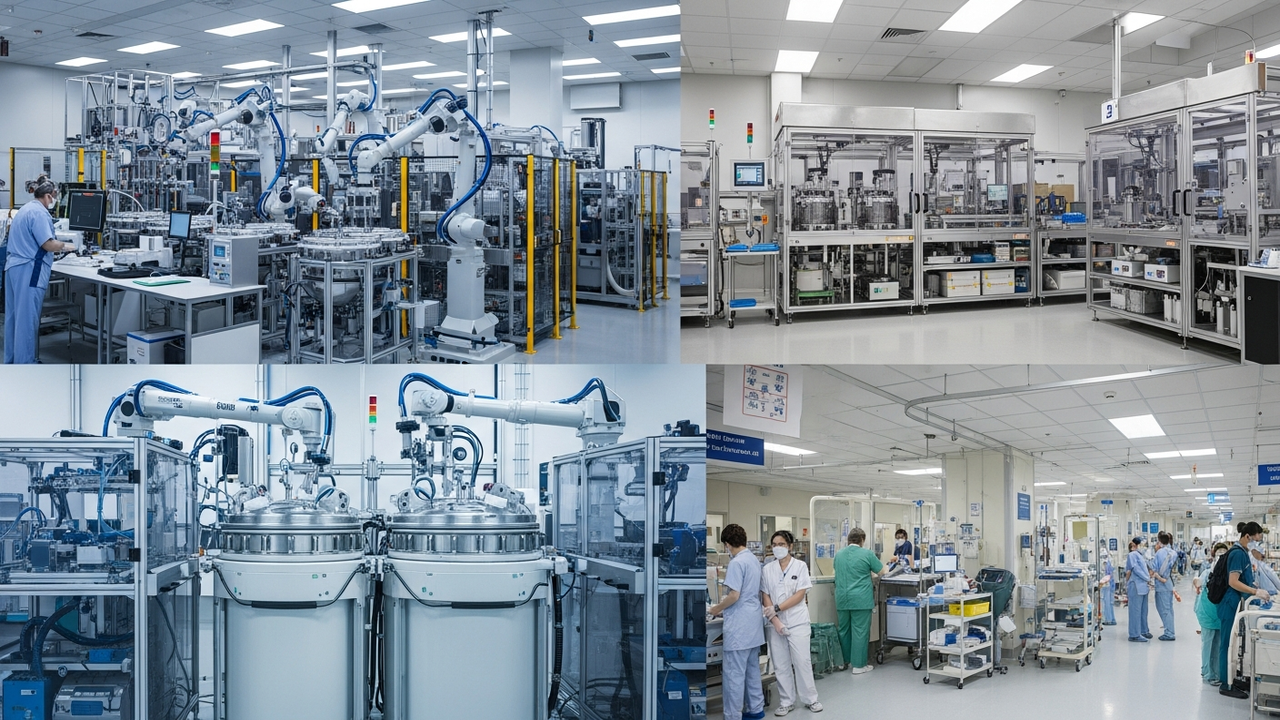
Key Findings: Hospital Capacity Identified as True Bottleneck for CAR-T Commercialization
While CAR-T cell therapies have delivered revolutionary results in treating hematologic cancers, significant challenges persist in their commercialization and achieving widespread patient access. Traditionally, the primary barrier was believed to be the complex and costly manufacturing process. However, recent analysis suggests that beyond manufacturing, the capacity and operational constraints within hospitals delivering the treatment are likely the true bottlenecks limiting market expansion. This highlights how inefficiencies across the entire patient journey, from initial diagnosis to actual treatment, are hindering the broader adoption of these therapies.
Technical & Clinical Details: Operational Challenges Arising from Complex Treatment Processes
CAR-T therapy involves more than just manufacturing and administering a drug. The process begins with rigorous patient screening and selection, followed by leukapheresis to collect the patient’s own T cells, genetic modification and expansion of these cells, and finally, reinfusion into the patient. Post-infusion, highly specialized expertise and intensive care support are required to manage severe side effects such as Cytokine Release Syndrome (CRS) and Immune effector Cell-Associated Neurotoxicity Syndrome (ICANS). Furthermore, complex reimbursement procedures for these high-cost therapies impose a significant burden on healthcare institutions.
- **Complexity of Patient Selection and Screening:** Shortage of specialists and resources to identify suitable patients.
- **Logistics of Leukapheresis:** Requirement for specialized facilities and trained staff.
- **Specialized CRS/ICANS Management:** Availability of Intensive Care Units (ICUs) and securing highly trained medical teams.
- **Reimbursement Process Burden:** High treatment costs and complex negotiations with insurance providers.
These operational aspects deter many hospitals from implementing CAR-T treatments and limit the number of patients that can be treated at existing CAR-T centers.
Background & Industry Context: The Innovation-Infrastructure Gap
CAR-T therapy has revolutionized cancer treatment in just a few years, but the medical infrastructure has struggled to keep pace with this technological innovation. While many pharmaceutical companies focus on scaling up manufacturing capabilities, the lack of readiness on the part of healthcare institutions delivering the treatment has emerged as a new challenge. This gap creates an ‘access disparity,’ where the treatment is technically feasible but cannot reach all patients who need it. This issue is common across the cell and gene therapy landscape, demanding multifaceted solutions involving pharmaceutical companies, CDMOs, healthcare institutions, regulatory bodies, and payers working in concert.
Strategic Significance & Outlook: The Need for Holistic Ecosystem Optimization
To make CAR-T therapy truly scalable and accessible to more patients, strategies to improve hospital operational efficiency and capacity are indispensable, alongside manufacturing process enhancements. This includes establishing more CAR-T treatment centers, strengthening specialized training programs for healthcare professionals, standardizing adverse event management protocols, and simplifying reimbursement processes. Additionally, implementing digital technologies for patient management systems and providing specialist support via telemedicine could contribute to operational efficiency improvements. For the industry as a whole, it is anticipated that CAR-T therapy will realize its full potential and shape the future of cancer treatment through the synergistic advancement of manufacturing innovation and clinical operational infrastructure development.
Source: https://chivanta.com/car-t-hospital-commercialization-challenges/
Get our weekly technology intelligence — free
Receive an infographic that lets you judge at a glance whether each field’s analysis report is worth reading.
Subscribe Free — Weekly Tech Intelligence
By subscribing, you’ll receive Troy-Technical’s weekly technology intelligence newsletter.
- Your email and selected fields are used only to deliver the newsletter.
- We never share your information with third parties.
- You can unsubscribe anytime via the link in each email.
See our Privacy Policy for details.
Takes about a minute · Unsubscribe anytime








Comments