Key Findings
Japan is accelerating a fundamental reconstruction of its semiconductor industry, envisioning an era where artificial intelligence (AI) forms the bedrock of society. This initiative leverages Japan’s long-cultivated world-class competitiveness in semiconductor materials, components, and manufacturing equipment, aiming to reclaim its former position as a semiconductor powerhouse. Significant drivers of this reconstruction include major investments by the leading U.S. semiconductor manufacturer Micron in Hiroshima, and increased production capacity from key Japanese material companies such as Shin-Etsu Chemical and SUMCO.
Technical / Clinical Details
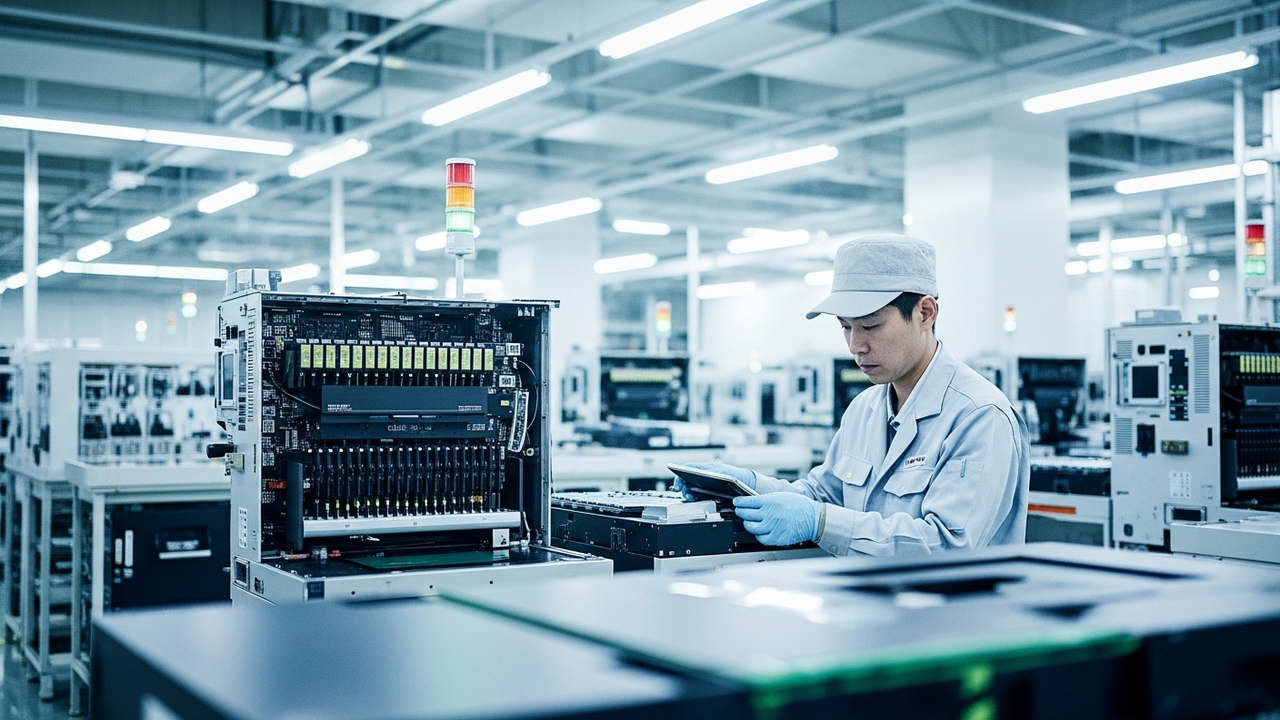
AI semiconductors demand advanced performance and stability distinct from conventional semiconductors. This necessitates ultra-high purity materials for manufacturing highly miniaturized circuits with high reliability, as well as extremely precise manufacturing equipment. Japanese companies hold significant global market shares in these niche areas, possessing overwhelming competitiveness in products like silicon wafers, photoresists, high-purity gases, and target materials. The current reconstruction strategy centers on further strengthening these advantages and expanding the supply capacity of essential materials and equipment required for advanced semiconductor manufacturing. Micron’s state-of-the-art DRAM manufacturing technology, introduced at its Hiroshima plant, heavily relies on high-performance materials and precision equipment supplied by the Japanese supply chain, which in turn stimulates new investments and increased production from Japanese material companies. Specifically, Shin-Etsu Chemical and SUMCO are enhancing their production of silicon wafers for high-performance memory, such as High Bandwidth Memory (HBM), which is crucial for generative AI data processing.
Background & Context
Japan, once a global leader in the semiconductor industry, saw its position partially erode after the 1990s due to intensifying international competition. However, against the backdrop of the U.S.-China semiconductor rivalry and rising geopolitical risks in supply chains, as nations move to bolster domestic semiconductor production capabilities, Japan is re-recognizing its ‘hidden strengths’ (materials, equipment) and pursuing the revitalization of its semiconductor industry as a national strategy. The rapid advancement of AI technology has dramatically escalated the demand for high-performance semiconductors, presenting a new growth opportunity for Japan. From an economic security perspective, the government prioritizes strengthening the semiconductor supply chain and aims to bolster Japan’s entire semiconductor ecosystem through investment support for domestic and international companies.
Strategic Significance & Outlook
The reconstruction of Japan’s semiconductor industry not only signifies a comeback but also aims to build the foundation for technological innovation in the AI era. Micron’s substantial investment in the Hiroshima plant provides opportunities for technological innovation and enhanced international competitiveness for Japan’s semiconductor material and equipment industries. Moving forward, Japan will further drive the development of high-functional materials and precision processing technologies indispensable for AI semiconductor manufacturing, establishing its position as an essential partner for semiconductor manufacturers worldwide. This movement is expected to contribute not only to Japan’s economic growth but also to the stabilization of global technology supply chains, playing a critical role in shaping the future society enabled by AI technology.
Source: #
Get our weekly technology intelligence — free
Receive an infographic that lets you judge at a glance whether each field’s analysis report is worth reading.
Subscribe Free — Weekly Tech Intelligence
By subscribing, you’ll receive Troy-Technical’s weekly technology intelligence newsletter.
- Your email and selected fields are used only to deliver the newsletter.
- We never share your information with third parties.
- You can unsubscribe anytime via the link in each email.
See our Privacy Policy for details.
Takes about a minute · Unsubscribe anytime









Comments