Key Findings
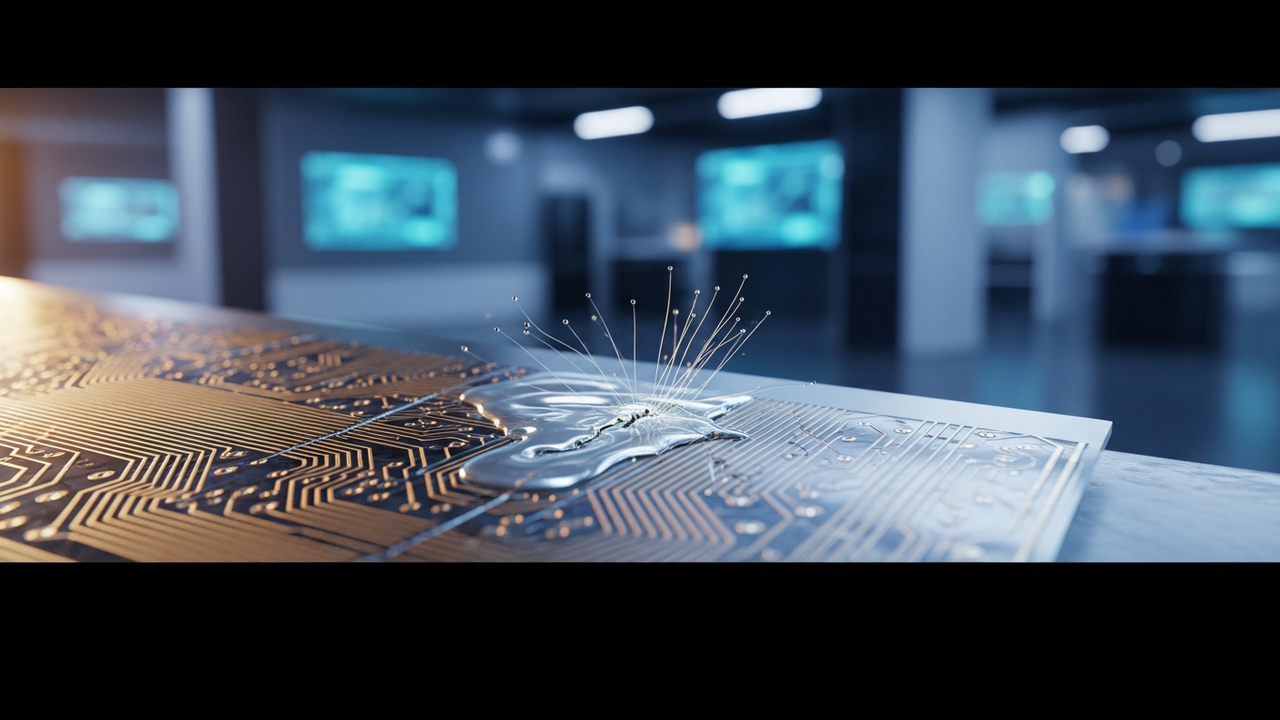
Self-healing epoxy coatings offer a groundbreaking solution for flexible circuit protection. This technology possesses the remarkable ability to automatically repair minor scratches and cracks that appear on the coating surface, leveraging the principles of microencapsulation and reversible chemical bonding. Consequently, it significantly extends the service life of the coating and ensures the continuous maintenance of its protective barrier function even after mechanical damage.
Technical / Clinical Details
Two primary approaches define the mechanism of self-healing epoxy coatings. One is the ‘microencapsulation approach,’ where liquid healing agents (e.g., epoxy resin monomers and curing agents) are encapsulated in tiny microcapsules and dispersed within an epoxy resin matrix. When a scratch or crack develops in the coating, the capsules rupture, releasing the healing agents. These released agents then undergo a polymerization reaction at the damaged site, hardening to fill the crack and repair the protective layer. The other is the ‘reversible chemical bonding approach.’ This involves incorporating chemical bonds (e.g., Diels-Alder reactions or imine bonds) into the polymer network that can reversibly form and break in response to specific external stimuli (such as heat or light). Upon damage, these dynamic bonds rearrange, allowing the material to flow, close the crack, and achieve self-healing.
Background & Context
Flexible circuits are indispensable components in modern electronic products demanding miniaturization, lightweighting, and high performance, such as wearable devices, IoT sensors, aerospace, and medical equipment. However, their inherent flexibility makes these circuits susceptible to mechanical stress, bending, impact, and abrasion, with damage to protective coatings directly risking device failure. Conventional protective coatings, once damaged, lose their functionality, necessitating costly repairs or replacements. Self-healing technology addresses this challenge, promising to enhance device reliability, reduce maintenance costs, and contribute to efficient resource utilization as a sustainable solution.
Strategic Significance & Outlook
The optimization of self-healing epoxy coatings will dramatically improve the reliability and lifespan of flexible circuits, significantly impacting the electronics industry. Research and development are expected to focus on further enhancing healing efficiency, increasing the number of healing cycles, developing more environmentally friendly healing agents, and reducing manufacturing process costs. In the future, this technology is anticipated to extend beyond mere circuit protection to become a core technology for various next-generation products requiring self-healing capabilities, including smart textiles, bio-inspired devices, and autonomous robots. This will accelerate the widespread adoption of more robust and sustainable electronic products.
Get our weekly technology intelligence — free
Receive an infographic that lets you judge at a glance whether each field’s analysis report is worth reading.
Subscribe Free — Weekly Tech Intelligence
By subscribing, you’ll receive Troy-Technical’s weekly technology intelligence newsletter.
- Your email and selected fields are used only to deliver the newsletter.
- We never share your information with third parties.
- You can unsubscribe anytime via the link in each email.
See our Privacy Policy for details.
Takes about a minute · Unsubscribe anytime



Comments