Key Findings
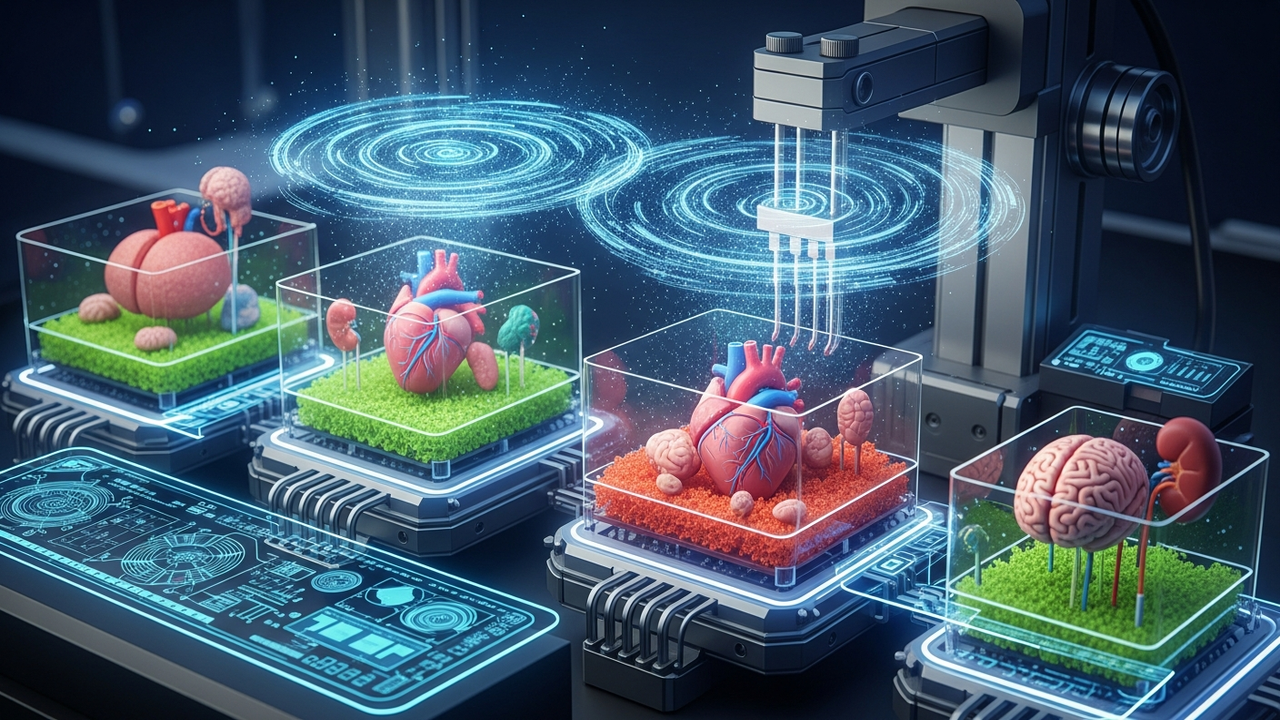
A recent publication in ‘Lab on a Chip’ (Royal Society of Chemistry) underscores the escalating importance of integrating Artificial Intelligence (AI) into organ-on-a-chip and organoid-on-a-chip technologies for drug screening. This integration dramatically improves the extraction and interpretation of information from the vast high-content imaging, sensor, and molecular data generated by these sophisticated biological models. AI is emerging as the key to efficiently transforming this data into reproducible and pharmacologically meaningful readouts, thereby significantly accelerating the utilization of human-relevant models in the drug discovery and development process.
Technical & Clinical Details
- Organ-on-a-Chip and Organoid-on-a-Chip Technologies: These technologies involve recreating the microenvironment of human organs or tissues on microfabricated devices to mimic in vivo physiological functions. In drug screening, they enable more accurate evaluation of human-specific drug responses and toxicity mechanisms that are difficult to reproduce in animal models. Organoids are 3D-cultured, self-organizing cell aggregates that exhibit more complex tissue structures and functions.
- High-Content Data Generation: Organ-on-a-chip and organoid-on-a-chip systems generate diverse high-content data in real-time, including cellular behavior, morphological changes, gene expression, protein secretion, and metabolite levels. This encompasses data from optical microscopes, fluorescence imaging, electrochemical sensors, and gene sequencing.
- AI for Data Processing and Analysis: The generated data is voluminous and complex, posing challenges for manual human analysis. AI, particularly deep learning, image recognition, and time-series data analysis, excels at automatically processing this data, detecting anomalous patterns, and identifying hidden correlations. For example, AI can automatically quantify cellular morphological changes after drug administration and correlate them with toxicity indicators.
- Enhanced Reproducibility and Interpretability: AI models analyze data based on objective criteria, thus eliminating subjectivity and improving reproducibility across different experiments. Furthermore, by deriving pharmacologically meaningful ‘readouts’ from complex datasets, AI assists researchers in gaining deeper insights into drug mechanisms of action and efficacy.
Background & Industry Context
Drug discovery faces significant challenges due to high costs and low success rates. One contributing factor is the difficulty in extrapolating animal study results to humans, leading to an increased demand for more human-relevant biological models. Organ-on-a-chip and organoid-on-a-chip technologies offer a promising approach to address this challenge, but maximizing their potential necessitates efficient methods for analyzing the complex data they generate. The introduction of AI is bridging this technological gap and will play a decisive role in establishing these as next-generation drug discovery platforms. The pharmaceutical industry is investing heavily in the integration of AI with these biological models.
Strategic Significance & Outlook
The integration of AI with organ-on-a-chip and organoid-on-a-chip technologies is expected to dramatically enhance the speed and accuracy of drug screening, accelerating the development of safer and more effective new drugs. In the future, AI may control ‘human-on-a-chip’ systems linking multiple organ-on-chip models, enabling predictions of systemic drug effects. Furthermore, with advancements in personalized medicine, AI may be used in drug screening with patient-derived organoids to individually identify the most effective treatments. This is expected to reduce drug discovery failure rates and maximize benefits for patients.
Source: https://pubs.rsc.org/en/content/articlelanding/2026/lc/d6lc00486g
Get our weekly technology intelligence — free
Receive an infographic that lets you judge at a glance whether each field’s analysis report is worth reading.
Subscribe Free — Weekly Tech Intelligence
By subscribing, you’ll receive Troy-Technical’s weekly technology intelligence newsletter.
- Your email and selected fields are used only to deliver the newsletter.
- We never share your information with third parties.
- You can unsubscribe anytime via the link in each email.
See our Privacy Policy for details.
Takes about a minute · Unsubscribe anytime









Comments