Key Findings
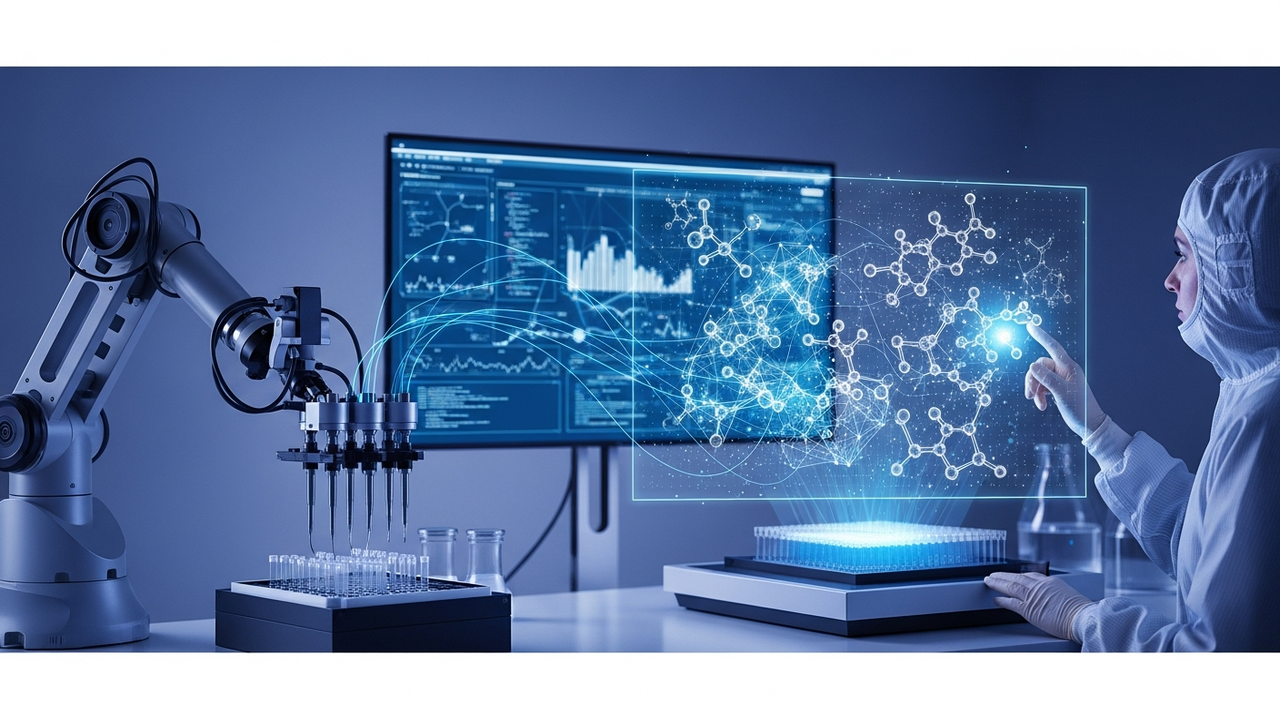
A preprint article published on ChemRxiv introduces an innovative AI workflow for structure-aware small-molecule drug design. This system integrates agentic and explainable machine learning techniques with generative molecular design to optimize the entire drug discovery process. Its primary achievements include the automated generation of novel molecular structures, high-precision prediction of potency against targets, explanation of the AI model’s decision-making processes, and intelligent guidance for experimental prioritization in oncology-relevant targets.
Technical & Clinical Details
The AI workflow consists of multiple modules. First, generative AI models de novo design diverse novel molecular structures based on specific desired drug properties and target protein structural information. Next, agentic AI components predict the physicochemical properties, pharmacokinetic profiles, and, most critically, the potency of these candidate molecules against their targets. Furthermore, an explainable AI component provides researchers with the model’s “thought process,” explaining why certain molecules were predicted to be promising and which structural features contribute to their potency. This allows researchers to deeply understand AI suggestions and adjust experimental plans based on insights rather than blindly following recommendations. The system was evaluated against multiple oncology target proteins, demonstrating its ability to identify promising lead compounds more rapidly and efficiently than conventional methods.
Background & Context
Traditional drug discovery heavily relies on screening vast numbers of compounds, a process that is often time-consuming, expensive, and associated with low success rates. The advancement of AI, particularly generative AI, has the potential to fundamentally shift this paradigm from ‘discovery by screening’ to ‘creation by design.’ The integration of agentic and explainable AI suggests that AI can become a powerful partner collaborating with human researchers rather than a black box. This is crucial for managing the complexity of drug discovery and generating breakthroughs that lead to faster clinical development.
Strategic Significance & Outlook
This AI workflow holds significant potential to dramatically improve the efficiency and success rates of small-molecule drug discovery. Particularly in areas with high unmet medical needs, such as oncology, it will enable the identification of effective drug candidates in significantly shorter timeframes. Future work will focus on further validating the robustness, versatility, and scalability of this system, with applications expected across other disease areas. The development of agentic and explainable AI is a crucial step towards increasing the transparency and trustworthiness of AI drug discovery, accelerating a future of human-AI collaboration in new drug development. It is anticipated to play a central role in designing drugs for complex multi-target therapies and intractable diseases.
Source: https://chemrxiv.org/doi/pdf/10.26434/chemrxiv.15005130
Get our weekly technology intelligence — free
Receive an infographic that lets you judge at a glance whether each field’s analysis report is worth reading.
Subscribe Free — Weekly Tech Intelligence
By subscribing, you’ll receive Troy-Technical’s weekly technology intelligence newsletter.
- Your email and selected fields are used only to deliver the newsletter.
- We never share your information with third parties.
- You can unsubscribe anytime via the link in each email.
See our Privacy Policy for details.
Takes about a minute · Unsubscribe anytime







Comments