Key Findings
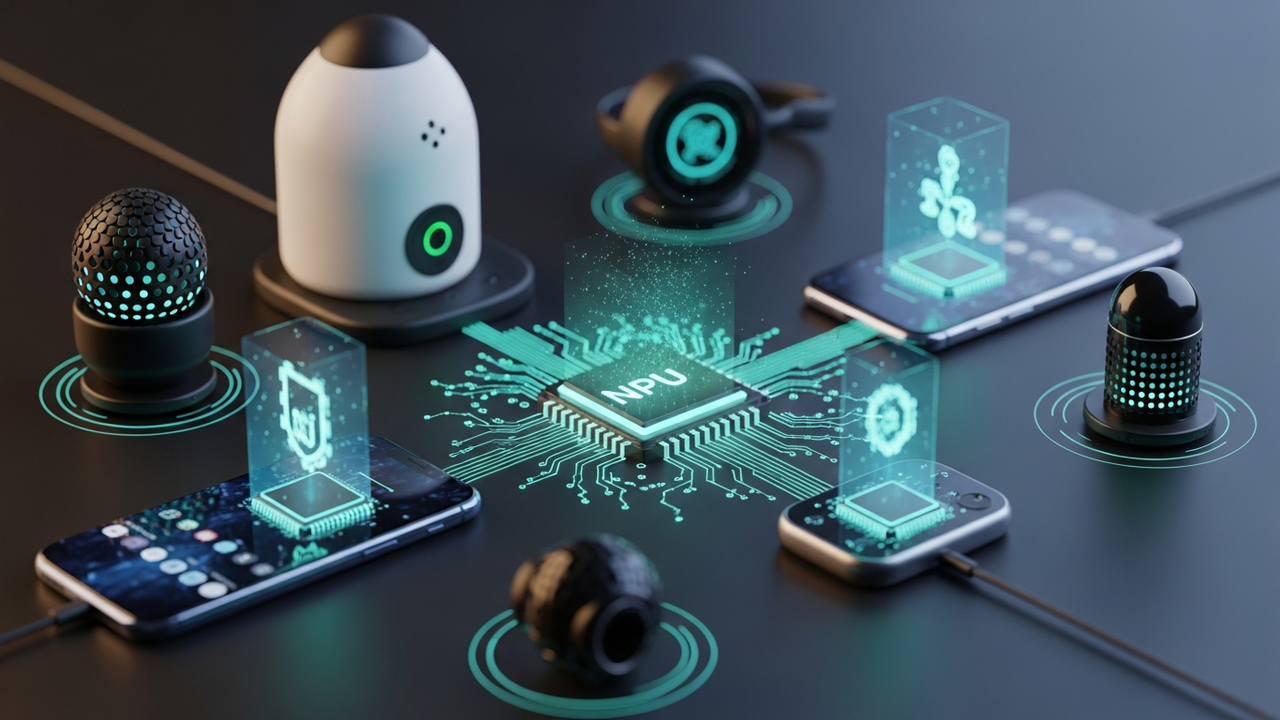
Edge AI is swiftly becoming a dominant paradigm for data processing on local devices such as smartphones, laptops, and IoT endpoints, driven by its inherent advantages in achieving low latency, enhancing data privacy, and enabling robust offline functionality. This technological shift is fundamentally propelled by the advent of AI-enabled processors featuring dedicated Neural Processing Units (NPUs), which allow sophisticated AI tasks to be executed directly on the device.
Technical / Clinical Details
At its core, Edge AI places AI models directly where data is generated, eliminating the need to transmit data to the cloud and drastically reducing processing delays. For instance, on-device generative AI can swiftly handle tasks such as writing assistance, text summarization, and image editing within the local environment. This capability is particularly critical for applications involving sensitive personal data, where it significantly bolsters data privacy. NPUs are purpose-built for neural network computations, offering superior power efficiency and AI processing power compared to traditional CPUs or GPUs. Furthermore, neuromorphic computing, which mimics the structure and function of the human brain, represents a promising future direction for Edge AI, poised to deliver even more energy-efficient and adaptive AI systems.
Background & Context
Historically, cloud-based AI processing dominated the landscape, but as data volumes and demands for real-time processing escalate, the importance of Edge AI has surged. The mounting costs, bandwidth constraints, and privacy concerns associated with transferring data to the cloud are key factors fueling this transition. Edge AI is becoming indispensable in sectors that require instantaneous decision-making and data processing, including autonomous vehicles, smart city infrastructure, industrial IoT, and personal health monitoring. Leading semiconductor manufacturers are actively developing low-power, high-performance NPUs to meet this escalating market demand.
Strategic Significance & Outlook
Edge AI is expected to continue driving innovation across a multitude of industries. The ongoing development of smaller, more powerful NPUs and the integration of novel architectures like neuromorphic computing will enable the execution of increasingly complex AI models on edge devices. This will foster greater device autonomy, enhance user experiences, and unlock new business models. The combination of low latency and heightened data privacy stands as a critical differentiator, offering a competitive edge across a broad spectrum of applications, from consumer electronics to advanced industrial systems.
Source: https://easify-ai.com/discover-edge-ai-shaping-the-future-hardware/
Get our weekly technology intelligence — free
Receive an infographic that lets you judge at a glance whether each field’s analysis report is worth reading.
Subscribe Free — Weekly Tech Intelligence
By subscribing, you’ll receive Troy-Technical’s weekly technology intelligence newsletter.
- Your email and selected fields are used only to deliver the newsletter.
- We never share your information with third parties.
- You can unsubscribe anytime via the link in each email.
See our Privacy Policy for details.
Takes about a minute · Unsubscribe anytime







Comments