Key Findings
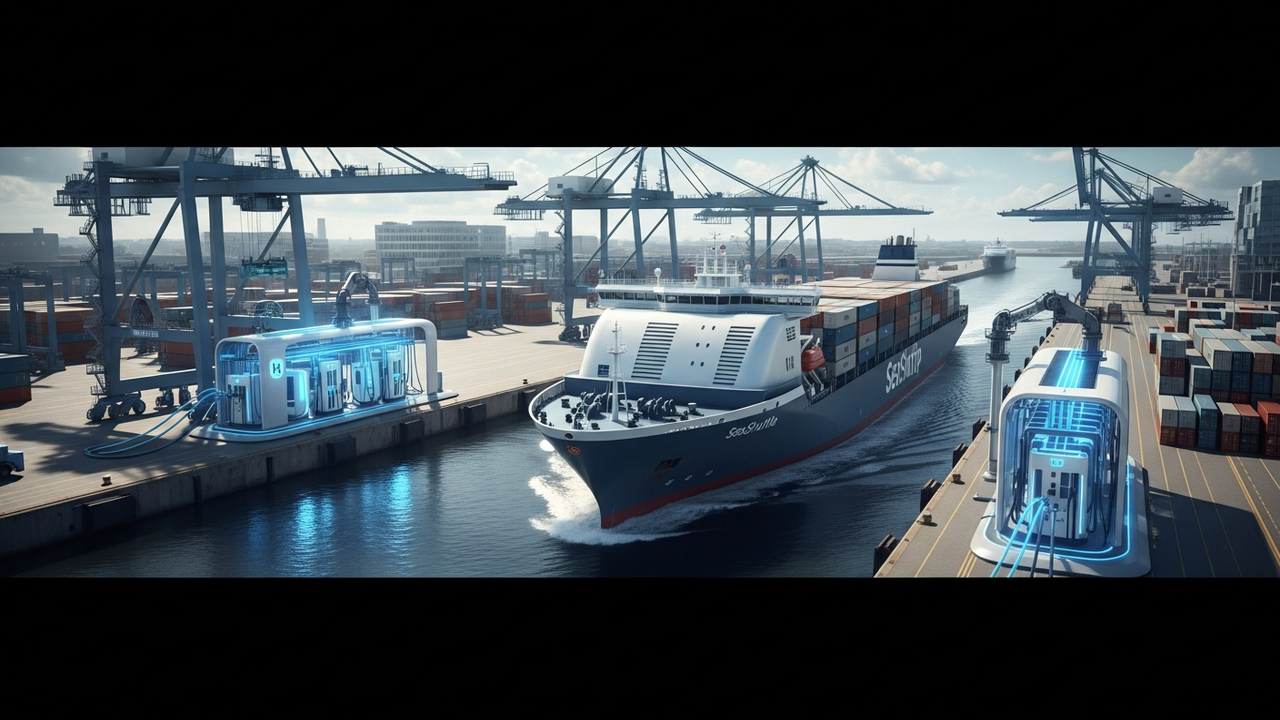
The EU-funded HyShip project aims to accelerate the commercial deployment of hydrogen-powered short-sea shipping by utilizing Samskip’s innovative SeaShuttle container vessel program. This initiative represents a significant milestone in the decarbonization of the maritime sector.
Technical Details
At the core of the HyShip project is the demonstration of hydrogen-powered container ships, which are slated to operate on the key maritime trade route between Oslo and Rotterdam. These vessels will use liquid hydrogen as fuel, providing practical insights into its storage, supply, and integration into daily ship operations. The project focuses on resolving two major technological and logistical challenges hindering the widespread adoption of hydrogen as a marine fuel: establishing robust onboard hydrogen storage solutions and developing shore-side port bunkering (refueling) infrastructure. By demonstrating the handling of liquid hydrogen, safety protocols, and supply chain efficiencies, HyShip paves the way for future commercialization.
Background and Industry Context
International shipping accounts for approximately 3% of global CO2 emissions, making its decarbonization essential for achieving the Paris Agreement goals. Hydrogen, as a zero-emission fuel, is gaining traction as a next-generation marine fuel candidate alongside ammonia and methanol, as it produces no CO2 during combustion. However, its low energy density, storage complexities, and lack of infrastructure have been major impediments to widespread adoption. The HyShip project aims to accelerate the maritime industry’s fuel transition by demonstrating concrete solutions to overcome these barriers.
Strategic Significance and Outlook
The success of the HyShip project will strongly validate the commercial viability of hydrogen-powered vessels, promoting the adoption of hydrogen fuel in short-sea shipping within and beyond Europe. Crucially, the establishment of a liquid hydrogen supply chain and bunkering infrastructure will also provide valuable lessons for long-haul maritime applications. This is expected to accelerate investments in green fuel infrastructure at European ports, fostering a transition towards a cleaner and more sustainable shipping industry. The project is seen as indispensable in shaping the future of zero-emission maritime transport.
Get our weekly technology intelligence — free
Receive an infographic that lets you judge at a glance whether each field’s analysis report is worth reading.
Subscribe Free — Weekly Tech Intelligence
By subscribing, you’ll receive Troy-Technical’s weekly technology intelligence newsletter.
- Your email and selected fields are used only to deliver the newsletter.
- We never share your information with third parties.
- You can unsubscribe anytime via the link in each email.
See our Privacy Policy for details.
Takes about a minute · Unsubscribe anytime




Comments