Key Findings
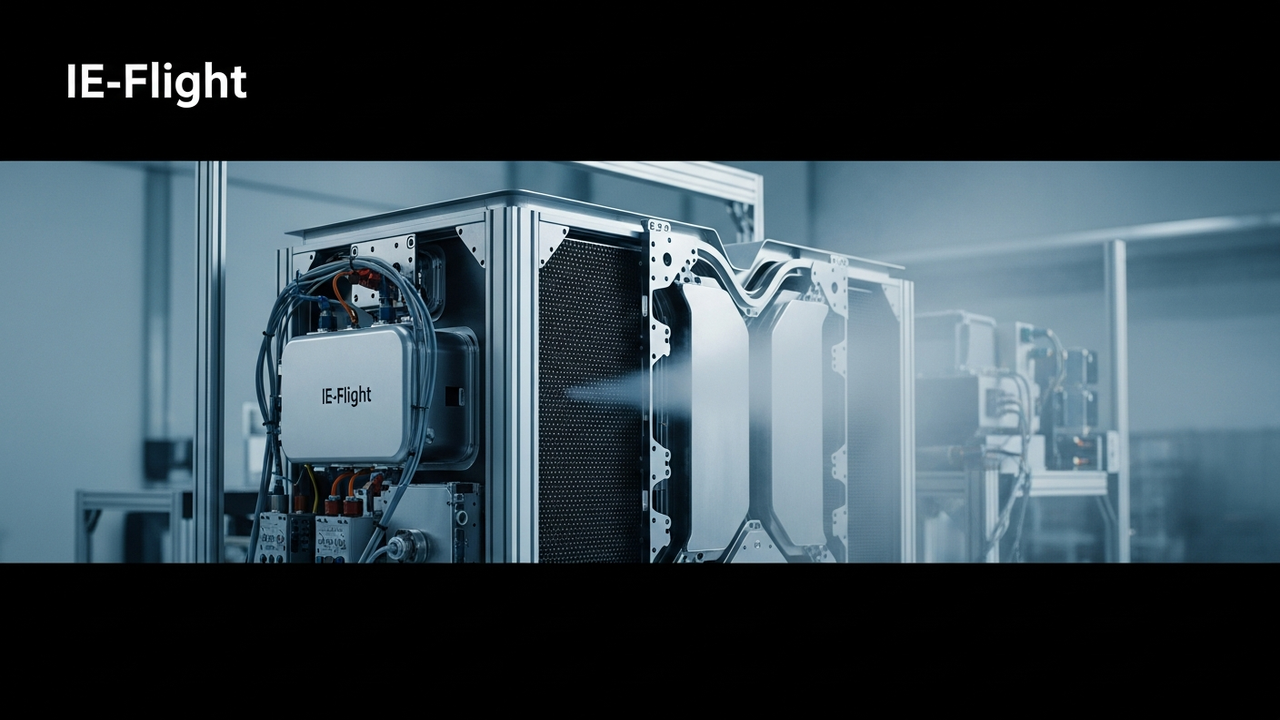
Despite Airbus’s announcement to postpone its plans for hydrogen-powered aircraft until the 2040s, research and development into next-generation fuel cell systems are progressing vigorously. In this context, Intelligent Energy (IE) is actively developing ‘IE-Flight,’ a new hydrogen fuel cell system for aircraft characterized by high-power evaporative cooling technology and a modular design, pushing forward technological innovations to enable aviation decarbonization.
Technical Details
IE-Flight is a modular fuel cell system specifically engineered for aerospace applications. One of its most significant technical features is the adoption of ‘high-power evaporative cooling’ technology, which allows for efficient thermal management while maintaining high power density. Fuel cells in aircraft must efficiently dissipate large amounts of heat within tight space and weight constraints, and evaporative cooling is seen as a promising solution. The modular design enables IE-Flight to be easily scaled and adapted to various aircraft sizes and power requirements, offering reduced development costs and increased deployment flexibility. The system aims to achieve both long-range flight and zero-emission operations.
Background and Industry Context
The aviation industry is a significant contributor to global CO2 emissions and faces strong pressure to decarbonize for a sustainable future. Hydrogen is considered one of the most promising fuels for achieving zero-emission aircraft, as it produces only water during combustion and no CO2. However, technical challenges related to hydrogen storage, fuel cell efficiency, and system weight and cooling have hindered widespread adoption in commercial aircraft. Airbus’s postponement signals the complexity of these challenges but also motivates specialized companies like IE to pursue technological breakthroughs and create market opportunities.
Strategic Significance and Outlook
The development of the ‘IE-Flight’ system by IE represents a crucial advancement towards realizing hydrogen-powered aircraft. High-power evaporative cooling and modular design hold significant potential to enhance the performance and practicality of aerospace fuel cells. If ground and flight tests of this system prove successful, it could lead to adoption in small and medium-sized aircraft initially, with future applications in larger aircraft also in scope. Through collaboration with aircraft manufacturers and airlines, IE-Flight is expected to contribute to cleaner, quieter air travel and play a vital role in shaping a sustainable future for the aviation industry.
Get our weekly technology intelligence — free
Receive an infographic that lets you judge at a glance whether each field’s analysis report is worth reading.
Subscribe Free — Weekly Tech Intelligence
By subscribing, you’ll receive Troy-Technical’s weekly technology intelligence newsletter.
- Your email and selected fields are used only to deliver the newsletter.
- We never share your information with third parties.
- You can unsubscribe anytime via the link in each email.
See our Privacy Policy for details.
Takes about a minute · Unsubscribe anytime







Comments