Key Findings
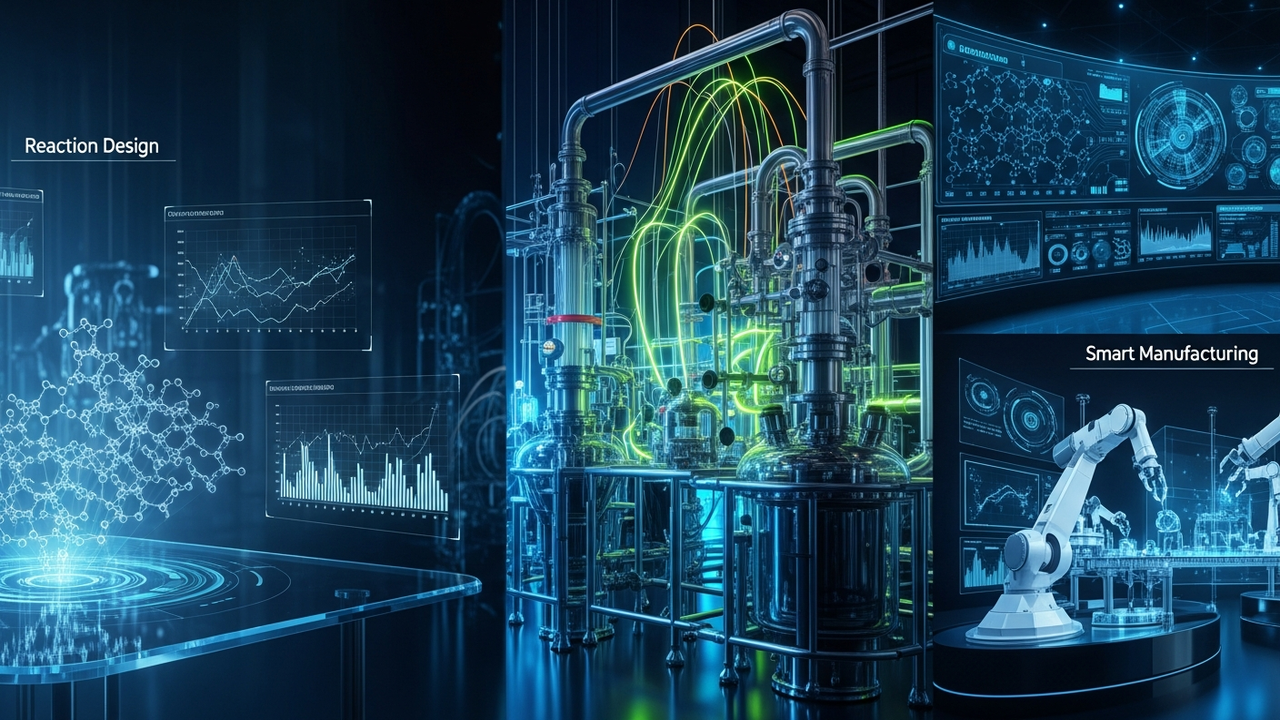
A review paper published on EurekAlert! details how artificial intelligence (AI) is reshaping chemical engineering across diverse areas such as production optimization, safety enhancement, and the design of new processes and materials. AI is positioned as a key technology to accelerate R&D cycles and improve the efficiency and sustainability of the chemical industry.
Technical / Clinical Details
The review analyzes the specific impacts of AI across the entire chemical engineering value chain. For instance, in process optimization, AI adjusts reaction conditions based on real-time data to maximize yield and energy efficiency. It also enhances worker safety by using predictive analytics to prevent equipment failures. Particularly noteworthy is AI’s role in materials discovery and molecular design. Foundation models and generative models propose novel molecules and materials that meet specific functional requirements, based on patterns learned from historical data. This enables researchers to efficiently explore vast chemical spaces and shorten development timelines. Furthermore, the review touches upon the development of ‘closed-loop autonomous labs,’ systems where AI autonomously conducts experimental design, execution, data analysis, and hypothesis revision, driving scientific discovery with minimal human intervention. These labs are being applied to complex R&D challenges such as optimizing chemical reactions, discovering new catalysts, and screening drug candidates, dramatically improving efficiency.
Background & Context
Chemical engineering is a foundational industry supporting all aspects of modern society, including energy, environment, pharmaceuticals, and food. However, developing new products involves long lead times and substantial costs, facing challenges like stricter environmental regulations and resource depletion. AI is expected to be a powerful solution to address these issues and realize a more sustainable and efficient chemical industry. Data-driven approaches and automation are fundamentally changing how chemical processes are designed, operated, and monitored.
Strategic Significance & Outlook
While the integration of AI into chemical engineering is still in its early stages, its transformative power is immense. In the future, AI will play an even more central role in predicting and controlling complex chemical reactions, designing new catalysts and polymers, and automating smart manufacturing processes. The proliferation of closed-loop autonomous labs is expected to dramatically accelerate the pace of discovery in materials science and chemistry, potentially leading to a new industrial revolution. This will enable the market introduction of greener, higher-performance products more quickly and at lower costs.
Source: https://www.eurekalert.org/news-releases/1045678
Get our weekly technology intelligence — free
Receive an infographic that lets you judge at a glance whether each field’s analysis report is worth reading.
Subscribe Free — Weekly Tech Intelligence
By subscribing, you’ll receive Troy-Technical’s weekly technology intelligence newsletter.
- Your email and selected fields are used only to deliver the newsletter.
- We never share your information with third parties.
- You can unsubscribe anytime via the link in each email.
See our Privacy Policy for details.
Takes about a minute · Unsubscribe anytime








Comments