Background
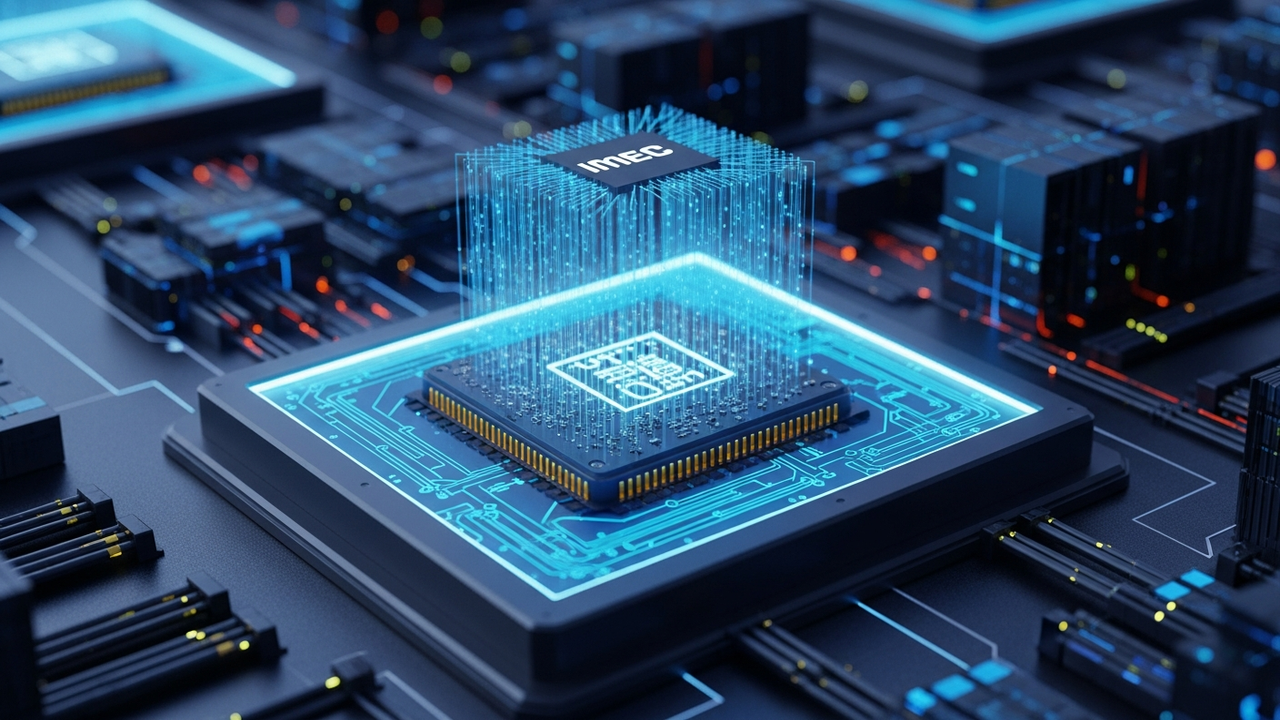
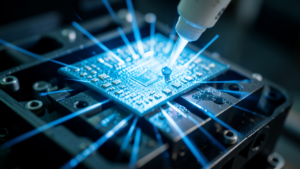
As the primary focus of AI workloads shifts from training to inference, the demands on data center infrastructure are undergoing a fundamental evolution. The explosive growth of AI has made data center power consumption a global concern, with current electrical interconnects emerging as a significant bottleneck. While GPUs and AI accelerators continue to advance in density and performance, the limitations of the electrical links connecting them increasingly hinder further scaling. Belgian research institution imec, a global R&D leader, is actively promoting 2.5D and 3D optical I/O technologies to integrate optical interconnects far more closely with processor chips than ever before.
Current solutions like Co-Packaged Optics (CPO) represent a step forward, but imec’s vision extends further, aiming to “embed” optical connectivity directly into the chip or package. This proactive stance is driven by predictions that future AI systems will demand data bandwidths reaching tens of petabits per second (Pbps) and extremely low latencies. Major semiconductor manufacturers and cloud providers recognize this advanced optical integration as crucial for addressing AI’s looming “energy crisis” and for building the next generation of AI infrastructure, actively collaborating with research institutions like imec to accelerate its realization.
Key Findings
imec’s initiatives directly target the persistent bottlenecks inherent in traditional electronic systems, including limitations in memory access, network bandwidth, data latency, and energy consumption. By integrating optical interconnects intimately with processor chips, the research promises a dramatic improvement in the overall performance and energy efficiency of future AI systems.
Technical Details
AI inference workloads demand high-speed, real-time processing of massive data volumes, characterized by distinct computational patterns and data flows compared to the training phase. In this context, the inherent speed and power consumption limitations of electrical signals become acutely pronounced, particularly in communication paths between processors and memory, and between processors themselves. imec’s 2.5D and 3D optical I/O technologies address this by enabling the placement of optical transceivers either within the processor package or, ultimately, directly on the chip.
This close integration eliminates the need for electrical signals to traverse lengthy traces, thereby significantly mitigating signal degradation, reducing latency, and cutting power loss. In 2.5D packaging, optical engines are integrated with processors via a silicon interposer. The more advanced 3D stacking approach envisions the vertical integration of optical components directly onto the chip stack. However, such pioneering integration introduces new technical hurdles, including ensuring compatibility between disparate optical and electrical materials, achieving high manufacturing yields in complex fabrication processes, and implementing effective thermal management strategies at the chip level. imec is actively researching novel materials science, advanced process technologies, and innovative design methodologies to surmount these formidable challenges.
Strategic Significance & Outlook
imec’s advancement of 2.5D and 3D optical I/O technologies holds the potential to fundamentally redefine the future landscape of AI computing. Should this technology mature and achieve widespread deployment, AI accelerator performance is projected to improve dramatically, accompanied by a drastic reduction in power consumption. This transformative shift will enable more sophisticated AI models to operate at near real-time speeds, fostering groundbreaking innovations across a diverse array of application areas, including autonomous driving, augmented/virtual reality (AR/VR), advanced medical diagnostics, and complex scientific simulations.
While overcoming significant engineering challenges, particularly in material compatibility and thermal management, remains paramount, imec’s pioneering research is poised to play a central role in establishing optics as the most critical interconnect technology in the rapidly evolving AI era.
Source: https://www.eetimes.com/as-ai-moves-from-training-to-inference-optics-moves-closer-to-the-chip/
Get our weekly technology intelligence — free
Receive an infographic that lets you judge at a glance whether each field’s analysis report is worth reading.
Subscribe Free — Weekly Tech Intelligence
By subscribing, you’ll receive Troy-Technical’s weekly technology intelligence newsletter.
- Your email and selected fields are used only to deliver the newsletter.
- We never share your information with third parties.
- You can unsubscribe anytime via the link in each email.
See our Privacy Policy for details.
Takes about a minute · Unsubscribe anytime




Comments