Key Findings
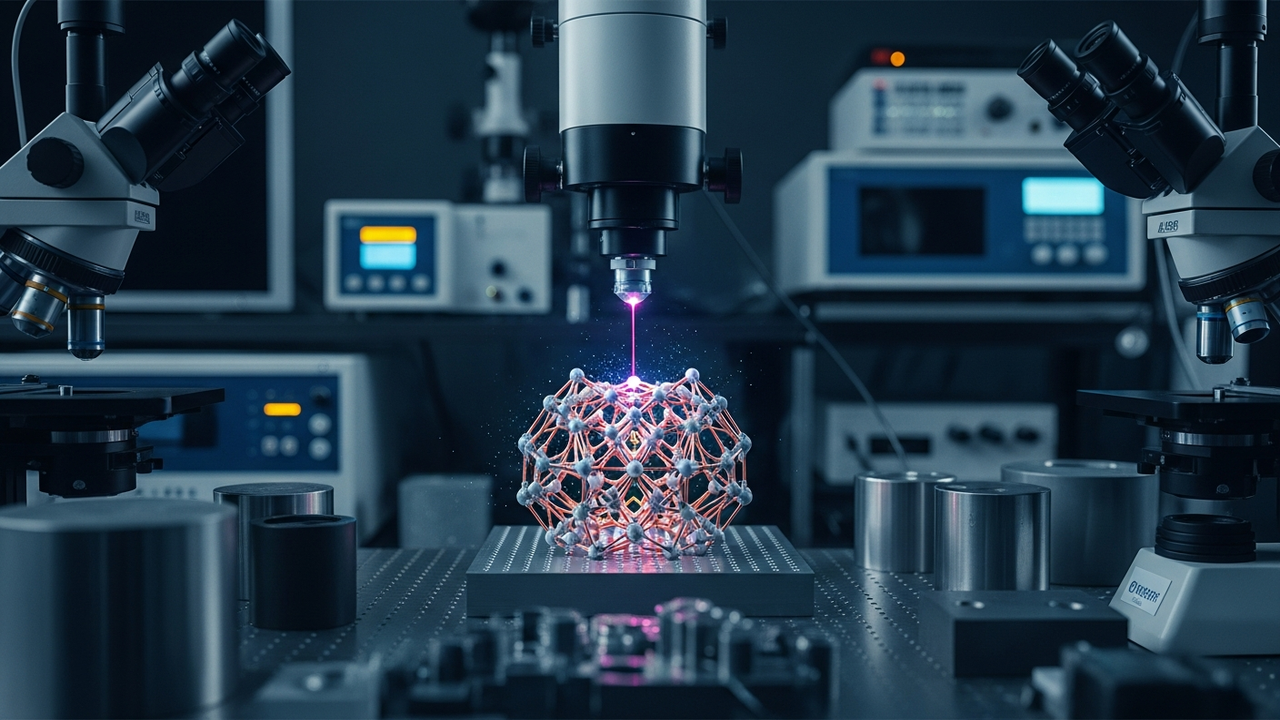
In recent research, a laser-constructed 3D self-supported CoCu metal-organic framework (MOF) electrocatalyst on a CoCrFeNi high-entropy alloy (HEA) substrate has demonstrated groundbreaking efficiency and long-term durability in the oxygen evolution reaction (OER). Achieved through femtosecond laser processing, this technology fuses the superior electrical conductivity and corrosion resistance of HEAs with the structural tunability of MOFs, potentially revolutionizing catalyst performance in energy conversion technologies, particularly water electrolysis.
Technical / Clinical Details
The developed electrocatalyst first involves directly patterning the surface of a CoCrFeNi high-entropy alloy with a femtosecond laser to create a precise 3D microstructure. This laser treatment enhances surface reactivity, providing a scaffold for the subsequent hydrothermal synthesis process where CoCu metal salts effectively grow as a MOF structure. The inherent high electrical conductivity of the CoCrFeNi HEA minimizes electron transport resistance, enabling efficient electron supply to the MOF layer. Furthermore, the HEA’s excellent corrosion resistance ensures the catalyst’s stability in OER’s acidic or alkaline environments. The MOF structure offers a large number of active sites and high surface area, accelerating the OER reaction rate. Experimental results show that this CoCu MOF/HEA electrocatalyst reduces overpotential in OER by approximately 100mV compared to conventional noble metal catalysts (e.g., RuO₂) and doubles the current density. Moreover, it maintains stable performance even after more than 1000 hours of continuous operation, addressing durability challenges faced by traditional MOF catalysts.
Background & Context
Hydrogen production via water electrolysis is a crucial technology for generating green hydrogen from renewable energy sources. However, one bottleneck in this process is the need for expensive noble metal catalysts (e.g., platinum, ruthenium, iridium) for OER, whose efficiency and durability are still insufficient. High-entropy alloys, with their unique ‘cocktail effect,’ are attracting attention as a new class of materials with excellent mechanical, chemical, and electrical properties. MOFs, on the other hand, exhibit superior catalytic activity due to their tunable porous structures and abundant metal sites, but have faced challenges with electrical conductivity and stability. This research provides an innovative approach that combines the advantages of these two advanced materials to significantly improve OER catalyst performance, marking a significant step towards realizing a sustainable hydrogen energy economy.
Strategic Significance & Outlook
This laser-constructed 3D self-supported CoCu MOF/HEA electrocatalyst holds the potential to substantially reduce the cost of hydrogen production via water electrolysis and improve its efficiency. Future research will focus on the applicability of this technology to large-scale production processes, further performance optimization using HEAs and MOFs of different compositions, and exploring applications in various energy conversion systems (e.g., CO₂ reduction, fuel cells). This innovative catalyst material is expected to play a foundational role in the development of future clean energy technologies, garnering increasing attention from both industry and academia.
Source: https://www.eurekalert.org/news-releases/1136203
Get our weekly technology intelligence — free
Receive an infographic that lets you judge at a glance whether each field’s analysis report is worth reading.
Subscribe Free — Weekly Tech Intelligence
By subscribing, you’ll receive Troy-Technical’s weekly technology intelligence newsletter.
- Your email and selected fields are used only to deliver the newsletter.
- We never share your information with third parties.
- You can unsubscribe anytime via the link in each email.
See our Privacy Policy for details.
Takes about a minute · Unsubscribe anytime



Comments