Key Findings
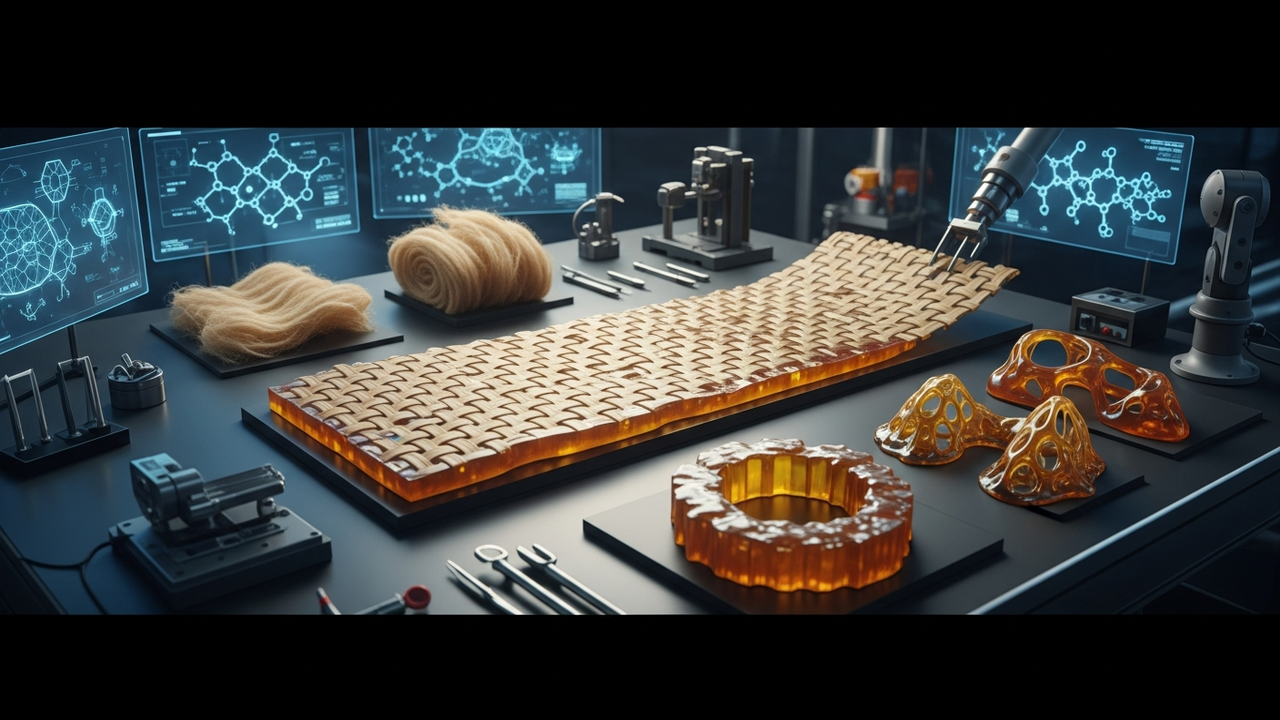
A recent research paper published in MDPI presents comprehensive evaluation results for woven hemp-reinforced polyfurfuryl alcohol (PFA) resin composites, targeting high-performance natural fiber composite applications. This study marks a significant advance in the field of sustainable polymer composites, substantially contributing to the reuse and valorization of hemp fibers, which are often regarded as agricultural waste. The resulting composite materials demonstrate a favorable balance of excellent mechanical properties and environmental performance, indicating their potential as sustainable alternative materials across various industrial sectors.
Technical / Clinical Details
The research team first prepared high-quality woven hemp fibers and then combined them with polyfurfuryl alcohol (PFA) resin, a bio-based thermosetting resin, to manufacture the composite materials. PFA is derived from furfural, which in turn is obtained from agricultural waste, making it low-cost and environmentally friendly, while also possessing good thermal and chemical resistance. Standard processes such as compression molding were used for composite fabrication, and the influence of hemp fiber orientation and volume fraction on the final mechanical properties was analyzed in detail. The study confirmed that hemp-reinforced PFA composites, manufactured under specific conditions, exhibited tensile, flexural, and impact strengths comparable to, or in some cases superior to, conventional glass fiber-reinforced polymer composites. Their lower density also contributes to lightweighting.
Background & Context
Driven by increasing environmental awareness and concerns over resource depletion, industrial sectors such as automotive, aerospace, construction, and packaging are seeing a rapid surge in demand for sustainable and environmentally friendly alternatives to conventional petroleum-derived synthetic fiber composites. Natural fibers (e.g., hemp, flax, kenaf) offer advantages like low cost, low density, and renewability, but have historically faced challenges such as variability in mechanical properties and moisture absorption. This research addresses some of these issues by combining the high mechanical properties of woven hemp fibers with the excellent environmental compatibility and thermal resistance of PFA resin, thereby bridging a gap in high-performance sustainable composite materials.
Strategic Significance & Outlook
The evaluation results of woven hemp-reinforced PFA composites open new avenues for the design and development of sustainable high-performance materials. If this technology further develops and becomes scalable for mass production, it is expected to find wide application in diverse products, including automotive interior components, non-structural building elements, sporting goods, and consumer electronics casings. Researchers and engineers will focus on optimizing the materials’ long-term durability, weather resistance, and manufacturing processes. Investors will find significant business opportunities in the growth of the green materials market and the environmental and economic benefits offered by natural fiber composites. This represents a crucial step towards realizing a circular economy.
Source: https://www.mdpi.com/2504-477X/10/7/372
Get our weekly technology intelligence — free
Receive an infographic that lets you judge at a glance whether each field’s analysis report is worth reading.
Subscribe Free — Weekly Tech Intelligence
By subscribing, you’ll receive Troy-Technical’s weekly technology intelligence newsletter.
- Your email and selected fields are used only to deliver the newsletter.
- We never share your information with third parties.
- You can unsubscribe anytime via the link in each email.
See our Privacy Policy for details.
Takes about a minute · Unsubscribe anytime







Comments