Key Findings
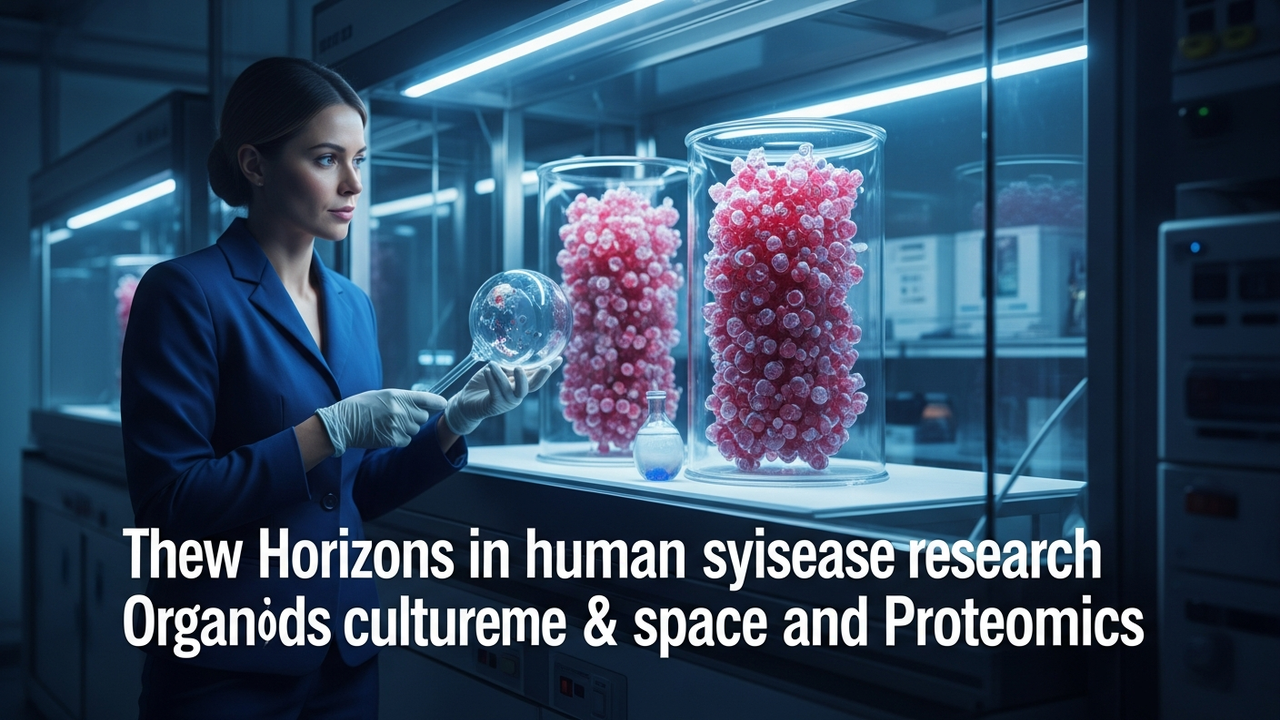
On July 17, 2026, reports highlighted that the combination of organoids cultivated in space and advanced proteomics technology is leading to groundbreaking progress in human disease research, including complex conditions such as retrosyndromes and cancer. This cutting-edge research demonstrates the potential of space’s unique environment to offer novel insights into biological processes that are otherwise elusive on Earth.
Technical / Clinical Details
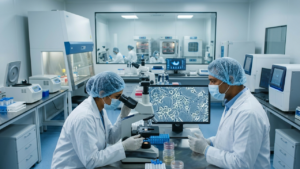
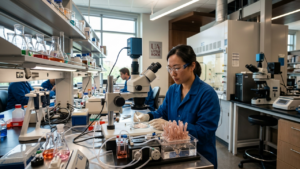
Organoids are 3D tissue models derived from patient-specific induced pluripotent stem cells (iPSCs), capable of recapitulating the complex structure and function of specific organs in vitro. By cultivating these organoids in space, particularly under microgravity conditions, researchers observed cellular growth patterns and differentiation states not achievable on Earth. Microgravity is known to influence cell adhesion, differentiation, and gene expression, potentially leading organoids to form more mature or pathologically accurate structures. Concurrently, proteomics (large-scale protein analysis) was employed to meticulously analyze the impact of the space environment on the organoids’ protein expression profiles. This integrated approach has yielded more relevant insights into the complex mechanisms of viral-related diseases like retrosyndromes and various cancers than traditional animal models.
Background & Context
Traditional disease research has predominantly relied on animal models, but species differences often pose significant limitations in translating findings to human conditions. Organoid technology has rapidly evolved to overcome these challenges, offering more human-relevant disease models. Furthermore, research in space provides a unique laboratory to investigate how factors like microgravity, radiation, and confined environmental stress influence biological systems, which are difficult to control on Earth. These studies not only contribute to astronaut health but also potentially uncover universal biological principles applicable to terrestrial disease research and drug discovery. Investment in this field is seen as a catalyst for accelerating the future of personalized and regenerative medicine.
Strategic Significance & Outlook
Research combining space-grown organoids and proteomics offers a revolutionary perspective for understanding human diseases and developing novel therapies. Moving forward, this approach is expected to enhance drug screening efficiency, advance personalized medicine, and construct more accurate disease models for intractable conditions. The progress in space research will continue to expand its potential as a new tool to solve global health challenges. Further technological innovation and international collaboration in this field are anticipated to usher in a new era in the fight against disease.
Get our weekly technology intelligence — free
Receive an infographic that lets you judge at a glance whether each field’s analysis report is worth reading.
Subscribe Free — Weekly Tech Intelligence
By subscribing, you’ll receive Troy-Technical’s weekly technology intelligence newsletter.
- Your email and selected fields are used only to deliver the newsletter.
- We never share your information with third parties.
- You can unsubscribe anytime via the link in each email.
See our Privacy Policy for details.
Takes about a minute · Unsubscribe anytime


Comments