Key Findings
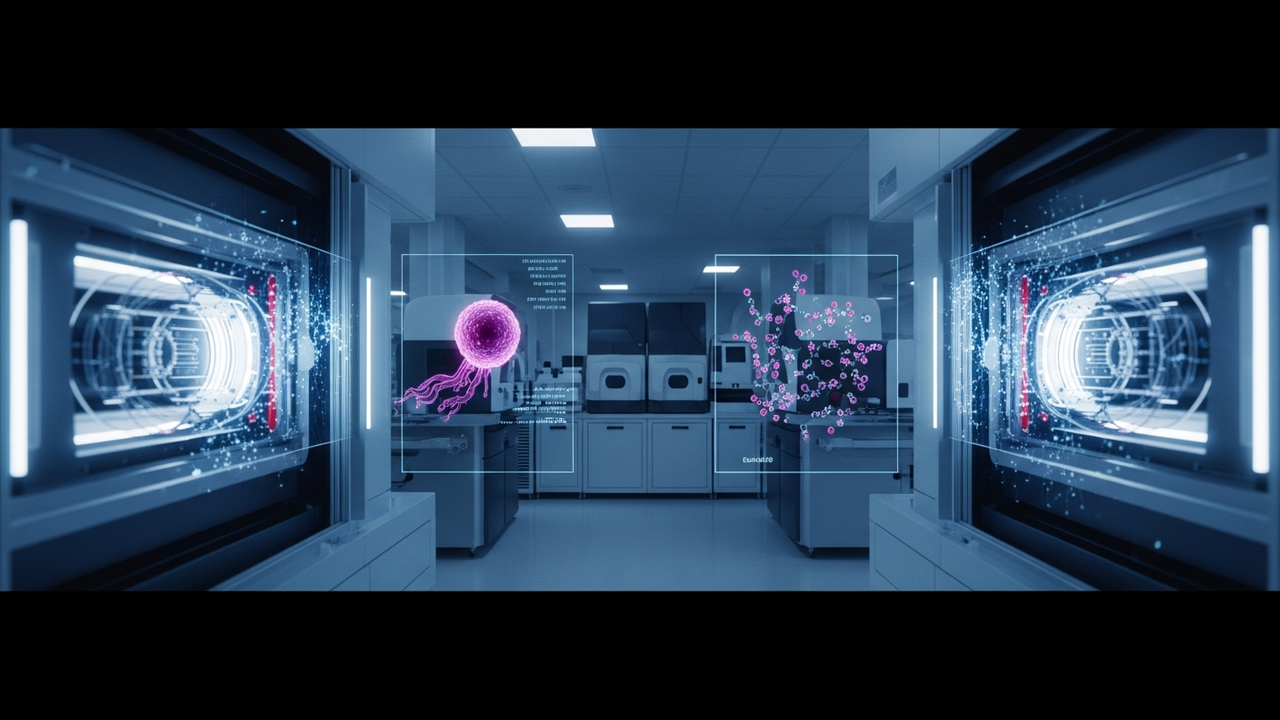
Researchers at the Cancer Center at Illinois (CCIL) have published a multi-institutional review paper in the journal ‘Lab on a Chip,’ advocating for the critical emergence and transformative potential of point-of-care (POC) molecular diagnostic technology in oncology. The paper underscores how POC diagnostics can dramatically enhance cancer detection, facilitate personalized therapy selection, and enable real-time monitoring of treatment efficacy by delivering rapid and accessible results directly at the patient’s bedside or in nearby clinical settings. Notably, the review highlights pioneering liquid biopsy POC technology developed in Professor Cunningham’s lab, which can provide oral cancer diagnostic results in less than 15 minutes.
Technical & Clinical Details
- Advantages of POC Molecular Diagnostics: Traditional molecular diagnostics often require specialized central laboratories and typically involve wait times of several days for results. POC molecular diagnostics, by enabling sample collection and result generation near the patient, significantly shortens the diagnostic-to-treatment interval and allows for more timely clinical decisions—a crucial advantage in progressive diseases like cancer.
- Integration with Liquid Biopsy: Liquid biopsy is a non-invasive method that detects cancer-derived biomarkers such as DNA, RNA, and proteins from bodily fluids like blood or saliva. Combining POC technology with liquid biopsy reduces the need for invasive tissue biopsies, lowers patient burden, and facilitates more frequent monitoring.
- Cunningham Lab’s Oral Cancer POC Technology: The oral cancer POC technology developed in Professor Cunningham’s lab at CCIL is an ultrafast diagnostic system capable of detecting cancer-related biomarkers from saliva samples and delivering results in under 15 minutes. This represents a significant potential for streamlining traditional diagnostic processes, particularly in screening and early-stage diagnosis.
- Significance of Multi-Institutional Collaboration: This review paper integrates expertise and data from multiple research institutions, reflecting a broad consensus on the scientific basis and clinical utility of POC molecular diagnostic technology. This collaboration helps to clarify the path toward practical implementation of this technology.
Background & Industry Context
Advances in personalized medicine have made precise diagnosis and tailored treatment selection based on a patient’s genetic profile and biomarkers indispensable in cancer care. However, traditional diagnostic workflows often lead to treatment delays due to waiting times for results. POC molecular diagnostics can resolve this bottleneck, empowering healthcare providers to make rapid, molecular-informed decisions during patient consultations, thereby improving the quality of cancer care. This is particularly significant for improving access to cancer screening and treatment in resource-limited settings.
Strategic Significance & Outlook
POC molecular diagnostic technology is expected to play a central role in cancer screening, early diagnosis, monitoring treatment efficacy, and recurrence surveillance. Future developments will likely include enhanced multiplex detection capabilities for a broader range of biomarkers and integrated AI-powered data analysis. These advancements will enable faster and more precise care delivery for cancer patients, ultimately contributing to significant improvements in patient survival rates and quality of life. Regulatory bodies are also beginning to streamline the approval process for POC devices, which could accelerate market entry.
Get our weekly technology intelligence — free
Receive an infographic that lets you judge at a glance whether each field’s analysis report is worth reading.
Subscribe Free — Weekly Tech Intelligence
By subscribing, you’ll receive Troy-Technical’s weekly technology intelligence newsletter.
- Your email and selected fields are used only to deliver the newsletter.
- We never share your information with third parties.
- You can unsubscribe anytime via the link in each email.
See our Privacy Policy for details.
Takes about a minute · Unsubscribe anytime







Comments