Key Findings
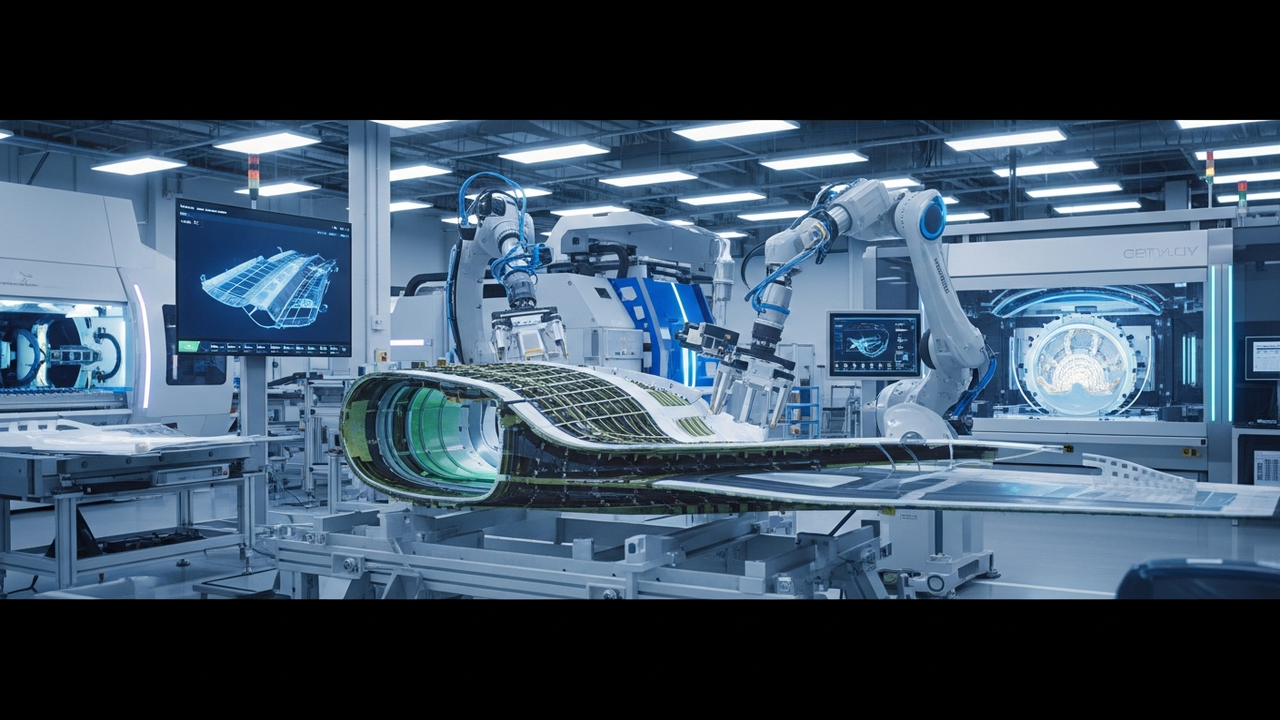
Albany Engineered Composites and A&P Technology have announced a strategic collaboration to integrate advanced braiding and resin transfer molding (RTM) technologies, aiming to accelerate the development of scalable, high-performance composite solutions for the aerospace and defense sectors. This partnership represents a significant step towards revolutionizing manufacturing processes for lightweight, durable materials.
Technical / Clinical Details
The collaboration will combine Albany Engineered Composites’ extensive expertise in composite design and manufacturing, particularly in automated fiber placement (AFP) and advanced lay-up techniques, with A&P Technology’s excellence in precision braiding. Braiding is a highly efficient method for orienting continuous fibers into complex 3D shapes, which is critical for optimizing structural efficiency in aerospace components. When integrated with RTM, this approach allows for the high-volume production of complex parts with excellent resin impregnation and minimal void content. The combined process yields composite components that boast superior strength-to-weight ratios, enhanced stiffness, and exceptional damage tolerance compared to traditional metallic structures. This leads to significant weight savings, directly contributing to improved fuel efficiency for aircraft and increased payload capacity for space and defense applications.
Background & Context
The aerospace and defense industries are under constant pressure to deliver higher performance while simultaneously reducing costs. Advanced composite materials are indispensable for achieving these goals, offering the necessary lightweighting and durability to meet stringent operational requirements and fuel efficiency targets. The synergy between braiding and RTM technologies is particularly promising because it enables the efficient manufacturing of geometrically complex parts, which are prevalent in these sectors. This partnership is a strategic move by both companies to leverage their respective strengths, address market demands for more sophisticated composite structures, and accelerate the evolution of composite manufacturing technology. It reflects an industry-wide push for innovative solutions that can keep pace with rapidly advancing aircraft and defense system designs.
Strategic Significance & Outlook
This strategic partnership is expected to significantly accelerate the design and manufacturing of next-generation composite materials for aerospace and defense applications. The development of scalable manufacturing processes will not only reduce the production cost of high-performance composites but also facilitate their adoption across a wider range of applications. In the coming years, this integrated technology is projected to contribute to lighter and more performant components in commercial aircraft, spacecraft, unmanned aerial vehicles (UAVs), and advanced defense systems, thereby enhancing competitive advantages in these critical sectors. For researchers and engineers, this collaborative approach provides a robust foundation for developing even more innovative composite structures, contributing to a more sustainable and technologically advanced aerospace industry globally.
Source: #
Get our weekly technology intelligence — free
Receive an infographic that lets you judge at a glance whether each field’s analysis report is worth reading.
Subscribe Free — Weekly Tech Intelligence
By subscribing, you’ll receive Troy-Technical’s weekly technology intelligence newsletter.
- Your email and selected fields are used only to deliver the newsletter.
- We never share your information with third parties.
- You can unsubscribe anytime via the link in each email.
See our Privacy Policy for details.
Takes about a minute · Unsubscribe anytime








Comments