Key Findings
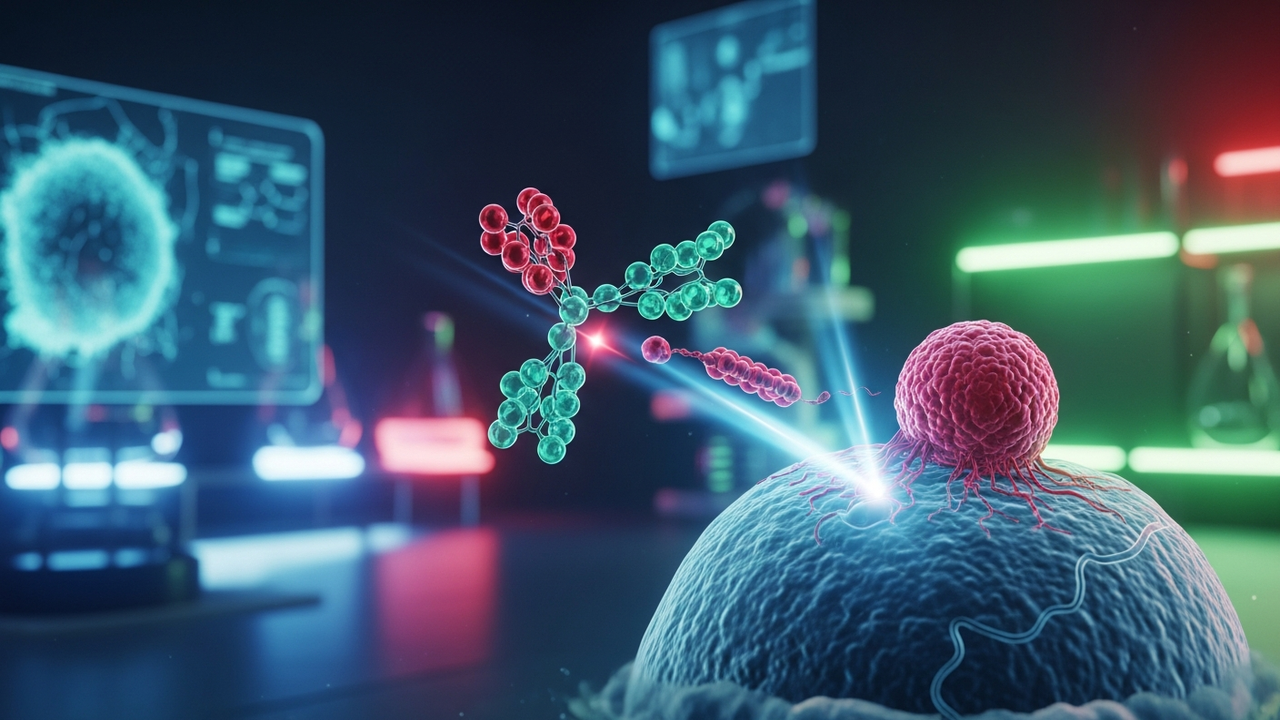
Antibody-Drug Conjugates (ADCs) are undergoing a significant evolution, transforming into a new generation of ‘smart chemotherapies’ that combine targeted delivery with potent cytotoxic agents. A major clinical breakthrough in this area is the May 2026 FDA approval of Datroway (datopotamab deruxtecan) as a first-line treatment for metastatic triple-negative breast cancer (mTNBC). This approval marks a critical advancement in providing more effective and less toxic options for patients with this aggressive cancer type.
Technical and Clinical Details
ADCs leverage the specificity of antibodies to deliver highly potent small molecule drugs (payloads) directly to cancer cells expressing specific antigens, thereby minimizing systemic toxicity. The recent advancements are largely driven by innovations in linker-payload technologies. For instance, companies like Tubulis are developing platforms, such as Alco5, which enable the integration of novel drug classes—including nucleic acid analogs and elongation factor inhibitors—as payloads, moving beyond traditional cytotoxic agents. Furthermore, the emerging class of Degrader-antibody conjugates (DACs) combines ADCs with targeted protein degraders, exemplified by partnerships between companies like Roche and C4 Therapeutics. DACs aim to induce the degradation of specific intracellular proteins within cancer cells, offering a distinct mechanism of action.
The FDA approval of Datroway for mTNBC is particularly impactful. Triple-negative breast cancer often presents limited treatment options and is associated with poor prognosis. Datroway’s approval provides a new, targeted approach that has demonstrated efficacy in a setting where conventional chemotherapy has been the primary but often burdensome treatment. This drug’s mechanism ensures that the therapeutic payload is precisely delivered to tumor cells, enhancing anti-tumor activity while reducing off-target effects.
Background and Context
The journey of ADCs has been marked by continuous innovation in antibody engineering, linker chemistry, and payload selection. Earlier ADCs faced challenges related to linker stability and systemic release of payloads. However, significant R&D efforts have led to the development of more stable linkers and potent, cell-specific payloads, making ADCs increasingly effective and safer. The success of Datroway underscores the maturation of ADC technology and its growing role as a cornerstone in oncology. The industry has seen a rapid expansion in ADC pipelines, with multiple approvals across various solid tumors and hematological malignancies.
Strategic Significance and Outlook
The continued evolution of ADC technology, including the advent of DACs and novel payload classes, signifies a robust and dynamic future for cancer therapy. Datroway’s approval is a strong indicator of ADCs’ potential to become standard-of-care across a broader spectrum of cancers. Future directions will likely involve the development of next-generation ADCs with enhanced tumor selectivity, improved payloads, and synergistic combinations with other therapies, such as immune checkpoint inhibitors. These advancements promise to deliver more personalized and curative outcomes for cancer patients worldwide, positioning ADCs at the forefront of precision medicine.
Get our weekly technology intelligence — free
Receive an infographic that lets you judge at a glance whether each field’s analysis report is worth reading.
Subscribe Free — Weekly Tech Intelligence
By subscribing, you’ll receive Troy-Technical’s weekly technology intelligence newsletter.
- Your email and selected fields are used only to deliver the newsletter.
- We never share your information with third parties.
- You can unsubscribe anytime via the link in each email.
See our Privacy Policy for details.
Takes about a minute · Unsubscribe anytime








Comments