Key Findings
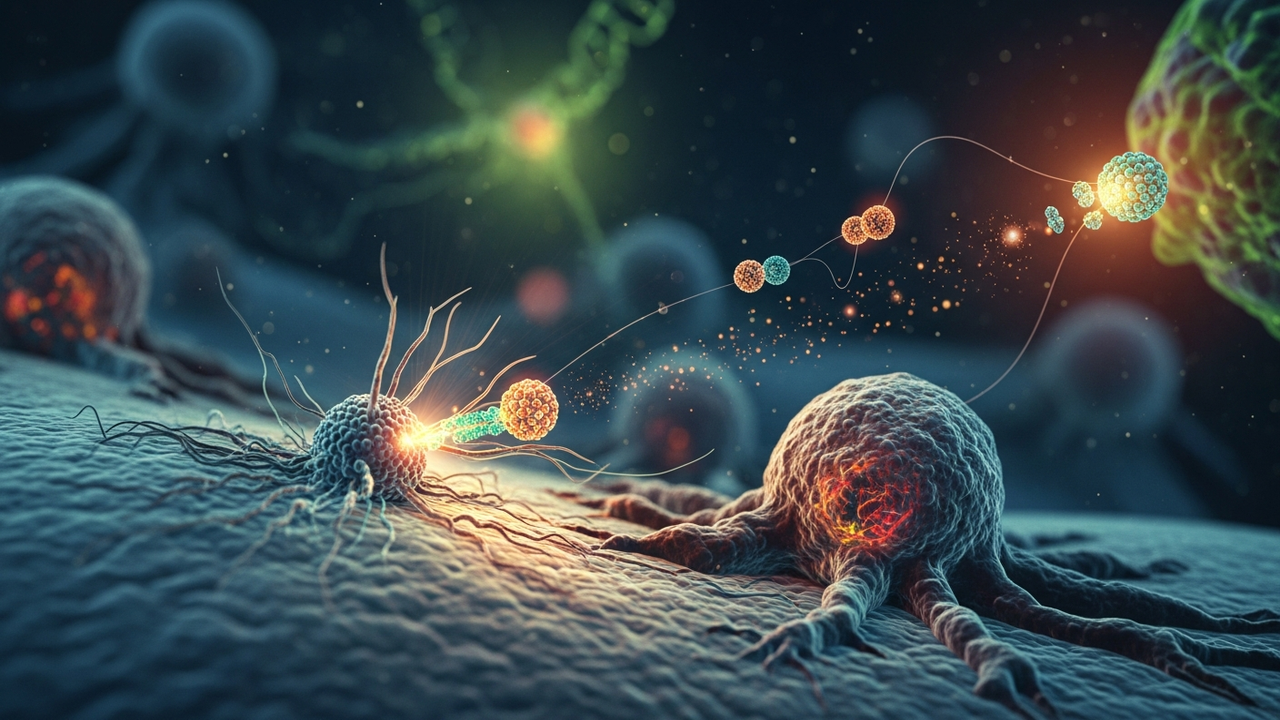
This review underscores the transformative potential of nanotechnology in significantly enhancing the efficacy of cancer theranostics, particularly when integrated with radioligand therapy (RLT). The application of nanoparticles promises precise targeting of cancer cells and a substantial reduction in systemic toxicity, marking a critical advancement in oncological treatment.
Technical / Clinical Details
Nanoparticles, precisely engineered within the 1-100 nm size range with tailored surface properties, offer multiple advantages when combined with RLT. Platforms such as gold nanoparticles (AuNPs), iron oxide nanoparticles (IONPs), and liposomes can be loaded with radioisotopes and surface-modified with cancer-specific ligands to selectively accumulate in tumor cells. This dual functionality enables both enhanced contrast in diagnostic imaging and accurate delivery of therapeutic radionuclides (e.g., 177Lu or 225Ac) to the target site. This approach allows for maximization of therapeutic effect while minimizing damage to surrounding healthy tissues, a long-standing challenge in conventional RLT. The review highlights several preclinical studies demonstrating promising results for nanoparticle-based RLT approaches, suggesting a clear path toward clinical translation.
Background & Context
Cancer treatment continually seeks novel approaches due to its inherent complexity. Radioligand therapy offers high specificity by targeting cancer cells expressing particular receptors, but optimizing therapeutic effect and managing systemic toxicity have been key hurdles. The introduction of nanotechnology provides a powerful toolkit to overcome these challenges. Nanoparticles can passively accumulate in tumor tissue via the Enhanced Permeability and Retention (EPR) effect and further enhance targeting specificity through active targeting ligands. This convergence embodies the ‘theranostics’ concept, seamlessly integrating diagnosis and therapy, which is vital for the progression of personalized medicine.
Strategic Significance & Outlook
The fusion of nanotechnology and RLT is an exceptionally promising field for the future of cancer treatment. As clinical trials further establish the safety and efficacy of these nanoparticle-based RLTs, they hold the potential to significantly improve outcomes for intractable cancers. The next focus will likely be on developing multi-modal nanoconstructs that combine several therapeutic modalities and smart nanocarriers capable of real-time monitoring of treatment response. These advancements are expected to contribute substantially to improving patient quality of life and prognosis, establishing a new paradigm in precision oncology.
Source: https://www.scholarsliterature.com/article_pdf/2/scientific_2_982_16072026121436.pdf
Get our weekly technology intelligence — free
Receive an infographic that lets you judge at a glance whether each field’s analysis report is worth reading.
Subscribe Free — Weekly Tech Intelligence
By subscribing, you’ll receive Troy-Technical’s weekly technology intelligence newsletter.
- Your email and selected fields are used only to deliver the newsletter.
- We never share your information with third parties.
- You can unsubscribe anytime via the link in each email.
See our Privacy Policy for details.
Takes about a minute · Unsubscribe anytime






Comments