Key Findings
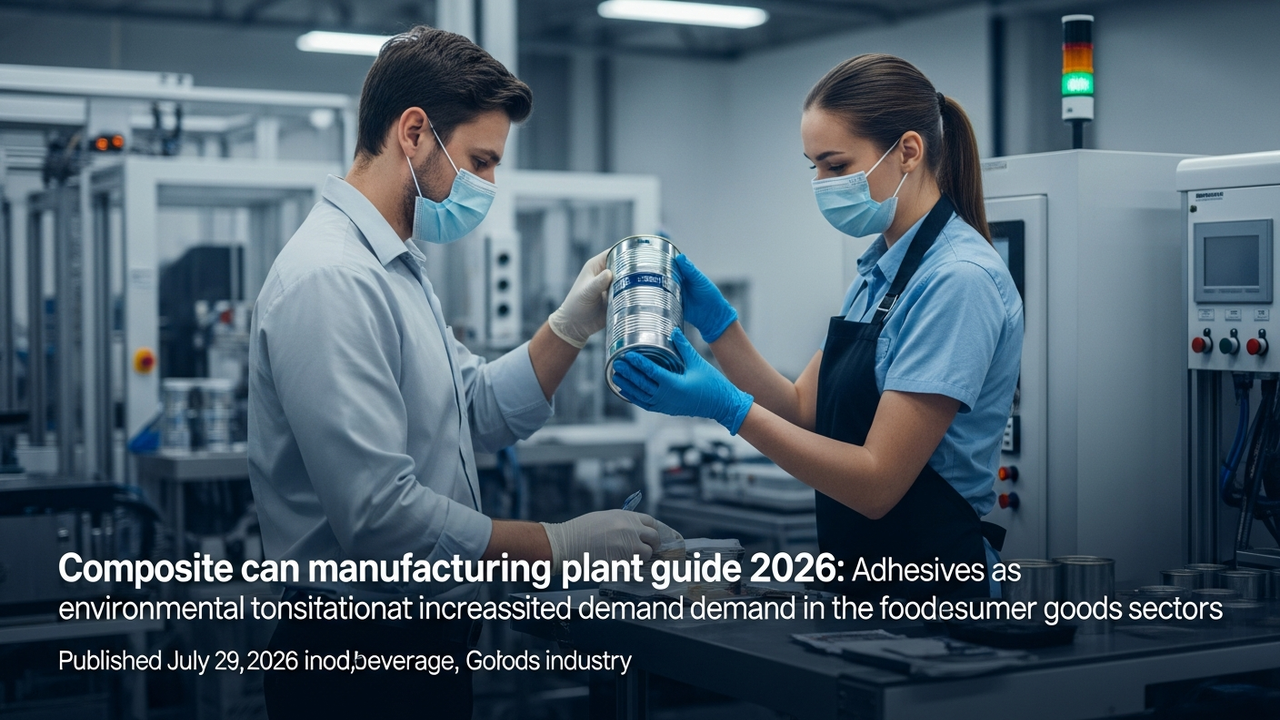
The latest insights into composite can manufacturing plant setups indicate a significant surge in demand for composite cans within the food, beverage, and consumer goods sectors. This escalation is attributed to the eco-friendly characteristics and versatile applications that composite cans offer. Crucially, adhesives have been identified as a primary and indispensable input material in the manufacturing cost structure, vital for forming the multi-layered structure of these cans.
Technical Details
Composite cans are engineered with a multi-layered structure, typically comprising paper, metal, and plastic. This sophisticated design endows the cans with high durability, superior protective qualities, and remarkable versatility for various contents. For instance, robust moisture and oxygen barrier properties are critical for food products, while strength and printability are paramount for consumer goods. High-performance adhesives are essential to securely and uniformly bond these multiple layers, representing a significant portion of the manufacturing cost. The careful selection of adhesives directly impacts the final product’s quality, environmental performance, and overall production efficiency.
Background & Context
The packaging industry is undergoing a transformative shift towards sustainable solutions, driven by heightened consumer environmental awareness and increasing governmental regulations aimed at reducing plastic waste. Composite cans present an attractive alternative to conventional plastic or pure metal containers, as they primarily utilize recyclable paper while maintaining the necessary barrier properties to protect contents. This trend creates substantial opportunities for adhesive manufacturers to innovate and develop higher-performing, lower environmental impact adhesive solutions.
Strategic Significance & Outlook
The growth trajectory for the composite can market is expected to accelerate in the coming years. For manufacturers, establishing efficient and sustainable composite can production processes will be critical for maintaining a competitive edge. This necessitates continuous advancements in adhesive technology, with particular focus on the development of bio-based and low-VOC (Volatile Organic Compound) adhesives. Composite cans are poised to play a pivotal role in meeting diverse packaging needs across industries and contributing to a more sustainable global economy.
Source: https://www.openpr.com/news/4589893/composite-cans-manufacturing-plant-setup-2026-machinery
Get our weekly technology intelligence — free
Receive an infographic that lets you judge at a glance whether each field’s analysis report is worth reading.
Subscribe Free — Weekly Tech Intelligence
By subscribing, you’ll receive Troy-Technical’s weekly technology intelligence newsletter.
- Your email and selected fields are used only to deliver the newsletter.
- We never share your information with third parties.
- You can unsubscribe anytime via the link in each email.
See our Privacy Policy for details.
Takes about a minute · Unsubscribe anytime