Key Findings
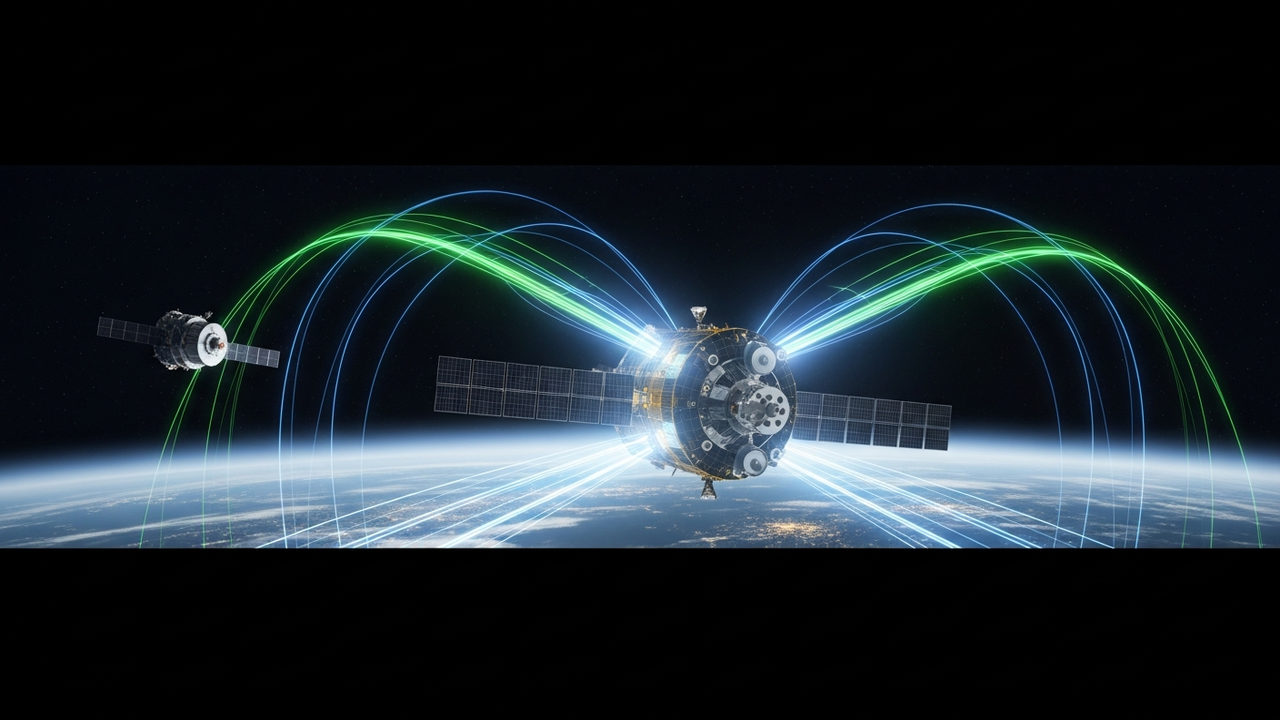
China announced the successful completion of all on-orbit tests for its new-generation space power system aboard the Tianzhou-10 cargo spacecraft. This system is the first in the world to implement a 400V bus power system in orbit, representing a groundbreaking achievement that strengthens the power infrastructure for future large-scale space missions, including manned lunar exploration.
Technical Details
The space power system tested employs a high-voltage bus (400V), which reduces power transmission losses and significantly improves efficiency compared to existing low-voltage systems. This high-voltage architecture is particularly advantageous for large space stations or lunar bases requiring substantial power delivery over long distances. The system design incorporates Silicon Carbide (SiC) components, known for their resilience to high temperatures and radiation. This not only enhances energy conversion efficiency but also dramatically reduces the overall mass and volume of the power system. For instance, the system achieved approximately 30% miniaturization and weight reduction compared to conventional technologies for the same power supply capacity, allowing for increased spacecraft payload. The series of tests on Tianzhou-10 confirmed the proper functioning of key features such as power generation, storage, distribution, and load response, demonstrating the system’s stability and reliability.
Background & Context
As space exploration evolves, the demand for power on spacecraft and lunar bases is constantly increasing. Traditional power systems are becoming inadequate for long-duration manned missions and large probes carrying numerous scientific instruments. Developing highly efficient and reliable power systems is one of the most critical challenges for expanding the scope and sustainability of space exploration. China, aiming to establish itself as a leading space power, is actively pursuing its own space station construction and lunar/Mars exploration programs. The success of this power system is a significant technological milestone towards achieving those goals.
Strategic Significance & Outlook
The success of the 400V space power system will have a profound impact on China’s future space development plans. This technology is slated for direct application in future manned lunar landers, lunar rovers, and the construction of lunar bases, ensuring long-term power supply. It is also expected to be utilized as a power infrastructure for large commercial satellites and space stations in Earth orbit, potentially supporting new commercial activities such as space-based AI data centers and in-orbit manufacturing. China is anticipated to leverage this technology as a foundation for planning more ambitious and complex space missions, further solidifying its presence in the global space race.
Source: https://www.globaltimes.cn/page/202607/1366973.shtml
Get our weekly technology intelligence — free
Receive an infographic that lets you judge at a glance whether each field’s analysis report is worth reading.
Subscribe Free — Weekly Tech Intelligence
By subscribing, you’ll receive Troy-Technical’s weekly technology intelligence newsletter.
- Your email and selected fields are used only to deliver the newsletter.
- We never share your information with third parties.
- You can unsubscribe anytime via the link in each email.
See our Privacy Policy for details.
Takes about a minute · Unsubscribe anytime