Key Findings
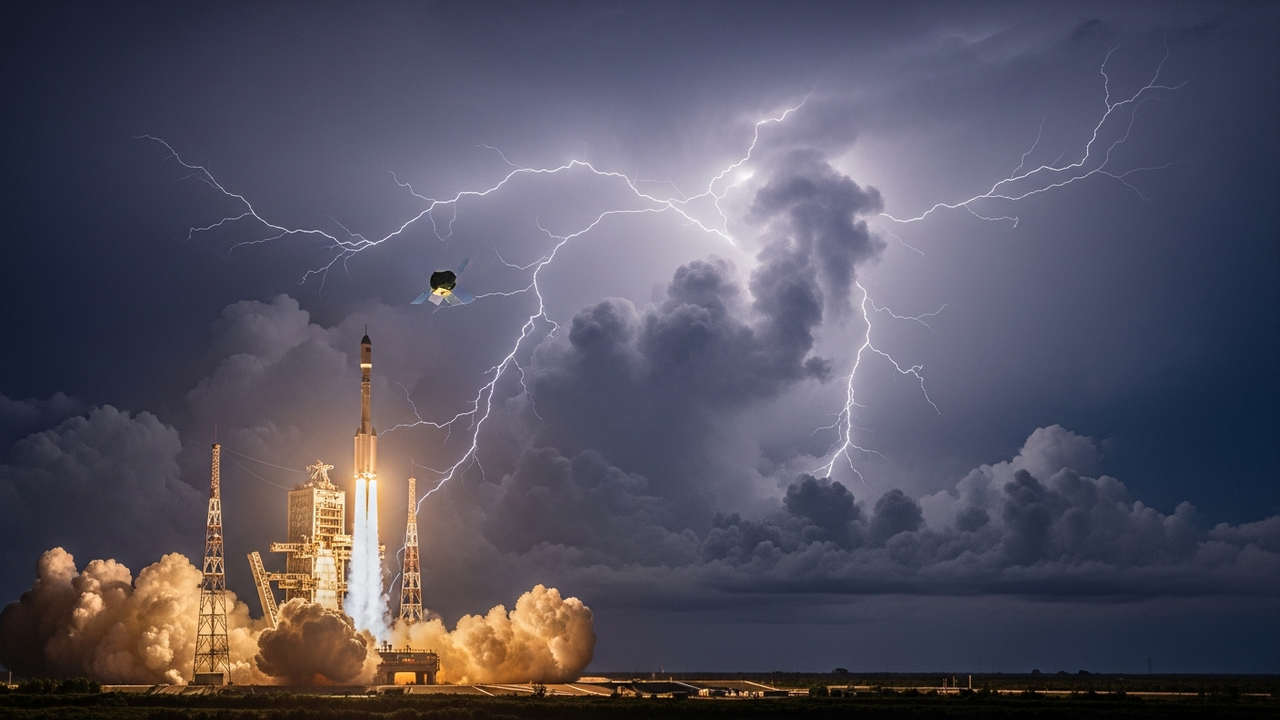
China successfully launched its Tianlian-2 06 data relay satellite on July 23, 2026, using a Long March 3B rocket from the Xichang Satellite Launch Center. What made this launch particularly dramatic was the rocket enduring a lightning strike just seconds after liftoff, yet it continued its flight path normally and successfully inserted the satellite into its planned orbit. This event strongly demonstrated the robust lightning protection design and high reliability of Chinese rockets to the international community.
Technical Details
The Long March 3B is one of China’s primary launch vehicles, primarily used for deploying satellites into geostationary orbit. Tianlian-2 06 is part of China’s Tianlian-2 data relay satellite system, playing a crucial role in relaying data for Earth observation satellites, crewed spacecraft, and space stations. The successful demonstration of lightning resilience indicates that the rocket’s electrical systems are equipped with advanced electromagnetic compatibility (EMC) design, capable of withstanding powerful external electromagnetic interference and discharge phenomena. This is a critical advancement for enhancing launch capabilities under adverse weather conditions.
Background & Context
China has made remarkable progress in space development in recent years, pursuing ambitious plans including crewed spaceflight, lunar and Mars exploration, and the construction of its own satellite constellations. Data relay satellites, in particular, serve as the ‘nervous system’ of space infrastructure, enabling real-time communication with a vast number of low Earth orbit satellites, significantly enhancing the overall efficiency and capability of space activities. The demonstrated ability to withstand a lightning strike suggests that China’s space technology is maturing not just in terms of launch success, but also in the qualitative aspect of operational reliability in extreme environments.
Strategic Significance & Outlook
The successful operationalization of Tianlian-2 06 will directly strengthen China’s space communication network, powerfully supporting the expansion of the future ‘Tiangong’ space station, lunar exploration missions like the Chang’e program, and its own mega-constellation plans. The proven resilience against lightning further underpins the reliability of Chinese rocket technology, potentially boosting its competitiveness in the international space market. This solidifies China’s position as a global space power, enabling it to pursue diverse space missions with greater confidence.
Get our weekly technology intelligence — free
Receive an infographic that lets you judge at a glance whether each field’s analysis report is worth reading.
Subscribe Free — Weekly Tech Intelligence
By subscribing, you’ll receive Troy-Technical’s weekly technology intelligence newsletter.
- Your email and selected fields are used only to deliver the newsletter.
- We never share your information with third parties.
- You can unsubscribe anytime via the link in each email.
See our Privacy Policy for details.
Takes about a minute · Unsubscribe anytime