Key Findings
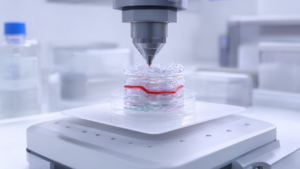
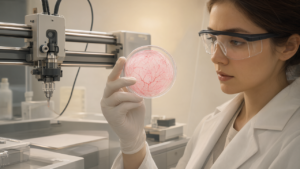
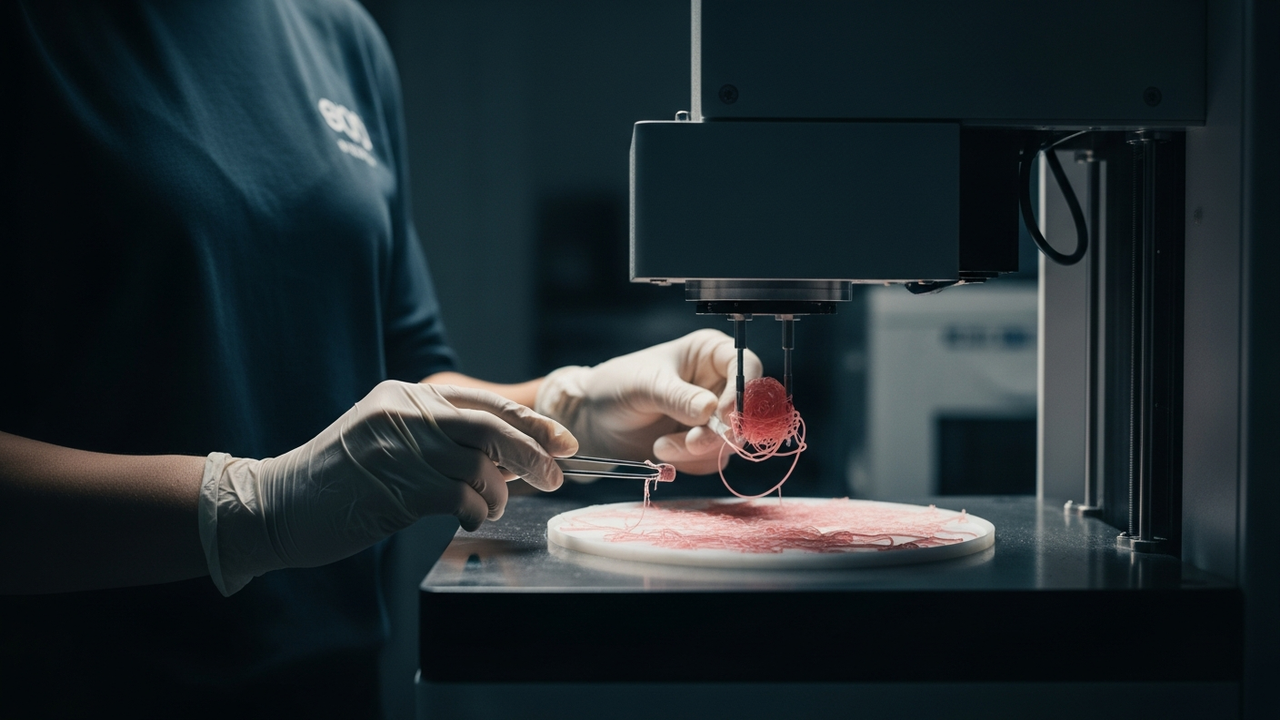
The integration of 3D bioprinting and organoid technology is poised to revolutionize personalized medicine and tissue engineering, according to a comprehensive review published in Oxford Academic’s Regenerative Biomaterials. This synergistic approach allows for the creation of more physiologically relevant disease models and sophisticated tissue constructs for regenerative applications.
Technical / Clinical Details
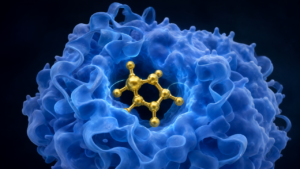
- The review emphasizes the advancements in biocompatible ink development, which are crucial for precisely depositing cells and creating biomimetic microenvironments. These advanced inks enable the structural and functional complexities necessary for successful organoid integration.
- In oncology, patient-derived tumor organoids, generated through bioprinting, offer a powerful platform for predicting individual patient responses to various therapies. This capability is critical for tailoring cancer treatments, minimizing adverse effects, and improving patient outcomes.
- For regenerative medicine, bioprinted constructs of bone, cartilage, cardiac tissue, and skin demonstrate significant promise for repairing or replacing damaged organs and tissues. Early studies indicate the potential for these engineered tissues to not only mimic natural structures but also to integrate and restore function in preclinical models.
- Drug discovery is also poised for significant benefits, as disease-specific human organoid models provide more accurate and efficient platforms for screening new therapeutic compounds and assessing their toxicity, thereby reducing reliance on less predictive animal models.
Background & Context
Traditional 2D cell cultures and animal models often fail to accurately recapitulate the complex human physiological responses and disease pathologies, limiting their predictive power in therapeutic development. The convergence of 3D bioprinting and organoid technology addresses this by enabling the creation of intricate, multi-cellular structures that more closely resemble native tissues and organs. This technological leap provides a superior platform for fundamental biological research, disease modeling, and the development of next-generation regenerative therapies in an era of increasing demand for functional tissue replacements.
Strategic Significance & Outlook
This evolving field holds immense strategic significance for the future of healthcare. Future developments are expected to focus on scaling up the bioprinting of more complex organ systems, incorporating vascularization, and modeling immune responses more accurately. Establishing standardized protocols for manufacturing and robust regulatory frameworks will be key to translating these innovative therapies into routine clinical practice. Ultimately, this technology offers a promising solution to the critical shortage of donor organs for transplantation and will accelerate the realization of truly personalized regenerative medicine.
Source: https://academic.oup.com/rb/article/3/1/zbac003/7625141
Get our weekly technology intelligence — free
Receive an infographic that lets you judge at a glance whether each field’s analysis report is worth reading.
Subscribe Free — Weekly Tech Intelligence
By subscribing, you’ll receive Troy-Technical’s weekly technology intelligence newsletter.
- Your email and selected fields are used only to deliver the newsletter.
- We never share your information with third parties.
- You can unsubscribe anytime via the link in each email.
See our Privacy Policy for details.
Takes about a minute · Unsubscribe anytime