Background
The global energy transition, coupled with rapid digitalization, is fueling an unprecedented demand for lightweight and flexible power sources. Emerging sectors such as space exploration, autonomous drone operations, and expansive IoT sensor networks present unique power requirements that traditional rigid and heavy solar panels cannot adequately address. Perovskite solar cells, recognized for their impressive power conversion efficiency and inherent suitability for thin-film and flexible fabrication, have emerged as a compelling candidate to penetrate these nascent yet rapidly expanding markets. The newly announced partnership between Halocell Energy and MSWay signifies a concrete, commercialization-focused step toward deploying flexible perovskite solar cells, effectively combining Australian innovation in material science with South Korean expertise in advanced manufacturing to meet these specific market demands. This collaboration also underscores the increasing strategic importance of global supply chain partnerships in the realm of advanced energy technologies.
Key Findings
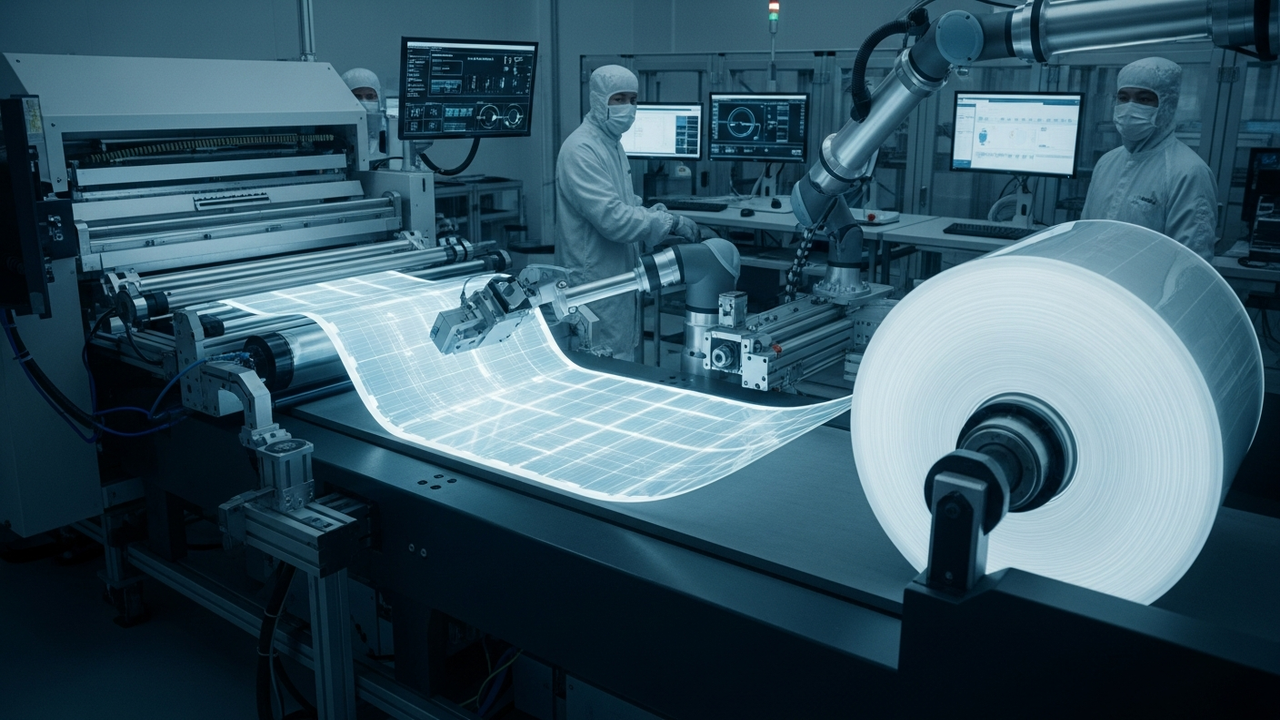
Halocell Energy, a vanguard Australian developer specializing in advanced perovskite solar cells, has formally announced a strategic partnership with MSWay, a prominent South Korean manufacturer of flexible electrodes. This Memorandum of Understanding (MOU) is specifically designed to facilitate the mass production and subsequent scale-up of Halocell’s roll-printed perovskite solar modules. By integrating MSWay’s proprietary high-performance flexible transparent electrode (FTE) materials directly into Halocell’s innovative roll-to-roll manufacturing process, this collaboration is poised to significantly accelerate the market introduction of lightweight and high-performance flexible photovoltaic solutions.
Technological Synergy and Implementation
Halocell Energy is at the forefront of pioneering technology for manufacturing low-cost, high-efficiency perovskite solar cells on flexible substrates utilizing a continuous roll-to-roll process. This manufacturing paradigm offers immense potential for applications demanding curved surfaces or ultra-lightweight power solutions, areas where conventional silicon-based solar cells are typically unsuitable due to their rigidity and mass. MSWay’s specialized expertise in flexible transparent electrodes is a cornerstone of this partnership. FTEs are absolutely critical for efficient charge carrier collection from the perovskite layer while simultaneously ensuring high optical transparency, which is paramount for device performance. MSWay’s advanced materials are engineered to meet these rigorous requirements, demonstrating both the requisite durability and processability essential for seamless integration into a high-throughput roll-to-roll manufacturing line. The synergistic combination of both companies’ proprietary technologies is anticipated to overcome persistent challenges in perovskite solar cell development, including the hurdles of large-area fabrication, overall cost reduction, and crucial enhancement of long-term operational stability. This will establish a significant competitive advantage for applications where a superior power-to-weight ratio is a critical performance metric, such as in satellites, unmanned aerial vehicles (drones), and mobile IoT devices.
Strategic Significance and Future Outlook
This collaboration represents a significant leap towards the full commercialization of roll-printed flexible perovskite solar cells, substantially enhancing their competitive positioning within high-value, specialized markets. Applications in demanding sectors like satellite power generation and drone propulsion require exceptionally high levels of performance and reliability compared to conventional solar cell technologies, making success in these domains a powerful validation of perovskite technology’s broader potential. Future joint efforts will strategically focus on further optimizing the integrated manufacturing processes, systematically expanding production capacity to meet anticipated demand, and conducting extensive, long-term reliability testing under diverse environmental conditions. Should this groundbreaking technology achieve widespread adoption, it is expected to dramatically broaden the applicability of solar power as a truly sustainable energy source, stimulating profound innovation across a multitude of industries and contributing significantly to a more energy-resilient global future.
Get our weekly technology intelligence — free
Receive an infographic that lets you judge at a glance whether each field’s analysis report is worth reading.
Subscribe Free — Weekly Tech Intelligence
By subscribing, you’ll receive Troy-Technical’s weekly technology intelligence newsletter.
- Your email and selected fields are used only to deliver the newsletter.
- We never share your information with third parties.
- You can unsubscribe anytime via the link in each email.
See our Privacy Policy for details.
Takes about a minute · Unsubscribe anytime