Key Findings: High-Performance Flexible Thermoelectric Generator (FTEG) Achieves Breakthrough in Body Heat Harvesting
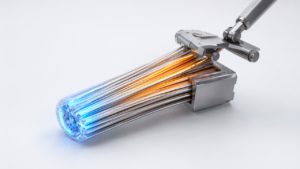
A high-performance flexible thermoelectric generator (FTEG) has been developed, capable of converting heat emitted from the human body into electrical power. This FTEG incorporates innovative structures, specifically perforated fins and copper-encapsulated polyimide, to effectively enhance turbulence, aiming to significantly improve the temperature gradient between its thermoelectric legs and boost overall power generation performance. This achievement represents a crucial step towards the realization of batteryless wearable electronics, medical sensors, and IoT devices.
Technical and Research Details
- Flexible Thermoelectric Generator (FTEG): FTEGs are devices designed to generate electricity from temperature differences while maintaining flexibility, allowing them to conform to curved surfaces like the human body. Unlike rigid conventional thermoelectric generators, their ability to adapt to body movements and shapes makes them ideal for wearable applications.
- Turbulence Enhancement via Perforated Fins: The efficiency of thermoelectric power generation heavily relies on the temperature difference between the hot and cold sides. In this FTEG, ‘perforated fins’ are strategically placed between the thermoelectric legs to intentionally disturb the flow of air or fluid in the heat path, thereby enhancing turbulence and improving heat exchange efficiency. This maximizes the temperature gradient across the thermoelectric legs, leading to increased power generation.
- Copper-Encapsulated Polyimide: Thermoelectric materials are typically composed of brittle semiconductors, making them susceptible to physical shock and bending. This FTEG employs a structure where high-thermal-conductivity copper is encapsulated within a flexible and thermally conductive polyimide film. This design ensures mechanical robustness while allowing for efficient heat supply to and dissipation from the thermoelectric material.
- Enhanced Power Generation Performance: These structural innovations enable higher power density and conversion efficiency compared to conventional FTEGs. While specific numerical details are provided in the paper, the synergistic effects of turbulence enhancement and material integration contributed to this improved power generation performance.
Background and Industry Context
The proliferation of wearable devices, particularly in fields such as health monitoring, sports tracking, and medical diagnostics, highlights an urgent need for miniaturized devices with extended battery life. Battery charging and replacement are inconvenient for users and often impede continuous device usage. Body heat harvesting offers a sustainable solution to this battery problem by utilizing the thermal energy constantly emitted by the human body as electrical power. The flexible form factor, in particular, enhances wearing comfort and contributes to improved biocompatibility.
Future Outlook and Strategic Significance
The development of this high-performance FTEG has the potential to significantly impact the wearable electronics industry. In the future, it is expected to contribute to the realization of various batteryless devices, including smartwatches, fitness trackers, biosensors, and medical patches. Furthermore, its application to IoT devices could enable self-powered widespread sensor networks, allowing for maintenance-free and sustainable data collection. Continued material science optimization and manufacturing process scale-up are anticipated to accelerate the practical implementation of this technology, paving the way for a new era of self-sustainable smart devices.
Source: https://ideas.repec.org/a/eee/energy/v360y2026icp.html
Get our weekly technology intelligence — free
Receive an infographic that lets you judge at a glance whether each field’s analysis report is worth reading.
Subscribe Free — Weekly Tech Intelligence
By subscribing, you’ll receive Troy-Technical’s weekly technology intelligence newsletter.
- Your email and selected fields are used only to deliver the newsletter.
- We never share your information with third parties.
- You can unsubscribe anytime via the link in each email.
See our Privacy Policy for details.
Takes about a minute · Unsubscribe anytime