Key Findings
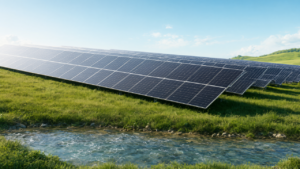
A research team at Hong Kong Polytechnic University has successfully developed a next-generation perovskite-organic tandem solar cell that maintains an impressive 97% of its efficiency even when partially shaded. This innovative device also demonstrates significantly improved resistance to reverse bias stress, a long-standing technical challenge that has limited the long-term performance and durability of conventional solar panels. This breakthrough promises to expand the practical application of solar energy, particularly in urban environments and complex architectural settings where shading is often unavoidable.
Technical / Clinical Details
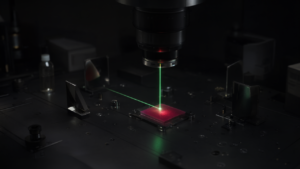
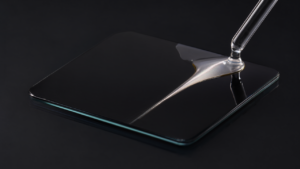
Traditional solar panels suffer from substantial performance degradation and potential damage when subjected to partial shading. The shaded cells can enter a reverse bias condition, impeding current flow, leading to localized heating (hot spots), and accelerating degradation. The novel perovskite-organic tandem solar cell developed by the Hong Kong PolyU team is engineered to withstand such reverse bias stress more effectively. While specific architectural details are not fully elaborated in the summary, the success likely stems from optimized interface engineering and careful integration of the perovskite and organic layers. This design allows for more efficient current pathways under non-uniform illumination, minimizing energy loss and preventing the severe efficiency drops seen in standard PV modules. The result is a more resilient and consistently performing solar device, even in sub-optimal light conditions.
Background & Context
The widespread adoption of solar photovoltaics requires not only higher efficiencies but also greater adaptability to diverse installation environments and improved long-term reliability. The issue of shading has been a persistent Achilles’ heel for solar panels, leading to reduced energy yield and shortened operational lifetimes, which in turn inflate the overall cost of solar electricity. Perovskite solar cells are heralded as a transformative next-generation technology due to their high power conversion efficiencies and potential for flexible manufacturing. However, their long-term stability and durability under real-world conditions have been areas of intensive research. This development from Hong Kong PolyU addresses a critical practical hurdle, significantly enhancing the robustness and applicability of perovskite technology by mitigating one of the most common performance detractors.
Strategic Significance & Outlook
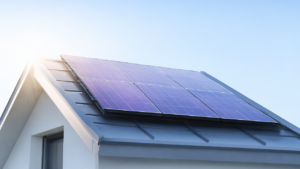
A solar cell capable of high-efficiency retention under shading and boasting enhanced durability has significant strategic importance. It opens up previously unfeasible installation sites, such as building facades, irregularly shaped rooftops, and agricultural structures, thereby expanding the overall renewable energy generation potential. This can accelerate localized power generation and the development of distributed energy systems, crucial for energy security and sustainability. Future research will undoubtedly focus on scaling up this technology for mass production, optimizing manufacturing costs, and conducting extensive long-term field tests under various environmental conditions to fully validate its commercial potential. This innovation represents a major step towards making solar power more reliable and universally applicable.
Source: https://allafrica.com/stories/202607290130.html
Get our weekly technology intelligence — free
Receive an infographic that lets you judge at a glance whether each field’s analysis report is worth reading.
Subscribe Free — Weekly Tech Intelligence
By subscribing, you’ll receive Troy-Technical’s weekly technology intelligence newsletter.
- Your email and selected fields are used only to deliver the newsletter.
- We never share your information with third parties.
- You can unsubscribe anytime via the link in each email.
See our Privacy Policy for details.
Takes about a minute · Unsubscribe anytime