Background
The European Union’s ambitious goal of achieving carbon neutrality by 2050 hinges on the extensive deployment of renewable energy sources, which in turn demands robust, large-scale energy storage solutions. Spain and Portugal, leveraging their rich solar and wind resources, have been at the forefront of renewable energy integration. However, the inherent intermittency of these sources presents significant challenges to grid stability and reliability. EU recovery initiatives, such as NextGenerationEU, are strategically channeling investments to mitigate these issues. Pumped Hydro Energy Storage (PHES) is considered a cornerstone of the EU’s energy transition strategy, owing to its proven capabilities for long-duration, large-scale storage, high operational efficiency, and extended lifespan. The recent policy shifts in both Iberian nations are fully congruent with broader EU objectives of enhancing regional energy self-sufficiency and phasing out fossil fuel dependency.
Key Findings
July 23, 2026, marked a pivotal day for Long-Duration Energy Storage (LDES) in the Iberian Peninsula with a series of major announcements. The Spanish government confirmed the allocation of €165 million from the EU’s NextGenerationEU recovery plan to seven distinct pumped hydro energy storage (PHES) projects. These initiatives are projected to collectively contribute 2.1 GW of new generation capacity and approximately 21 GWh of energy storage. Simultaneously, Portugal introduced its inaugural National Energy Storage Strategy, which includes a legally binding commitment to increase its pumped hydro capacity from the existing 3.6 GW to 5.0 GW by 2040. These parallel developments emphatically demonstrate both Spain’s and Portugal’s strategic resolve to accelerate renewable energy integration and enhance grid resilience.
Technical & Commercial Details
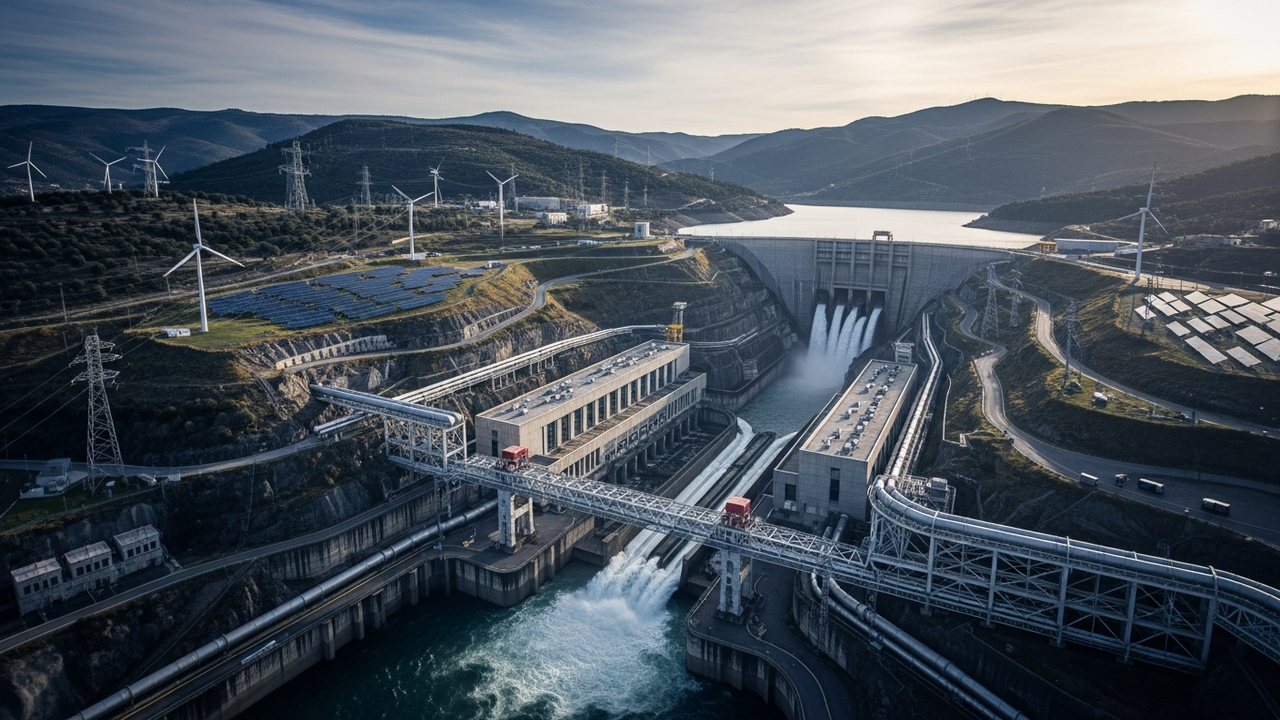
Pumped Hydro Energy Storage (PHES) is a mature and widely deployed technology that stores potential energy by leveraging gravitational force. Water is pumped from a lower reservoir to an upper reservoir during periods of surplus electricity generation or low demand. When electricity demand rises, the stored water is released, flowing back through turbines to generate power. The €165 million allocated to Spain will finance seven large-scale PHES projects, designed to deliver a combined 2.1 GW of generation capacity and 21 GWh of energy storage. This expansion is critical for mitigating the inherent variability of solar and wind power, thereby significantly enhancing grid stability and flexibility. Portugal’s National Energy Storage Strategy, by targeting a 5.0 GW PHES capacity by 2040, establishes a foundational framework for substantially increasing the share of renewable energy in its national grid. Both nations’ strategies are underpinned by a shared understanding that LDES is paramount for optimizing renewable energy integration and bolstering energy security.
Future Outlook
The considerable investment and precise target-setting by Spain and Portugal in pumped hydro storage send a robust signal, poised to accelerate the broader adoption of LDES technologies. Upon the successful commissioning of these projects, both nations’ electricity grids are anticipated to achieve enhanced stability, facilitating even deeper integration of renewable energy sources. Portugal’s decision to establish a legally binding target is particularly noteworthy, as it signifies long-term policy consistency and provides a compelling incentive for private sector investment. Looking ahead, the Iberian Peninsula is expected to emerge as a global archetype for constructing advanced energy systems that seamlessly integrate large-scale renewables with LDES. This strategic move will not only propel Europe’s clean energy transition but also mark a critical advancement towards a future where renewable energy constitutes the predominant source of power generation.
Get our weekly technology intelligence — free
Receive an infographic that lets you judge at a glance whether each field’s analysis report is worth reading.
Subscribe Free — Weekly Tech Intelligence
By subscribing, you’ll receive Troy-Technical’s weekly technology intelligence newsletter.
- Your email and selected fields are used only to deliver the newsletter.
- We never share your information with third parties.
- You can unsubscribe anytime via the link in each email.
See our Privacy Policy for details.
Takes about a minute · Unsubscribe anytime