Key Findings
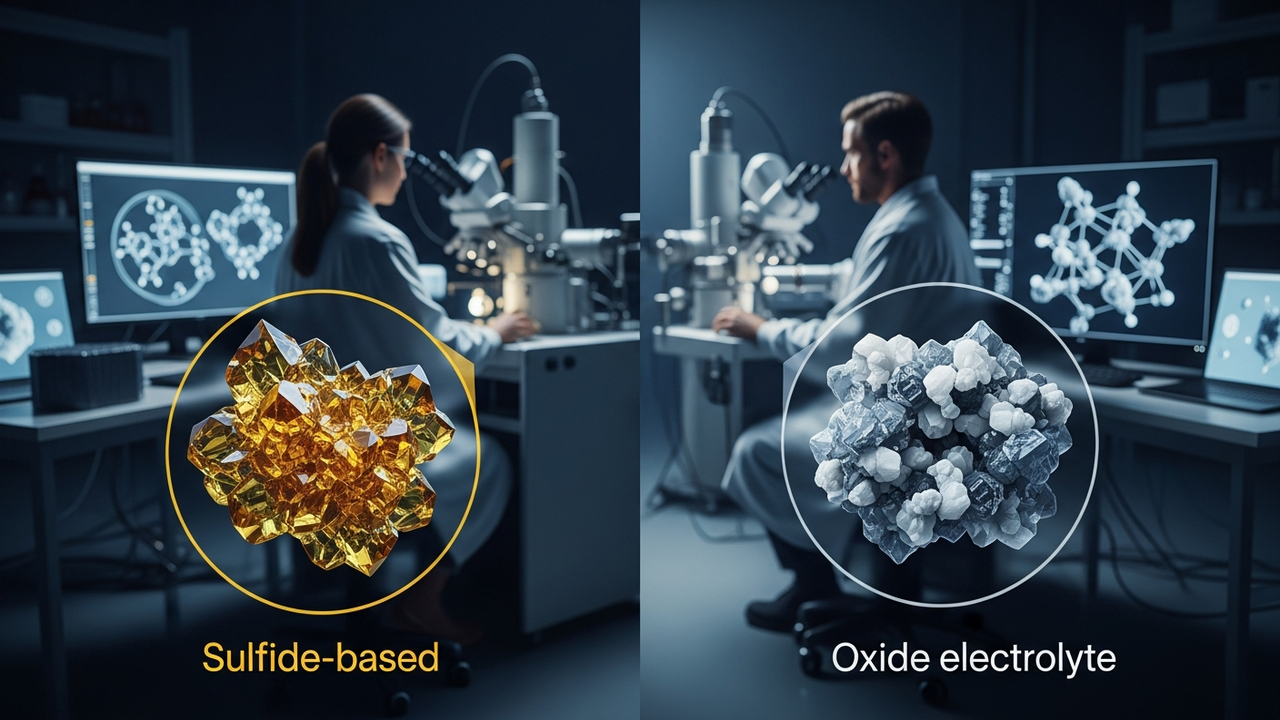
The J&K Scientific article focuses on solid electrolytes, the core materials determining the performance of all-solid-state batteries, by comparing and analyzing the two major candidates: sulfide electrolytes and oxide electrolytes. Sulfide electrolytes boast high ionic conductivity, comparable to or even exceeding that of liquid electrolytes in existing lithium-ion batteries, and excellent interfacial contact as their primary strengths. Oxide electrolytes, on the other hand, offer superior chemical stability and mechanical strength. This comparison clearly highlights the importance of understanding each material’s characteristics and making optimal choices based on the intended application in the development of all-solid-state batteries.
Technical / Clinical Details
The choice of solid electrolyte significantly impacts the overall performance of all-solid-state batteries.
- Sulfide Electrolytes: Sulfide-based solid electrolytes exhibit high lithium-ion conductivity (some superionic conductors are reported to reach approximately 25 mS/cm at room temperature) and excellent interfacial contact. Materials such as LGPS (Li₁₀GeP₂S₁₂) and argyrodite-type Li₆PS₅Cl are known for demonstrating the highest ionic conductivities. Due to the high polarizability of sulfur ions, they generally tend to achieve higher conductivity than oxides. These properties are advantageous for high-power applications like electric vehicles (EVs). However, their low stability in air and the risk of hydrogen sulfide gas evolution during manufacturing require careful handling.
- Oxide Electrolytes: Oxide-based solid electrolytes are characterized by excellent chemical stability, high thermal stability, and good mechanical strength. They are stable in air and relatively easy to handle. Garnet-type LLZO (Li₇La₃Zr₂O₁₂) can potentially achieve very high room-temperature ionic conductivity with appropriate crystal structures and defect engineering. However, challenges include lower ionic conductivity compared to sulfides, a tendency for poor interfacial contact with electrodes, and the requirement for high operating pressures.
The selection between these two types depends on the final battery application (e.g., high-power EVs vs. high-safety wearables), manufacturing process requirements, and specific performance targets (e.g., maximum range vs. longest cycle life).
Background & Context
All-solid-state batteries are garnering global attention as a next-generation battery technology that addresses the safety (fire risk) and energy density (range limitation) challenges faced by conventional liquid-electrolyte lithium-ion batteries. The solid electrolyte is the ‘heart’ of these batteries, and its properties largely dictate the overall battery performance, leading to intense material development competition. Sulfides and oxides are currently the two most actively researched systems, with vigorous efforts underway to overcome their respective technical advantages and challenges.
Strategic Significance & Outlook
Given that sulfide and oxide electrolytes possess distinct strengths and weaknesses, future developments may see their selective use based on application, or the creation of hybrid composite solid electrolytes that combine the benefits of both. Specifically, improving the stability of sulfide electrolytes and enhancing the ionic conductivity and interfacial contact of oxide electrolytes will be key areas of future research. If these technical barriers are overcome, and mass production and cost reduction are achieved, all-solid-state batteries will accelerate EV adoption and provide safer, higher-performance energy storage solutions across a wide range of sectors.
Source: https://www.jk-sci.com/blogs/resource-center/sulfide-vs-oxide-solid-electrolytes
Get our weekly technology intelligence — free
Receive an infographic that lets you judge at a glance whether each field’s analysis report is worth reading.
Subscribe Free — Weekly Tech Intelligence
By subscribing, you’ll receive Troy-Technical’s weekly technology intelligence newsletter.
- Your email and selected fields are used only to deliver the newsletter.
- We never share your information with third parties.
- You can unsubscribe anytime via the link in each email.
See our Privacy Policy for details.
Takes about a minute · Unsubscribe anytime