Key Findings
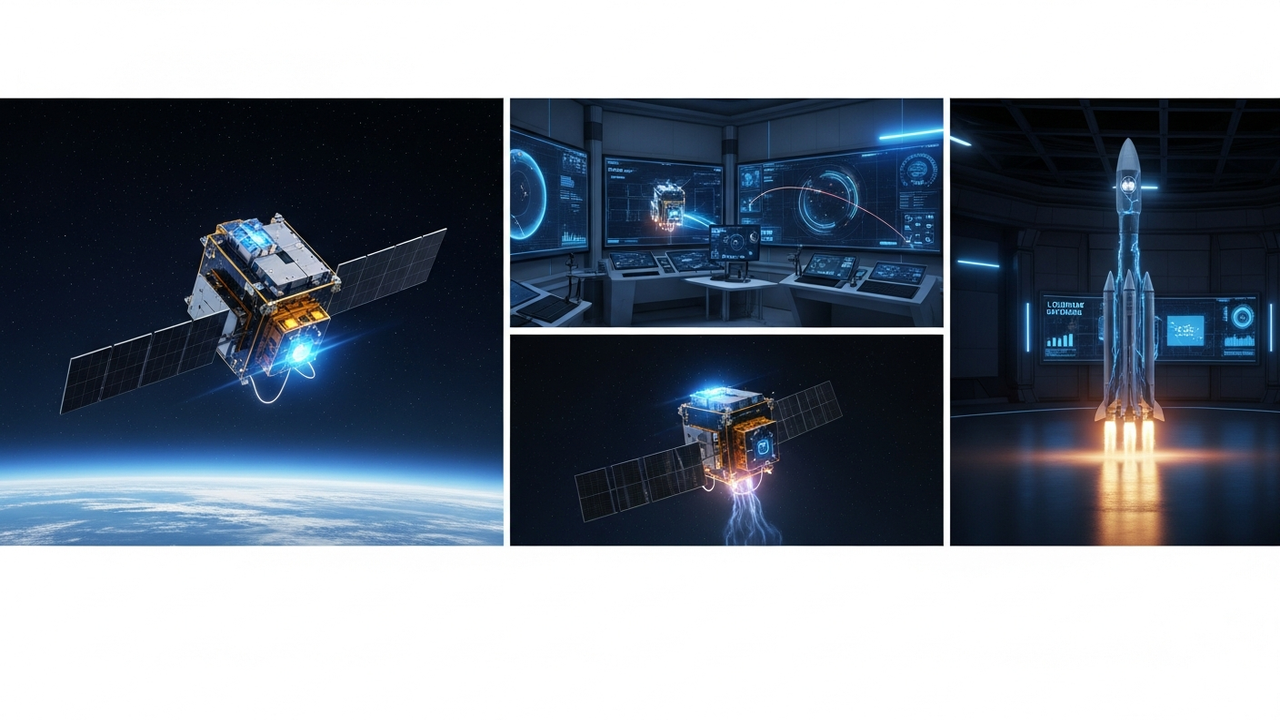
Miami-based City Labs has launched its first commercial nuclear-powered payload into orbit using a SpaceX rocket. This represents a groundbreaking step in applying small nuclear batteries (nanotritium batteries), capable of generating power continuously for decades without sunlight, to space exploration. This on-orbit test aims to demonstrate that the company’s batteries can withstand extreme space environments and provide reliable power sources essential for lunar colonization and deep-space missions.
Technical Details
City Labs’ nanotritium batteries are based on beta-voltaic technology, which generates electricity from the beta decay of the radioactive isotope tritium. These batteries are designed to supply stable, low-level power (microwatt to milliwatt range) for missions during lunar or deep-space nights, shaded areas where solar panels are ineffective. Their extremely small size and light weight make them ideal for small satellites, remote probes, and scientific instruments on lunar bases. They are particularly advantageous for operations in sunless environments, such as permanently shadowed craters on the Moon or Mars. The current orbital test will evaluate the battery’s performance and durability under conditions including space radiation, extreme temperature fluctuations, and vibrations.
Background & Context
With the evolution of space exploration, there is a growing need for sustainable and reliable power sources that do not rely on sunlight. Traditional batteries have limited lifespans, and solar panels are constrained by lighting conditions. While nuclear batteries, particularly Radioisotope Thermoelectric Generators (RTGs), have a proven track record in deep-space missions, City Labs’ technology is smaller and tailored for lower-power applications, enabling broader integration into various spacecraft. This technology is crucial for ensuring continuous power supply to life support systems and scientific observation instruments as human activities on the Moon and Mars intensify, contributing to the expansion of the space economy.
Strategic Significance & Outlook
The success of this orbital demonstration will solidify City Labs’ role in shaping the future of space exploration. The company positions nuclear batteries as an ‘indispensable element’ for lunar colonization, projecting significant market growth. These small nuclear batteries will be key to maximizing the autonomy and scientific output of probes on long-duration missions to the Moon, Mars, and the outer solar system. Furthermore, potential terrestrial applications include remote sensors, medical devices, and defense uses, suggesting that its technological impact could extend beyond the space industry.
Source: https://www.wlrn.org/light/science-technology/2026-07-23/nuclear-battery-tritium-space-miami
Get our weekly technology intelligence — free
Receive an infographic that lets you judge at a glance whether each field’s analysis report is worth reading.
Subscribe Free — Weekly Tech Intelligence
By subscribing, you’ll receive Troy-Technical’s weekly technology intelligence newsletter.
- Your email and selected fields are used only to deliver the newsletter.
- We never share your information with third parties.
- You can unsubscribe anytime via the link in each email.
See our Privacy Policy for details.
Takes about a minute · Unsubscribe anytime