Key Findings
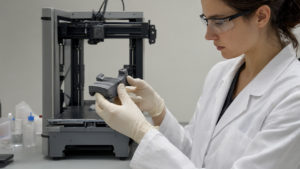
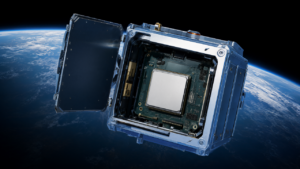
Planet Labs & Metals has announced its orbital manufacturing platform, aiming to support a robust commercial economy in low Earth orbit (LEO) and beyond. This platform is designed to maximize the benefits of the microgravity environment, focusing on the in-space production of advanced materials, high-performance titanium alloys, and innovative biomedical products.
Technical Details
The orbital manufacturing platform is particularly anticipated to have applications in the following areas:
- Advanced Semiconductor Materials: Production of high-purity, high-quality materials such as defect-free silicon carbide (SiC) and gallium nitride (GaN) wafers, which are challenging to achieve on Earth. This could dramatically enhance the performance of next-generation electronics and power electronics.
- Ultra-Low-Loss Optical Fibers: Specialty optical fibers like ZBLAN (Zirconium Barium Lanthanum Aluminum Sodium Fluoride) can be manufactured in microgravity with suppressed crystal formation, resulting in fibers that are much longer, clearer, and have lower signal loss than their Earth-produced counterparts. This has the potential to revolutionize long-distance and quantum communications.
- High-Purity Carbon Nanotubes: Defect-free carbon nanotubes, known for their lightweight, high-strength, and excellent electrical conductivity, can be utilized in spacecraft structural materials and next-generation batteries.
- 3D Cell Tissue Scaffolds for Regenerative Medicine: Cell cultures in microgravity tend to form more homogeneous tissue structures, promising applications in regenerative medicine for complex organ and tissue regeneration on Earth.
These products achieve qualities and performances unattainable on Earth by utilizing the unique physical properties of space, namely the suppression of gravity-induced convection, sedimentation, and impurity inclusion.
Background & Context
In-Space Manufacturing (ISM) is emerging as a new growth sector within the space industry, attracting vigorous investment from both government agencies and private companies. Years of experimentation on the International Space Station (ISS) have demonstrated the advantages that the microgravity environment offers to materials science, biotechnology, and pharmaceuticals. Planet Labs & Metals’ entry indicates that this market is transitioning from a technology demonstration phase to commercial-scale production, accelerating the trend of utilizing space as a new ‘factory floor.’
Strategic Significance & Outlook
The success of this orbital manufacturing platform will be an indispensable component for the expansion of the space economy, paving the way for the establishment of a high-value product supply chain in space. For terrestrial industries, access to previously impossible material properties and product performance will spur widespread technological innovation. High-performance semiconductors, next-generation communications, and regenerative medicine are among the sectors expected to benefit most significantly from in-space manufacturing. Planet Labs & Metals has the potential to make a substantial impact not only on the space industry but also on the global high-tech sector by bringing these innovative products to market.
Source: https://www.planetlabsandmetals.com/solutions/in-space-manufacturing
Get our weekly technology intelligence — free
Receive an infographic that lets you judge at a glance whether each field’s analysis report is worth reading.
Subscribe Free — Weekly Tech Intelligence
By subscribing, you’ll receive Troy-Technical’s weekly technology intelligence newsletter.
- Your email and selected fields are used only to deliver the newsletter.
- We never share your information with third parties.
- You can unsubscribe anytime via the link in each email.
See our Privacy Policy for details.
Takes about a minute · Unsubscribe anytime