Key Findings
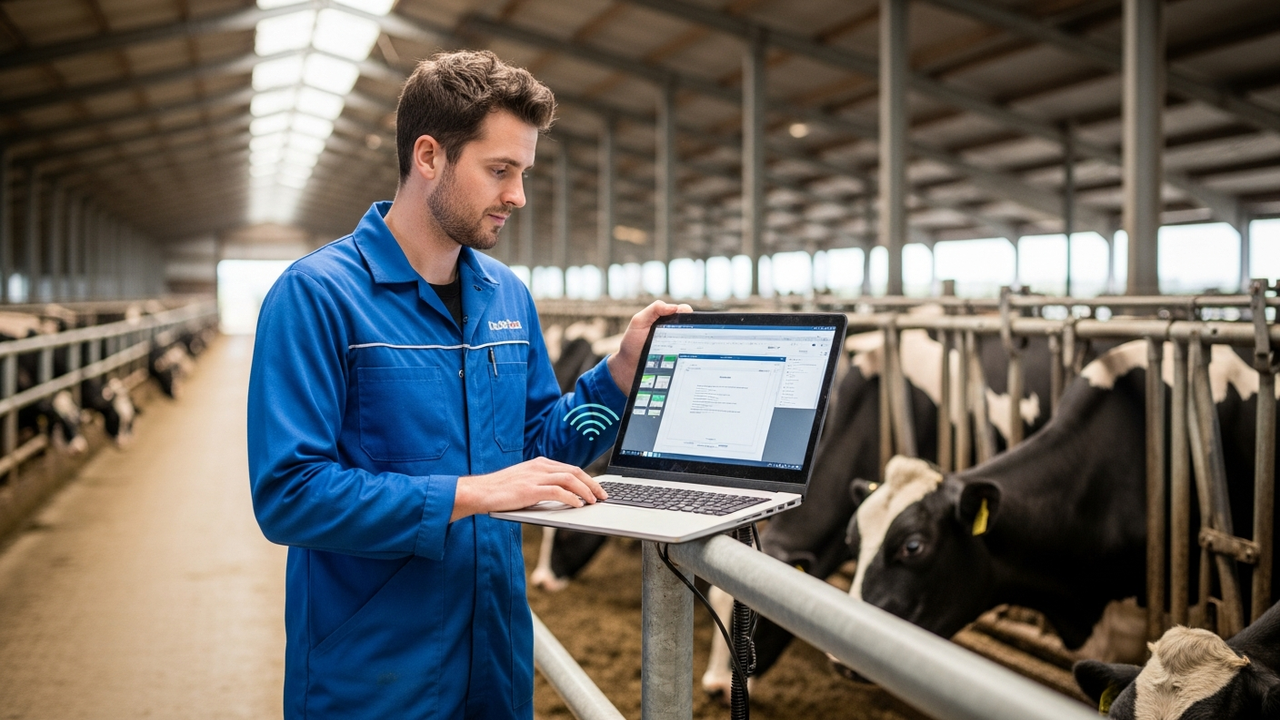
Remote monitoring technologies are proving instrumental in enhancing dairy farm management by automating critical oversight functions and tracking equipment performance. This proactive approach effectively prevents costly disruptions, as reported by Ag Proud. The systems provide real-time alerts, enabling quicker responses to potential issues and generating valuable historical data for preventive maintenance, ultimately contributing to improved animal welfare, productivity, and sustainable operational growth for dairy producers.
Technical / Clinical Details
The remote monitoring systems deployed in dairy operations integrate a diverse network of sensors. This includes environmental sensors that track temperature, humidity, and air quality within barns, biosensors (both wearable and ingestible) that monitor individual animal activity, rumination, and body temperature, and performance sensors that oversee critical equipment like milking machines, feed delivery systems, and cooling units. Data from these sensors are continuously transmitted to a central processing unit, where AI-driven algorithms analyze patterns and detect anomalies. Farmers receive real-time notifications via smartphone applications or management software, enabling immediate intervention for issues such as early signs of animal illness, equipment malfunctions, or irregularities in feed distribution. The accumulated historical data is invaluable for optimizing maintenance schedules, identifying long-term health trends within the herd, and making data-driven management decisions that enhance overall farm efficiency and animal well-being.
Background & Context
Modern dairy farming faces numerous challenges, including labor shortages, rising operational costs, increasing consumer demand for higher animal welfare standards, and stringent environmental regulations. Addressing these complexities necessitates highly efficient and data-driven management practices. Traditionally, dairy operations relied on manual inspections and observations, which were often prone to human error and delayed problem identification. Remote monitoring technologies offer a cost-effective solution by providing 24/7 continuous surveillance, minimizing human intervention, and facilitating early detection and response. This represents a significant advancement within smart agriculture and agritech, supporting the transition towards more sustainable and resilient food production systems globally. The adoption of these technologies is not merely about efficiency but also about meeting ethical and environmental responsibilities.
Strategic Significance & Outlook
The widespread adoption of remote monitoring technologies in dairy management promises to dramatically improve both operational efficiency and sustainability. In the future, sensor technologies will likely become even smaller, more precise, and cost-effective. Further integration of AI and machine learning will enhance predictive analytics, allowing systems not only to detect existing problems but also to anticipate potential issues before they arise, enabling more sophisticated preventative measures. This will lead to continued improvements in animal welfare, significant reductions in production costs, and minimization of environmental impact, transforming dairy farming into a more resilient and profitable enterprise. The success of these technologies in the dairy sector is also expected to accelerate their application in other livestock industries, driving growth across the broader agritech market and contributing to global food security through sustainable practices.
Source: https://www.agproud.com/articles/63038-how-remote-monitoring-prevents-costly-dairy-disruptions
Get our weekly technology intelligence — free
Receive an infographic that lets you judge at a glance whether each field’s analysis report is worth reading.
Subscribe Free — Weekly Tech Intelligence
By subscribing, you’ll receive Troy-Technical’s weekly technology intelligence newsletter.
- Your email and selected fields are used only to deliver the newsletter.
- We never share your information with third parties.
- You can unsubscribe anytime via the link in each email.
See our Privacy Policy for details.
Takes about a minute · Unsubscribe anytime