Key Findings
During Q2 2026, the policy environment supporting the deployment of Virtual Power Plants (VPPs) and Distributed Energy Resources (DERs) saw significant advancements across the United States. Specific developments in Hawaii, Illinois, and Michigan indicate a growing recognition of VPPs as crucial tools for grid stabilization and renewable energy integration.
Technical & Commercial Details
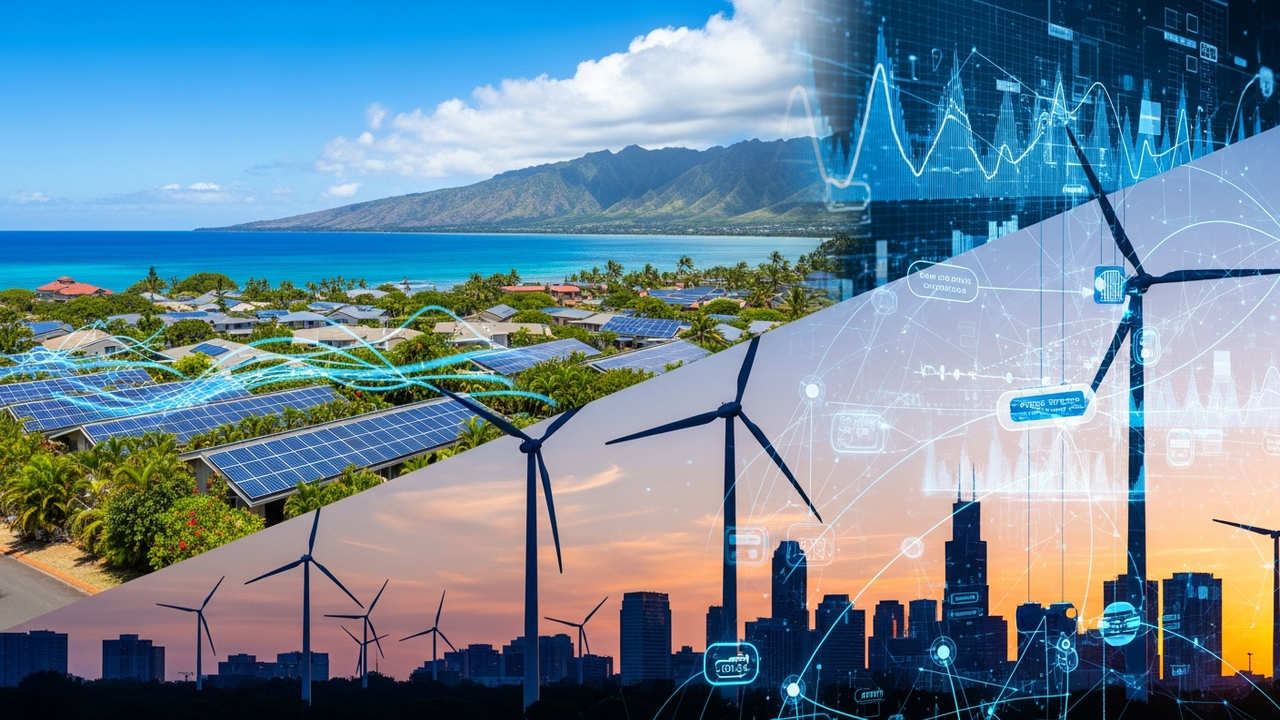
In Hawaii, the development of a VPP grid services program has commenced. This program aims to integrate homes and commercial facilities equipped with solar panels and battery storage to provide flexible capacity when the grid requires it. This is expected to reduce the reliance on expensive peak power plants and enhance overall grid reliability. In Illinois, VPP tariffs submitted by major utilities ComEd and Ameren received approval. These tariffs enable customers to earn revenue by operating their home or business DERs as part of a VPP, providing grid services to the utility. In Michigan, DTE Electric proposed a residential battery VPP pilot program. This pilot offers incentives to customers who connect their existing home battery systems to the VPP and participate in demand response and other grid services. These programs collectively establish the commercial and technical frameworks to maximize the potential of DERs, building a more distributed and resilient power grid.
Background & Industry Context
As renewable energy integration expands, maintaining grid stability becomes a global challenge. VPPs offer an effective solution by aggregating and controlling DERs, such as home battery storage, EV chargers, and smart thermostats, to function as a single power plant. This optimizes the supply-demand balance of electricity and alleviates grid congestion during peak demand periods. State governments and regulatory bodies across the U.S. are actively implementing policies and incentives to support VPPs and DERs, driving grid modernization and decarbonization. These Q2 2026 advancements reflect the U.S.’s commitment to accelerating the clean energy transition and building a more robust and flexible electricity grid, aligning with international efforts to achieve sustainable energy systems.
Future Outlook
The continuous evolution of VPP and DER support policies has the potential to fundamentally transform the U.S. energy landscape. As more states adopt VPP programs and refine existing regulatory frameworks, homeowners and businesses will gain direct economic benefits from their DER investments, further accelerating adoption. This will lead to improved overall grid efficiency and potentially reduce the need for new centralized power plant construction. Furthermore, it enhances grid resilience during outages and promotes energy independence for communities. The maturation of VPP technology and policy is a critical step towards realizing a smart grid, with the potential for nationwide, coordinated DER operations in the future. This decentralized approach to energy management positions the U.S. to lead in leveraging technological innovation for a sustainable and resilient energy future.
Source: https://sepapower.org/knowledge/vpp-and-supporting-der-policy-developments-q2-2026/
Get our weekly technology intelligence — free
Receive an infographic that lets you judge at a glance whether each field’s analysis report is worth reading.
Subscribe Free — Weekly Tech Intelligence
By subscribing, you’ll receive Troy-Technical’s weekly technology intelligence newsletter.
- Your email and selected fields are used only to deliver the newsletter.
- We never share your information with third parties.
- You can unsubscribe anytime via the link in each email.
See our Privacy Policy for details.
Takes about a minute · Unsubscribe anytime