Key Findings
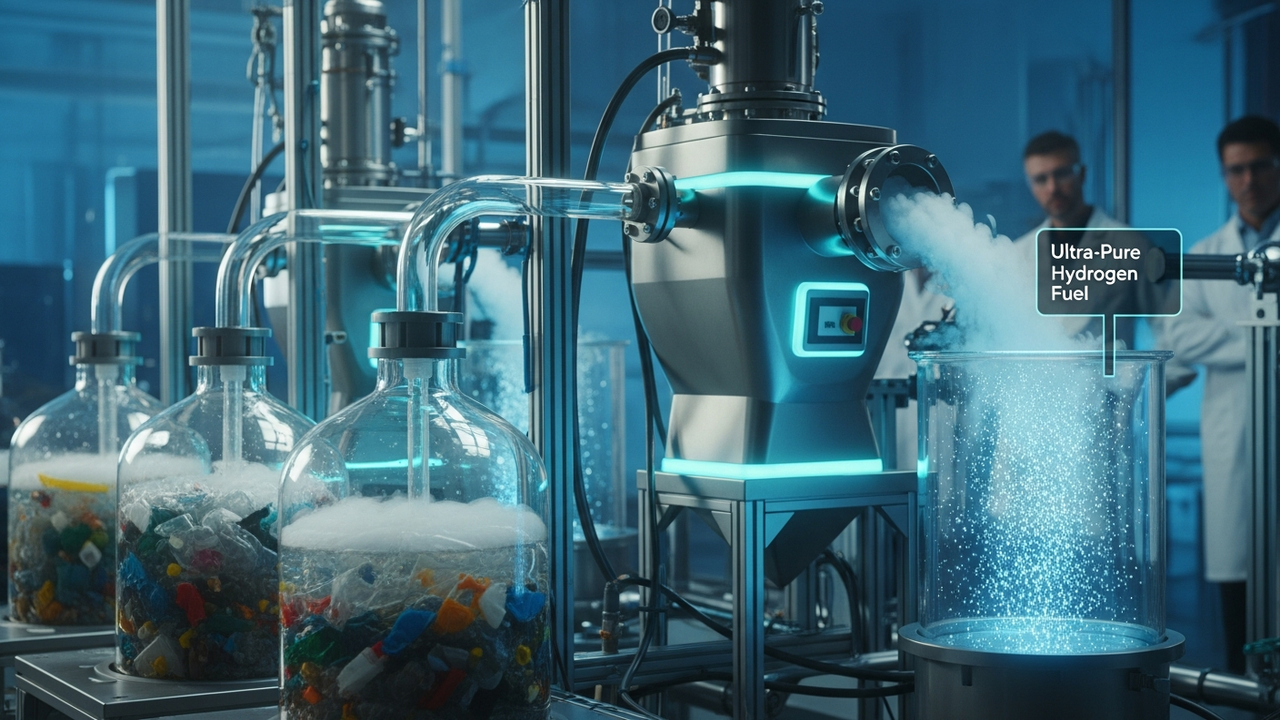
A team of researchers at the University of California, Los Angeles (UCLA) has developed a revolutionary “Alkaline Thermal Treatment” (ATT) method that directly converts plastic waste into hydrogen fuel. This innovative technology produces hydrogen gas with over 90% purity from the three most common types of unsorted plastic waste. Remarkably, the process operates at temperatures 300-400°C lower than existing hydrogen production methods and efficiently captures 75% of the carbon byproduct as a solid. This breakthrough offers a dual solution to both the escalating plastic waste crisis and the imperative for clean energy production.
Technical / Clinical Details
- Mechanism of the ATT Process: The ATT process involves heating plastic waste in an alkaline solution, facilitating specific chemical reactions that separate hydrogen from carbon. The key innovation lies in its ability to efficiently capture the carbon generated during plastic decomposition as a solid, rather than allowing it to gasify. This enables the direct production of high-purity hydrogen gas. The process is designed to be robust and efficient, ensuring consistent output.
- Advantage of Unsorted Waste Processing: Conventional plastic recycling typically demands rigorous sorting based on plastic type, a costly and labor-intensive prerequisite. ATT, however, can directly process mixed, unsorted plastic waste (ee.g., HDPE, PP, PET), significantly reducing pre-treatment costs and labor. This expands the range of plastic waste that can be effectively managed and repurposed, increasing the overall viability of waste-to-hydrogen initiatives.
- Lower Temperature Operation and Carbon Capture: Existing hydrogen production technologies, such as steam methane reforming or pyrolysis, typically require extremely high temperatures, often exceeding 700-1000°C. ATT’s ability to operate at temperatures 300-400°C lower significantly reduces energy consumption. Furthermore, by capturing 75% of the carbon generated during the process as a solid, ATT minimizes CO2 emissions. The captured solid carbon can potentially be utilized in various applications, such as construction materials or composite manufacturing, adding further value.
Background & Context
The global plastic waste crisis continues to intensify, with hundreds of millions of tons of plastic ending up in landfills or oceans annually. Concurrently, the demand for clean energy, particularly hydrogen, is on the rise, but its production still faces challenges related to cost, energy intensity, and associated emissions. The UCLA research presents a compelling opportunity to address these two pressing global issues simultaneously. By converting a pervasive environmental pollutant into a valuable clean fuel, this technology promises a significant impact on both sustainable waste management and green energy production, fostering a more circular economy.
Strategic Significance & Outlook
If commercialized, the ATT technology could transform plastic waste from an environmental burden into a valuable resource. By reducing reliance on complex sorting infrastructure and being easily integrable with existing waste management systems, this technology enables decentralized hydrogen production at local levels. It is poised to become a powerful tool for accelerating the transition towards a circular economy. This groundbreaking breakthrough is expected to garner global attention as a solution that simultaneously secures clean energy supplies and mitigates planetary waste pollution, offering a sustainable path forward for both environmental protection and energy independence.
Get our weekly technology intelligence — free
Receive an infographic that lets you judge at a glance whether each field’s analysis report is worth reading.
Subscribe Free — Weekly Tech Intelligence
By subscribing, you’ll receive Troy-Technical’s weekly technology intelligence newsletter.
- Your email and selected fields are used only to deliver the newsletter.
- We never share your information with third parties.
- You can unsubscribe anytime via the link in each email.
See our Privacy Policy for details.
Takes about a minute · Unsubscribe anytime