Key Findings
The aerospace industry is significantly increasing its investment in all-solid-state batteries (ASSBs), recognizing their potential to fundamentally improve safety, energy capacity, charging speed, and mitigate thermal runaway risks. This technology is positioned as a core component for dramatically enhancing aircraft performance and operational safety.
Technical Details
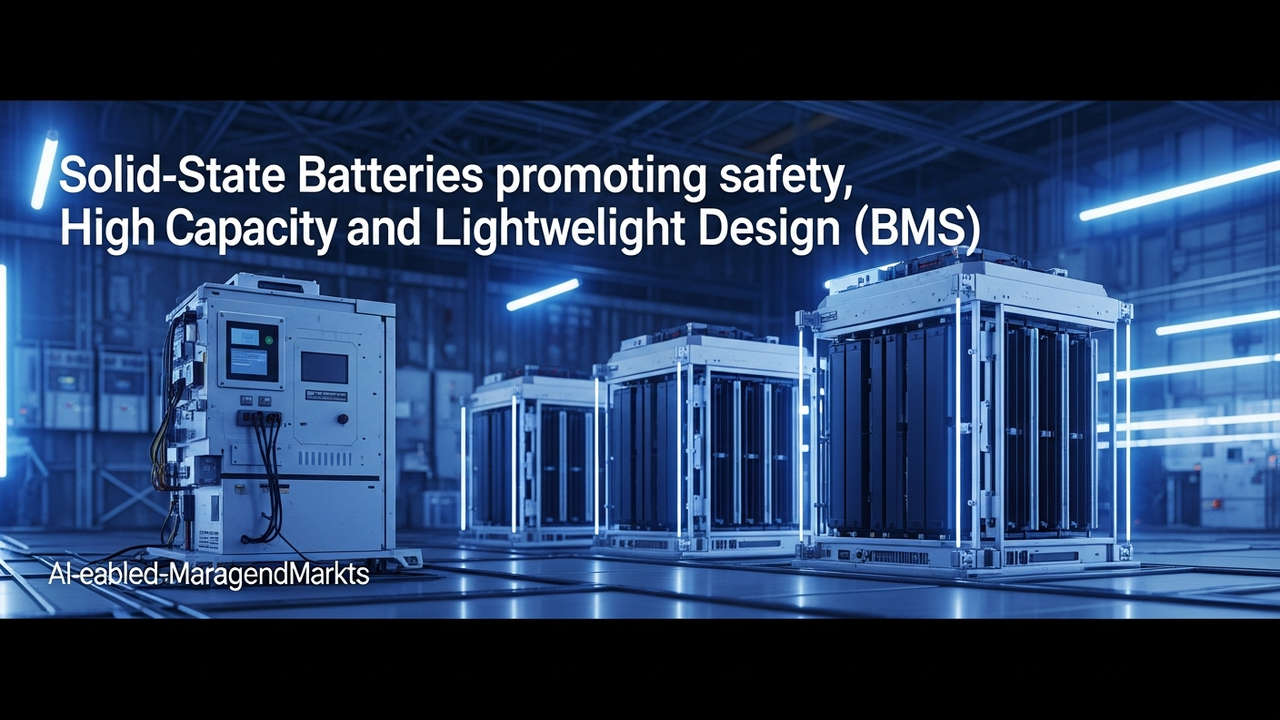
ASSBs achieve superior safety by eliminating the flammable liquid electrolytes found in traditional lithium-ion batteries. This enhanced safety is paramount for aircraft applications, directly impacting the protection of passengers and cargo. Furthermore, ASSBs enable higher energy density, which translates to extended flight ranges for aircraft and the capability to carry increased payloads. They also contribute to overall weight reduction, as the battery system itself becomes lighter, leading to improved fuel efficiency (or power efficiency for electric aircraft) of the entire aircraft. The extended lifespan of ASSBs also contributes to reduced maintenance costs over time.
These battery technology innovations are not evolving in isolation; their effectiveness is maximized when integrated with other advanced technologies. Specifically, AI-enabled Battery Management Systems (BMS) offer real-time, optimal control of battery states, boosting both performance and safety. Advanced thermal management systems ensure stable battery operation under the demanding conditions of aerospace environments, while lightweight composite materials contribute to overall airframe weight reduction. Moreover, predictive maintenance technologies allow for early detection of battery anomalies and enable proactive, planned maintenance, thereby enhancing operational reliability.
Background & Context
The aerospace industry faces dual challenges of reducing environmental impact and improving operational efficiency, with electrification being a primary solution. However, aircraft batteries demand extremely high levels of safety, reliability, and energy density. Conventional battery technologies have struggled to meet these stringent requirements, but the advent of ASSBs has made the realization of next-generation air mobility, such as electric aircraft and eVTOLs (electric Vertical Take-Off and Landing aircraft), increasingly feasible. Governments and private enterprises worldwide are investing heavily in research and development in this sector.
Strategic Significance & Outlook
The evolution of ASSBs and related technologies is poised to bring about a radical transformation in the aerospace industry. The widespread adoption of electric aircraft will contribute to significant reductions in greenhouse gas emissions and enable the creation of quieter, more efficient air transport systems. In the future, eVTOLs and smaller electric aircraft are expected to play a major role in urban air mobility and regional air services, with ASSBs serving as their pivotal power source. This technological innovation will profoundly impact aircraft design, operations, and entire business models, serving as a key to unlocking a new era of aviation.
Source: https://www.marketsandmarkets.com/blog/AD/future-of-aircraft-battery-technology-innovation
Get our weekly technology intelligence — free
Receive an infographic that lets you judge at a glance whether each field’s analysis report is worth reading.
Subscribe Free — Weekly Tech Intelligence
By subscribing, you’ll receive Troy-Technical’s weekly technology intelligence newsletter.
- Your email and selected fields are used only to deliver the newsletter.
- We never share your information with third parties.
- You can unsubscribe anytime via the link in each email.
See our Privacy Policy for details.
Takes about a minute · Unsubscribe anytime