Background
Hydrogels have attracted considerable attention in biomedical fields, including tissue engineering, drug delivery, and soft robotics, owing to their high water content and biocompatibility. Nevertheless, a significant drawback has been their limited self-healing capacity; many high-strength hydrogels experience substantial and irreversible mechanical degradation after damage. Human skin, conversely, exhibits exceptional elasticity and self-repairing capabilities, allowing it to withstand repeated external stresses. This research successfully applies the principles of such biological systems to synthetic materials, integrating materials science with biomimetics to develop practical next-generation materials.
Key Findings
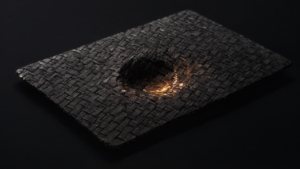
A research collaboration between Aalto University (Finland) and the University of Bayreuth (Germany) has successfully engineered a self-healing hydrogel that replicates the remarkable strength and repair capabilities of human skin. This novel material impressively recovers 80-90% of its original strength within just four hours post-damage, achieving complete self-restoration within 24 hours.
Technical Details
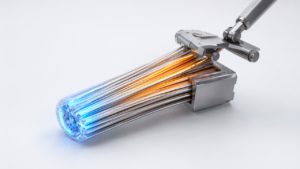
The ingenuity behind this self-healing hydrogel stems from its unique architecture, which utilizes ultra-thin clay nanosheets. These nanosheets are intricately entangled within polymer chains, forming a robust and dynamic network. This network incorporates reversible bonds that can reform even after being broken during damage, thereby enabling the material to self-heal. Specifically, the clay nanosheets restrict the mobility of polymer chains, promoting close proximity and efficient re-bonding at fractured sites. This mechanism allows the material to combine high mechanical strength with rapid repair capabilities, addressing the challenge of low self-healing efficiency often seen in conventional high-strength hydrogels.
Strategic Significance & Outlook
This human-skin-mimicking self-healing hydrogel holds transformative potential, especially within the medical sector. Prospective applications include more durable biocompatible implants, self-repairing medical wearable devices, long-lasting soft robots, and even as a skin substitute in regenerative medicine. Industrial applications could encompass self-healing coatings or flexible electronics that retain functionality despite damage. This technology promises to extend material lifespans and reduce waste, thus contributing to a more sustainable society. Future research will prioritize validating in-vivo safety and long-term stability, alongside establishing large-scale production techniques, thereby positioning this material as competitive and impactful on the global stage.
Source: #
Get our weekly technology intelligence — free
Receive an infographic that lets you judge at a glance whether each field’s analysis report is worth reading.
Subscribe Free — Weekly Tech Intelligence
By subscribing, you’ll receive Troy-Technical’s weekly technology intelligence newsletter.
- Your email and selected fields are used only to deliver the newsletter.
- We never share your information with third parties.
- You can unsubscribe anytime via the link in each email.
See our Privacy Policy for details.
Takes about a minute · Unsubscribe anytime