Key Findings
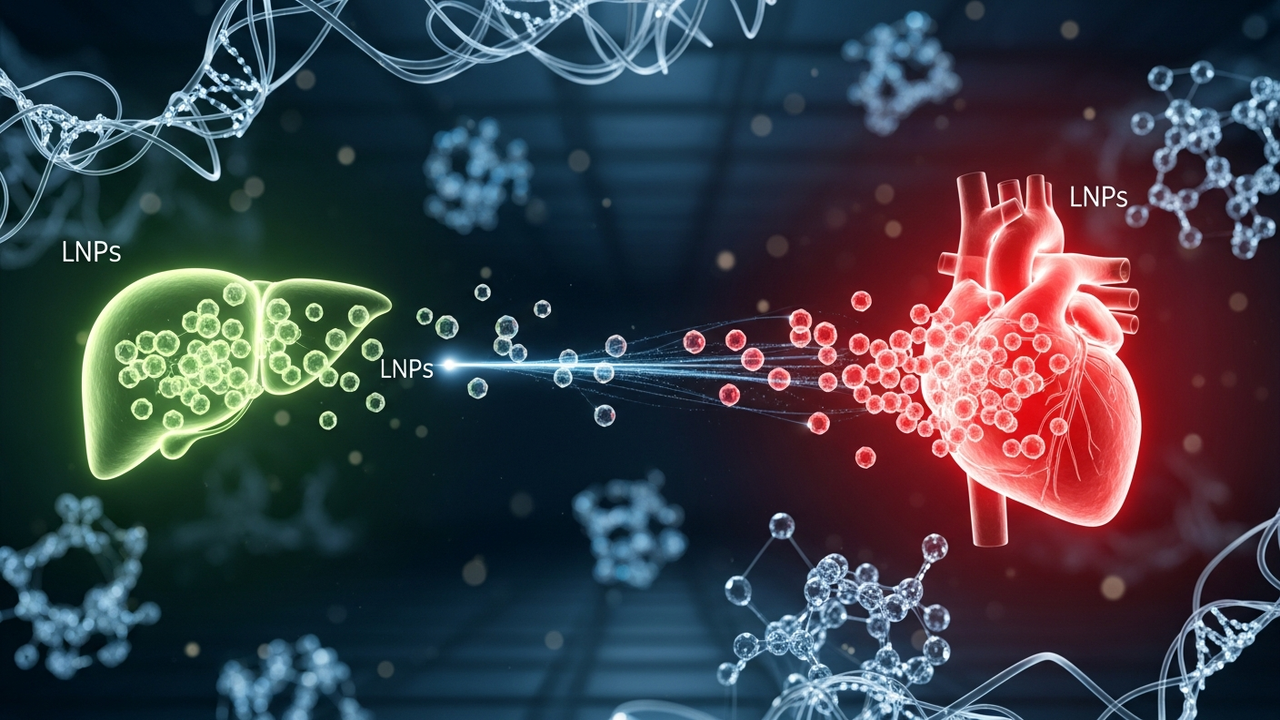
A study published in Arteriosclerosis, Thrombosis, and Vascular Biology highlights the critical need for bioengineering strategies to improve the cardiac biodistribution of lipid nanoparticles (LNPs) in nanomedicine for cardiovascular disease treatment. Current LNP formulations predominantly accumulate in the liver, with less than 1-2% reaching the heart. Overcoming this liver tropism is deemed essential for the successful development of LNP-based therapeutics for myocardial infarction and other cardiac conditions.
Technical / Clinical Details
LNPs have demonstrated clinical success in mRNA vaccines and the RNAi therapeutic patisiran due to their efficient nucleic acid delivery. However, their systemic administration typically results in significant hepatic uptake, mediated primarily by serum ApoE proteins interacting with liver cells. This inherent liver tropism severely limits LNP delivery to other organs, including the heart, where concentrations remain critically low. To address this, researchers are pursuing two main bioengineering approaches. The first is ‘extrinsic surface modification,’ involving the conjugation of cardiac homing peptides to the LNP surface. These peptides are designed to specifically bind to receptors prevalent in cardiac tissue, thereby promoting targeted LNP accumulation in the heart. The second approach, ‘intrinsic lipid engineering,’ focuses on chemically designing and modifying the structure of ionizable lipids and other lipid components within the LNP formulation. By fine-tuning the physicochemical properties (e.g., particle size, surface charge, stability) and altering ApoE interactions, researchers aim to redirect LNP delivery away from the liver and towards other desired organs. These strategies represent a shift from ‘endogenous passive enrichment’ to ‘programmed precise targeting’ for LNPs.
Background & Context
Cardiovascular diseases, such as myocardial infarction and heart failure, remain leading causes of mortality worldwide, necessitating the development of more effective therapies. Nanomedicine offers significant potential for these conditions by improving drug stability, enabling targeted delivery to diseased tissues, and reducing systemic side effects. However, for LNP-based gene or RNA therapies, their inherent liver tropism has been a major barrier to developing effective treatments specifically targeting the heart. Achieving efficient cardiac delivery of LNPs is thus a paramount challenge in cardiovascular nanomedicine, as it could enable direct genetic or drug delivery to cardiac cells that are difficult to reach with conventional methods, opening possibilities for cardiac repair and regeneration.
Strategic Significance & Outlook
The research into bioengineering strategies for cardiac-targeted LNP delivery is crucial for the future of cardiovascular disease treatment. Successful implementation of these approaches could lead to novel gene therapies or RNA therapeutics for repairing myocardial tissue after infarction, improving cardiac function, or providing curative options for genetic heart diseases. Accelerated preclinical and clinical trials will be essential to evaluate the efficacy and safety of these new LNP formulations. Furthermore, a deeper understanding of cardiac-specific delivery mechanisms, in parallel with other organ-selective LNP developments, is required. Progress in this field is anticipated to address significant unmet needs in cardiology, leading to breakthrough therapies that improve patient prognosis and quality of life globally.
Source: https://www.ahajournals.org/doi/10.1161/ATVBAHA.126.324247
Get our weekly technology intelligence — free
Receive an infographic that lets you judge at a glance whether each field’s analysis report is worth reading.
Subscribe Free — Weekly Tech Intelligence
By subscribing, you’ll receive Troy-Technical’s weekly technology intelligence newsletter.
- Your email and selected fields are used only to deliver the newsletter.
- We never share your information with third parties.
- You can unsubscribe anytime via the link in each email.
See our Privacy Policy for details.
Takes about a minute · Unsubscribe anytime