Key Findings
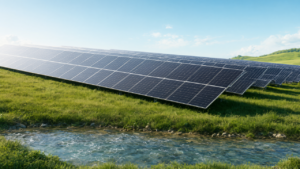
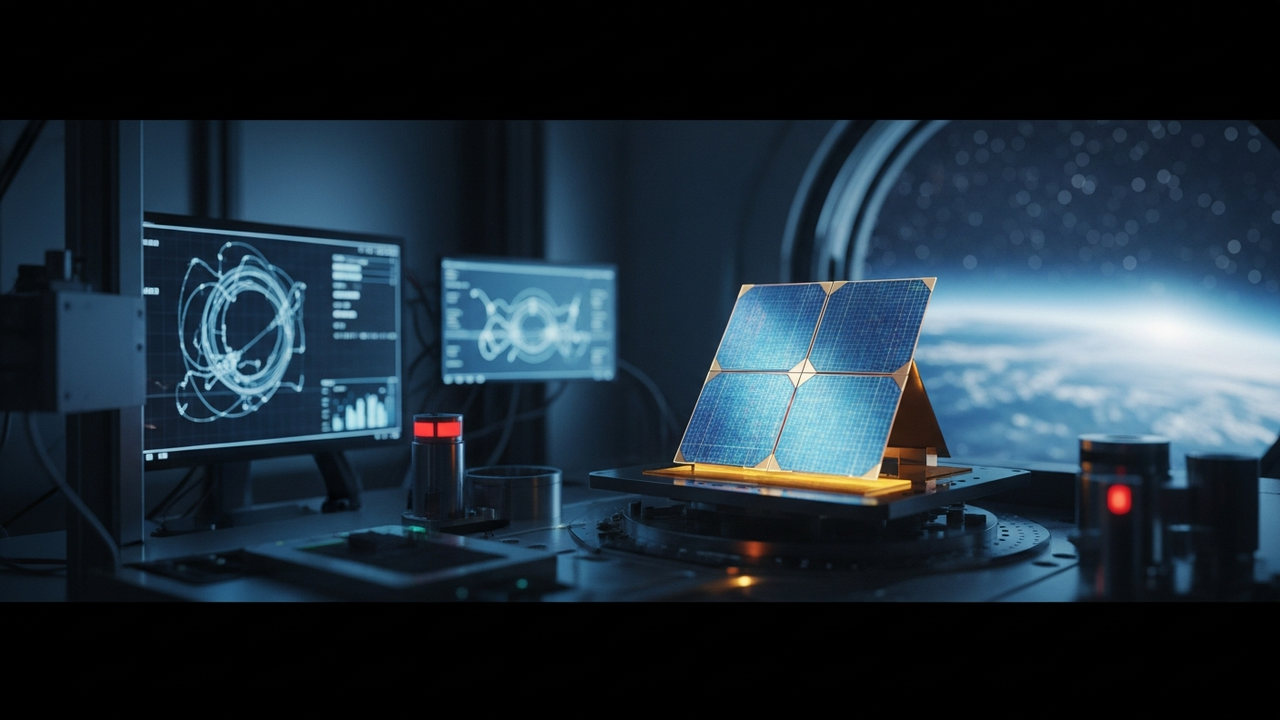
A Chinese research team has developed a perovskite/silicon tandem solar cell specifically engineered for space applications, achieving a certified power conversion efficiency of 27.49% under AM0 (outer space) illumination conditions. This groundbreaking device demonstrated high resilience against electron and proton radiation and maintained stable power output during a real-world high-altitude balloon flight at approximately 30 km. This achievement sets a new benchmark for the durability and efficiency of solar cells in extraterrestrial environments.
Technical / Clinical Details
- The developed tandem solar cell is optimized to endure the harsh conditions of space, including vacuum, extreme temperature fluctuations, and high-energy radiation. Radiation damage is a primary factor limiting the lifespan of space-grade solar cells; however, this device maintained high performance even after irradiation with electrons and protons.
- The research identified that damage to the silicon bottom cell acts as the “weak link” dictating the overall device performance. Based on this analysis, p-type silicon bottom cells were found to be superior to n-type silicon in terms of radiation tolerance, providing crucial insights for future space solar cell designs.
- The 27.49% efficiency under AM0 illumination is measured under stricter conditions than terrestrial standards (AM1.5G), indicating a higher power generation capability in actual space environments. The real-world validation through a high-altitude balloon flight demonstrates practical operational feasibility beyond mere laboratory results.
Background & Context
The space industry critically relies on high-performance and durable solar cells as power sources for satellites and spacecraft. Traditional space solar cells are expensive and face challenges related to degradation from radiation. Perovskite solar cells, with their potential for high efficiency and lower manufacturing costs, have been considered for space applications, but their stability and radiation resistance were major hurdles. This Chinese research marks a significant step towards overcoming these challenges, contributing to the advancement of space technology.
Strategic Significance & Outlook
This radiation-tolerant, high-efficiency perovskite/silicon tandem solar cell has the potential to revolutionize power systems for future satellites, space stations, and deep-space exploration missions. The discovery regarding the superiority of p-type silicon bottom cells will likely serve as a crucial guideline for designing next-generation space-grade solar cells. Future efforts will focus on further long-term durability testing, cost reduction, and validation in actual space missions. If commercialized, this technology is expected to accelerate the development of smaller, longer-lasting, and higher-performing space instruments, significantly broadening the possibilities for space exploration.
Get our weekly technology intelligence — free
Receive an infographic that lets you judge at a glance whether each field’s analysis report is worth reading.
Subscribe Free — Weekly Tech Intelligence
By subscribing, you’ll receive Troy-Technical’s weekly technology intelligence newsletter.
- Your email and selected fields are used only to deliver the newsletter.
- We never share your information with third parties.
- You can unsubscribe anytime via the link in each email.
See our Privacy Policy for details.
Takes about a minute · Unsubscribe anytime