Key Findings
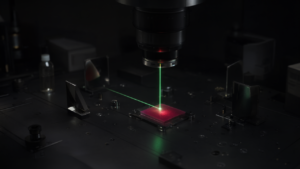
A Chinese research team has developed an innovative perovskite/CIGS (Copper, Indium, Gallium, Selenium) tandem solar cell that achieves a high power conversion efficiency (PCE) of 29.71% while demonstrating significantly enhanced stability. This breakthrough was realized through the introduction of a sulfur compound, bis(2-pyridylmethyl)sulfide (BPMS), into the active layer, successfully reducing defect density within the material and suppressing photo-induced degradation processes.
Technical / Clinical Details
- The developed tandem solar cell combines a perovskite top layer with a CIGS bottom layer as light-absorbing components. Each material efficiently absorbs different wavelengths of sunlight, thereby boosting the overall conversion efficiency beyond what either material could achieve alone.
- The addition of BPMS effectively passivates trap states at grain boundaries and surfaces within the perovskite layer, which leads to a reduction in non-radiative recombination losses. Furthermore, BPMS facilitates charge transfer and inhibits photo-induced changes in the material’s structure, dramatically improving the device’s long-term stability.
- A PCE of 29.71% is among the highest reported for perovskite-CIGS tandem cells, and the fact that this efficiency is coupled with improved stability makes it a major advantage for commercialization efforts.
Background & Context
Perovskite solar cells hold immense promise as a next-generation photovoltaic technology due to their potential for high efficiency and low-cost manufacturing. However, a primary factor hindering their widespread practical application has been their lack of long-term stability. Tandem structures are considered one of the most promising approaches to surpass the efficiency limits of conventional single-junction solar cells. This latest research from China offers a practical solution to the dilemma of achieving both high efficiency and high stability in perovskite technology, significantly paving the way for commercial deployment.
Strategic Significance & Outlook
This stable, 29.71%-efficient perovskite/CIGS tandem solar cell has the potential to profoundly impact the solar photovoltaic industry. The defect passivation strategy using sulfur compounds is broadly applicable to other perovskite devices, promising performance enhancements across a wide range of next-generation solar cells. Future efforts will likely focus on developing large-scale manufacturing processes and conducting durability tests to obtain international certifications. If commercialized, this technology is expected to facilitate the proliferation of more affordable and reliable solar power solutions, accelerating the expansion of the global renewable energy market and bolstering China’s leadership in advanced PV research.
Get our weekly technology intelligence — free
Receive an infographic that lets you judge at a glance whether each field’s analysis report is worth reading.
Subscribe Free — Weekly Tech Intelligence
By subscribing, you’ll receive Troy-Technical’s weekly technology intelligence newsletter.
- Your email and selected fields are used only to deliver the newsletter.
- We never share your information with third parties.
- You can unsubscribe anytime via the link in each email.
See our Privacy Policy for details.
Takes about a minute · Unsubscribe anytime