Key Findings
A recent article published by Coursera provides a clear and comprehensive distinction between Artificial Intelligence (AI), Machine Learning (ML), and Deep Learning, clarifying their hierarchical relationship and diverse applications across various business sectors.
Technical / Clinical Details
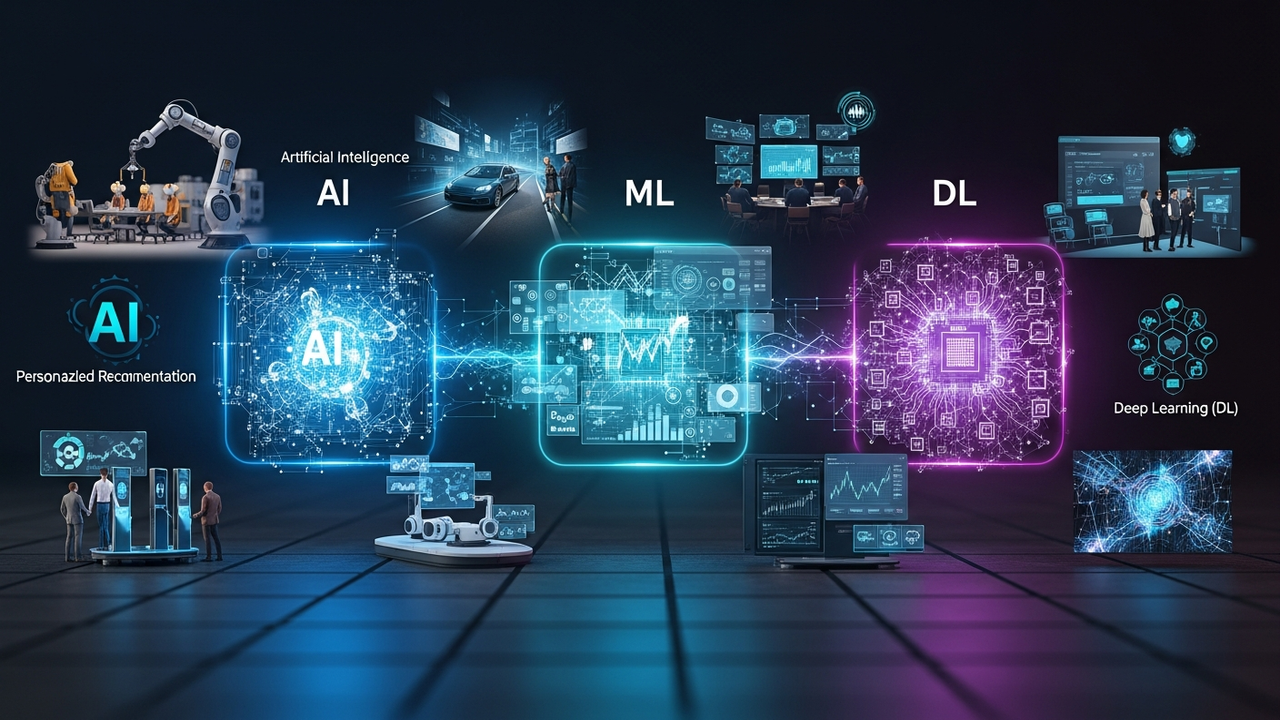
The article positions AI as the overarching concept encompassing technologies designed to mimic human intelligence, enabling machines to perform cognitive functions like problem-solving, learning, and understanding. Machine Learning is then described as a subset of AI, characterized by algorithms that learn from data to make predictions or decisions without being explicitly programmed. This includes techniques such as supervised, unsupervised, and reinforcement learning. Deep Learning, in turn, is presented as a specialized form of ML that utilizes artificial neural networks with multiple layers—’deep’ layers—to analyze complex patterns in vast datasets. For instance, ML is widely used in fraud detection, where algorithms identify unusual transaction patterns, while deep learning excels in tasks like image recognition, powering autonomous vehicles by interpreting visual data, or natural language processing, enabling sophisticated chatbots. Businesses leverage these technologies for diverse applications, including predictive analytics for market trends, real-time risk assessment in finance, and optimizing inventory logistics, which can lead to significant operational efficiencies and competitive advantages.
Background & Context
The terms AI, ML, and Deep Learning are often used interchangeably, leading to confusion. However, understanding their specific definitions and capabilities is crucial for businesses aiming to strategically implement these technologies. The proliferation of big data and increasing computational power have accelerated the adoption of these intelligent systems across industries, from healthcare to retail. Companies are increasingly investing in AI/ML solutions to automate processes, enhance decision-making, and personalize customer experiences, making a clear understanding of these concepts a fundamental requirement for innovation and growth.
Strategic Significance & Outlook
The distinctions highlighted by Coursera are essential for effective strategic planning and resource allocation in the rapidly evolving tech landscape. By accurately differentiating these technologies, organizations can choose the most appropriate tools for their specific challenges, leading to more efficient development and deployment of intelligent systems. This clarity fosters better decision-making for investments in AI training, talent acquisition, and technological infrastructure, ensuring that businesses can harness the full potential of AI to drive innovation, manage risks, and maximize operational efficiency in an increasingly data-driven world.
Source: https://www.coursera.org/in/articles/machine-learning-vs-ai
Get our weekly technology intelligence — free
Receive an infographic that lets you judge at a glance whether each field’s analysis report is worth reading.
Subscribe Free — Weekly Tech Intelligence
By subscribing, you’ll receive Troy-Technical’s weekly technology intelligence newsletter.
- Your email and selected fields are used only to deliver the newsletter.
- We never share your information with third parties.
- You can unsubscribe anytime via the link in each email.
See our Privacy Policy for details.
Takes about a minute · Unsubscribe anytime