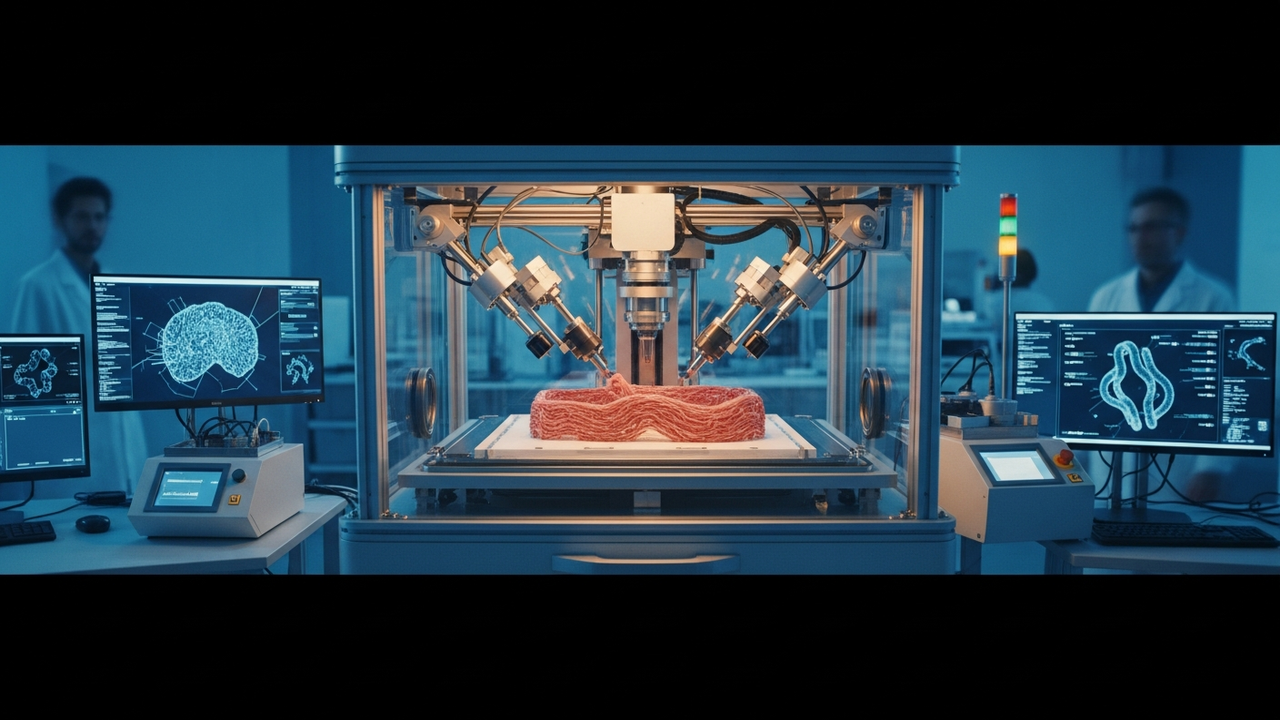
Background: Bridging the Gap in Regenerative Medicine
Tissue engineering and regenerative medicine offer revolutionary approaches to repair or replace tissues and organs damaged by failure, trauma, or disease. However, the scalable and cost-effective manufacturing of functional human tissues with clinically relevant sizes and complexities has remained a significant barrier. While previous research has successfully produced relatively small tissue structures, manufacturing larger, more complex tissues with intricate elements like vascular networks and nerve innervation requires further technological innovation. Recognizing this challenge, the European Union, through flagship programs like Horizon Europe, strategically invests in high-risk, high-reward R&D to strengthen its scientific and technological capabilities and enhance the health and well-being of its citizens.
Project VitaliTE: An Integrated Approach to Scalable Bioprinting
The European Union has committed a substantial investment of €2.5 million to Project ‘VitaliTE’ through its Horizon Europe program. The primary objective of this groundbreaking project is to enable the scalable fabrication of clinically relevant, viable human tissues by integrating advanced 3D Bioprinting with engineered living matter. VitaliTE is poised to make significant strides in regenerative medicine by incorporating cutting-edge research in nanotechnology and nanomaterials, utilizing a bottom-up tissue engineering approach, and leveraging granular and micromaterials to create complex biological structures.
VitaliTE aims to achieve its ambitious goals by synergistically integrating multiple innovative technologies and approaches:
- 3D Bioprinting: This technique involves precisely depositing ‘bioinks’ — formulations containing cells, biomaterials, and growth factors — layer by layer to construct biological tissues. It is crucial for replicating complex biological structures and forming functional tissues with high fidelity.
- Engineered Living Matter: This involves designing materials that are responsive to physical, chemical, and biological stimuli, leveraging living cells and tissue components. This approach aims to mimic or enhance the intrinsic characteristics of tissues functioning within the body.
- Nanotechnology and Nanomaterials: The project utilizes nanofibers and nanoparticles as advanced scaffold materials to promote optimal cell growth, differentiation, and subsequent tissue formation. It also explores incorporating nanostructures that can act as embedded sensors or targeted delivery systems, further improving tissue integration and functionality.
- Bottom-Up Tissue Engineering: This strategic approach constructs larger, more intricate tissue structures from individual cells or pre-formed cell aggregates. This methodology is essential for fabricating large, functional tissues equipped with vital vascular networks and complex hierarchical arrangements.
- Utilization of Granular and Micromaterials: Employing micro- and nanoscale materials as sophisticated cell scaffolds is key to mimicking the native in vivo microenvironment, thereby optimizing cell-material interactions and promoting robust tissue formation.
The fusion of these advanced technologies is expected to resolve the dual, persistent challenges of scalability and clinical utility in biological tissue manufacturing, pushing the boundaries of what is possible in regenerative medicine.
Strategic Significance & Future Outlook
The VitaliTE project holds the potential to be a game-changer in the field of regenerative medicine. If successful, its implications could be broad and transformative, including the manufacturing of artificial organs, the development of sophisticated in vitro models for drug screening and disease modeling, and advancements in personalized medicine tailored to individual patient needs. Specifically, scalable tissue manufacturing technology is crucial for alleviating critical organ donor shortages and expanding viable treatment options for patients suffering from severe diseases or extensive trauma.
Future research will meticulously focus on evaluating the in vivo functionality, long-term safety, and seamless integration of the manufactured tissues within living systems, meticulously paving the way for eventual clinical trials. This project serves as an exemplary case of how the convergence of biotechnology, materials science, and nanotechnology will profoundly shape the future of medical treatments and patient care.
Source: https://cordis.europa.eu/project/id/101266635
Get our weekly technology intelligence — free
Receive an infographic that lets you judge at a glance whether each field’s analysis report is worth reading.
Subscribe Free — Weekly Tech Intelligence
By subscribing, you’ll receive Troy-Technical’s weekly technology intelligence newsletter.
- Your email and selected fields are used only to deliver the newsletter.
- We never share your information with third parties.
- You can unsubscribe anytime via the link in each email.
See our Privacy Policy for details.
Takes about a minute · Unsubscribe anytime