Key Findings
Facebook has declared that silicon photonics-based optical interconnects are essential for next-generation data centers and computing platforms, driven by the exponential growth of AI workloads and high-performance computing (HPC). This technology is poised to address the fundamental limitations of traditional electrical interconnects, which are struggling to meet the demands for increased bandwidth, reduced latency, and improved energy efficiency.
Technical / Clinical Details
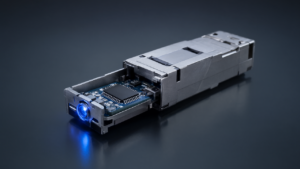
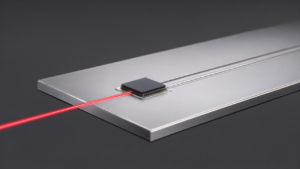
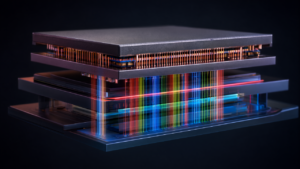
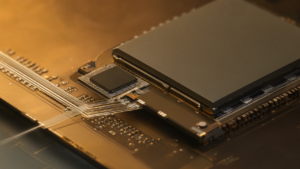
Silicon photonics interconnects utilize light for data transfer between processors and within systems, offering significantly higher speeds and lower losses compared to electrical signals. Specifically, this technology enables terabit-per-second bandwidths and nanosecond-level latencies that are unachievable with current electrical wiring. Furthermore, the reduced heat generation associated with optical transmission dramatically lowers data center cooling requirements, enhancing overall energy efficiency. This breakthrough is critical for overcoming data bottlenecks in AI model training and inference, thereby facilitating the construction of larger and more complex AI systems.
Background & Context
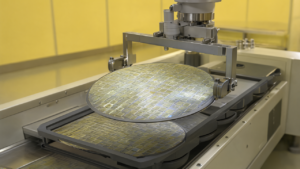
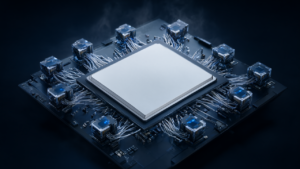
The evolution of AI has not only boosted the computational power of GPUs and other processing units but also drastically increased the volume and speed of data movement within data centers. Conventional copper cables and electrical traces are increasingly unable to cope with this demand, leading to severe issues like signal degradation, high power consumption, and thermal challenges. Silicon photonics, being compatible with standard semiconductor manufacturing processes, offers a pathway for relatively straightforward integration into existing infrastructure and possesses significant potential for mass production. The endorsement and push by hyperscale data center operators like Facebook are powerful catalysts for accelerating industry-wide standardization and adoption.
Strategic Significance & Outlook
While challenges such as improving manufacturing yields and reducing integration costs persist, the relentless advancement of AI technology ensures a continuous surge in demand for faster and more efficient data transfer solutions. Facebook’s announcement underscores that silicon photonics is no longer merely a research concept but a foundational technology for AI infrastructure within the next few years. This will likely spur increased investment and technological partnerships across data center design, AI hardware development, and the semiconductor manufacturing sectors, further solidifying the critical role of optical technology in the AI era.
Get our weekly technology intelligence — free
Receive an infographic that lets you judge at a glance whether each field’s analysis report is worth reading.
Subscribe Free — Weekly Tech Intelligence
By subscribing, you’ll receive Troy-Technical’s weekly technology intelligence newsletter.
- Your email and selected fields are used only to deliver the newsletter.
- We never share your information with third parties.
- You can unsubscribe anytime via the link in each email.
See our Privacy Policy for details.
Takes about a minute · Unsubscribe anytime