Background
Soft robotics has garnered significant attention for its inherent flexibility and safety, making it highly suitable for applications in medicine, human-robot collaboration, and the manipulation of delicate objects—areas where traditional rigid robots often encounter limitations. However, a primary challenge for soft robots has been their restricted ability to differentiate between their own internal state (e.g., bending angle, degree of deformation) and external physical stimuli (e.g., touch, pressure). Without this crucial distinction, robots risk making erroneous decisions or reacting improperly to their surroundings. GIST’s breakthrough directly addresses this long-standing issue of ‘decoupling state estimation and external sensing,’ marking a substantial leap forward in the autonomy and intelligence of soft robots. Notably, Asia, and particularly South Korea, is at the forefront of global research and development in robotics and advanced materials.
Key Findings
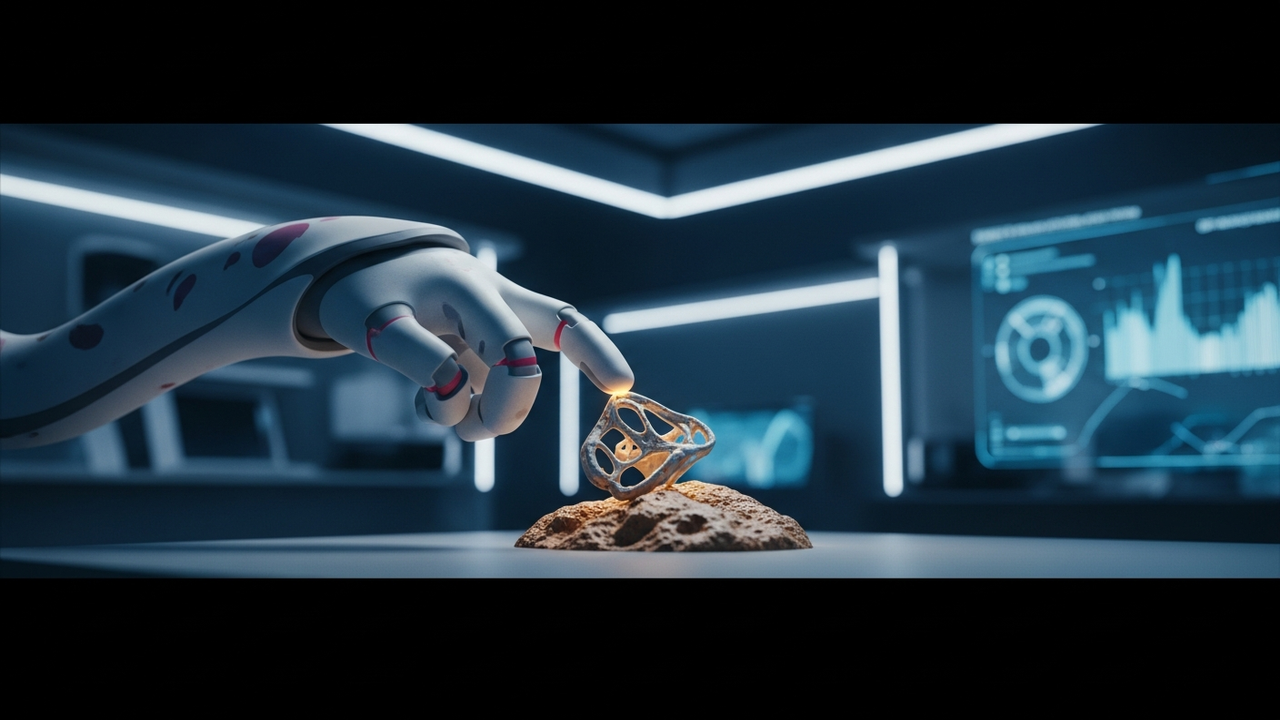
A research team at GIST (Gwangju Institute of Science and Technology) has developed a groundbreaking soft robot material capable of accurately distinguishing between deformation caused by its own movement and external tactile stimuli. This innovative material features a unique structure of magneto-piezoelectric barium titanate (BaTiO₃) nanowires coated with iron oxide (Fe₃O₄) nanoparticles, enabling integrated sensing and actuation. This breakthrough is poised to dramatically enhance the autonomy and safety of medical devices and robots operating in complex environments.
Technical / Clinical Details
The core innovation of this soft robot material lies in its composite nature, which imbues it with both magnetic responsiveness (from Fe₃O₄ nanoparticles) and piezoelectricity (from BaTiO₃ nanowires). The BaTiO₃ nanowires exhibit a piezoelectric effect, generating an electrical charge in response to mechanical stress (whether deformation or pressure), while the Fe₃O₄ nanoparticles react to external magnetic fields. When the material bends due to its own movement, the BaTiO₃ nanowires generate a piezoelectric signal. Similarly, external contact (touch) also produces a piezoelectric signal. To overcome this, the research team successfully developed sophisticated algorithms to analyze and differentiate these two types of signals, distinguishing between ‘self-bending’ and ‘external touch’ based on subtle differences in signal patterns and temporal characteristics. This allows the robot to more accurately perceive its own state and interact with its environment with significantly greater precision. This integrated sensing-actuation functionality confers several key properties:
- Precise Motion Control: The robot can more accurately recognize its own movements, enabling highly fine-tuned and responsive control.
- Safe Environmental Interaction: It can detect contact with external objects or humans in real-time, facilitating safe and appropriate adaptive responses.
- Tactile Feedback: The material provides the robot with the ability to ‘feel’ its environment through touch, mirroring aspects of human tactile perception.
Strategic Significance & Outlook
This novel soft robot material, with its capabilities for tactile and bending discrimination, is expected to enable a wide array of innovative applications:
- Medical Devices: Including minimally invasive surgical robots, advanced diagnostic probes, and assistive robots designed to conform intimately to a patient’s body.
- Robots for Complex Environments: Facilitating precision tasks in uncertain or hazardous settings, such as debris exploration, delicate biological sample collection, and safe handling of hazardous materials.
- Human-Robot Interaction: Empowering industrial and service robots to work more safely and collaboratively alongside human operators.
- Wearable Devices: Enabling smartwear that can intelligently distinguish between the user’s own movements and external contact, thereby providing more personalized and context-aware feedback.
For successful commercialization, extant challenges include achieving material scalability for mass production, ensuring robust durability, and comprehensive performance evaluation under diverse environmental conditions. Nevertheless, the enhanced autonomy and safety offered by this technology are exceptionally appealing to researchers, engineers, and investors alike, holding substantial potential to significantly expand the global market for soft robotics across the medical, industrial, and service sectors.
Source: #
Get our weekly technology intelligence — free
Receive an infographic that lets you judge at a glance whether each field’s analysis report is worth reading.
Subscribe Free — Weekly Tech Intelligence
By subscribing, you’ll receive Troy-Technical’s weekly technology intelligence newsletter.
- Your email and selected fields are used only to deliver the newsletter.
- We never share your information with third parties.
- You can unsubscribe anytime via the link in each email.
See our Privacy Policy for details.
Takes about a minute · Unsubscribe anytime