Key Findings
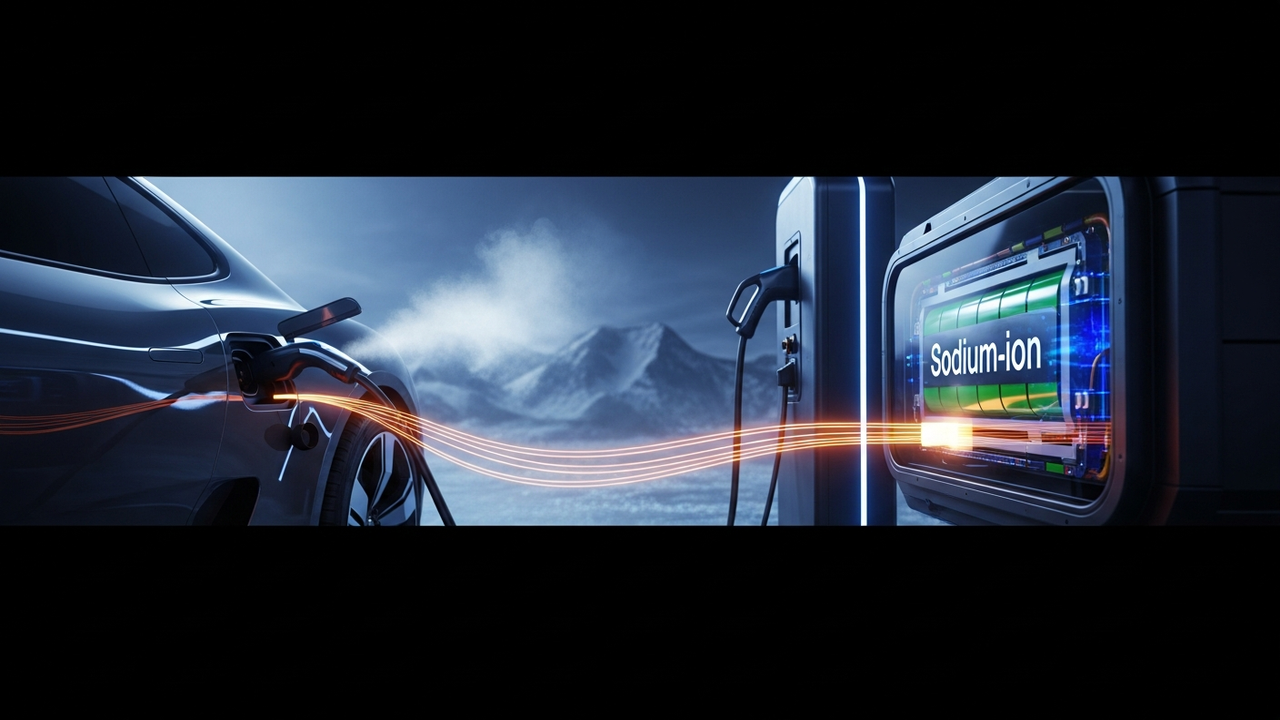
Sodium-ion batteries are rapidly establishing themselves as a cost-effective and sustainable alternative to lithium-ion batteries, gaining significant commercial traction in the energy storage market. Their economic and performance advantages are particularly noteworthy for applications such as urban electric vehicles (EVs), cold-weather operation, and backup power, with leading manufacturers already introducing advanced cell designs and automakers actively exploring their integration into EV platforms.
Technical & Clinical Details
The primary technical advantage of sodium-ion batteries lies in the abundance and lower cost of their raw materials. Unlike lithium, which is concentrated in specific geopolitical regions and subject to price volatility, sodium is widely distributed across the Earth, significantly reducing procurement costs. This enables a substantial reduction in overall battery manufacturing costs, making them highly competitive for price-sensitive urban EV markets and large-scale stationary energy storage systems. Furthermore, sodium-ion batteries exhibit superior performance in low-temperature environments (below -20°C) compared to lithium-ion, making them ideal for electricity supply in cold climates and improving EV performance during winter. They also boast enhanced safety, with a lower risk of thermal runaway. Major battery manufacturers like CATL are driving innovations to improve cell energy density and extend cycle life, with cells exceeding 160 Wh/kg already commercially available. This progress enhances their practicality for shorter-range urban EVs and as reliable backup power for residential and industrial applications.
Background & Context
The global energy market is undergoing a significant transformation driven by decarbonization and electrification. While lithium-ion batteries have spearheaded this transformation over the past few decades, concerns regarding the supply security and price volatility of critical minerals like lithium and cobalt, as well as the environmental impact of their extraction, have emerged as sustainability challenges. Against this backdrop, lithium-free sodium-ion batteries have been rapidly researched and commercialized as the “next frontier” technology, offering solutions for supply chain stability, reduced environmental footprint, and cost efficiency. Notably, China has been at the forefront of national-level initiatives to develop sodium-ion batteries, with companies like CATL successfully bringing this technology to practical application.
Strategic Significance & Outlook
Given their cost-effectiveness and resource abundance, sodium-ion batteries are poised to become a major alternative to lithium-ion in various niche markets where extended range is not the primary concern. These include urban EVs, electric two-wheelers, and stationary energy storage systems for homes and industrial facilities, as well as backup power solutions. The consideration of sodium-ion powered EVs by major automakers signals the technology’s move into mainstream markets. As the technology matures further and production scales increase, sodium-ion batteries are expected to expand into even more diverse application areas, playing an indispensable role in diversifying global energy storage solutions and realizing a sustainable future.
Source: https://www.thecooldown.com/green-tech/sodium-ion-batteries-reduce-costs-electric-vehicles/
Get our weekly technology intelligence — free
Receive an infographic that lets you judge at a glance whether each field’s analysis report is worth reading.
Subscribe Free — Weekly Tech Intelligence
By subscribing, you’ll receive Troy-Technical’s weekly technology intelligence newsletter.
- Your email and selected fields are used only to deliver the newsletter.
- We never share your information with third parties.
- You can unsubscribe anytime via the link in each email.
See our Privacy Policy for details.
Takes about a minute · Unsubscribe anytime