Key Findings
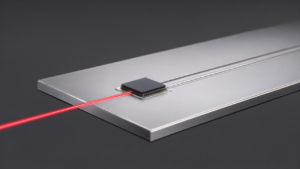
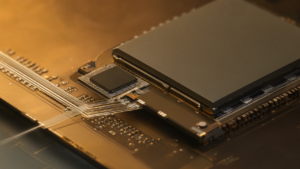
Thin-Film Lithium Niobate (TFLN) modulators have cemented their position as a pivotal component for next-generation high-speed and high-efficiency photonic systems. These modulators offer an unprecedented combination of ultra-high bandwidth, low drive voltage, and low insertion loss, dramatically enhancing performance across optical communication, sensing platforms, and other advanced photonic applications.
Technical Details
At the heart of TFLN modulators is the ability to integrate lithium niobate (LiNbO₃), a material known for its high electro-optic coefficient and excellent optical properties, onto a thin-film platform. This innovation allows for a significant reduction in device size compared to conventional bulk lithium niobate devices, while simultaneously lowering drive voltages to millivolt levels and increasing modulation speeds to hundreds of gigahertz (GHz). Specifically, they are capable of handling data rates exceeding several hundred Gbps, enabling precise on/off switching and phase control of optical signals. This thin-film approach facilitates low-loss light confinement within waveguides, contributing to reduced power consumption and maintained signal integrity.
Background & Context
The rapid advancement of AI, machine learning, and the widespread adoption of cloud computing have led to an exponential increase in data transfer volumes and processing speeds within and between data centers. Traditional electronic communication systems face inherent limitations in bandwidth and escalating power consumption, propelling a growing reliance on optical communication technologies. TFLN modulators are particularly crucial in the evolution of Co-Packaged Optics (CPO) and photonic integrated circuits, where they deliver superior performance that is challenging for silicon photonics to match. Their adoption is accelerating across diverse sectors, including data center interconnects, long-haul optical networks, and even quantum computing.
Strategic Significance & Outlook
The advancements in TFLN technology are poised to revolutionize optical communication infrastructure. Future developments, including further integration and optimized manufacturing processes, are expected to improve the cost-efficiency of TFLN modulators, fostering broader market adoption. They are indispensable for realizing next-generation ultra-high-speed optical transceivers, such as 1.6T and 3.2T, which will significantly enhance data center power efficiency and contribute to sustainable information societies. Beyond communication, TFLN technology holds promise for optical computing and novel sensing applications, positioning it as a core driver of innovation across the broader photonics landscape.
Get our weekly technology intelligence — free
Receive an infographic that lets you judge at a glance whether each field’s analysis report is worth reading.
Subscribe Free — Weekly Tech Intelligence
By subscribing, you’ll receive Troy-Technical’s weekly technology intelligence newsletter.
- Your email and selected fields are used only to deliver the newsletter.
- We never share your information with third parties.
- You can unsubscribe anytime via the link in each email.
See our Privacy Policy for details.
Takes about a minute · Unsubscribe anytime