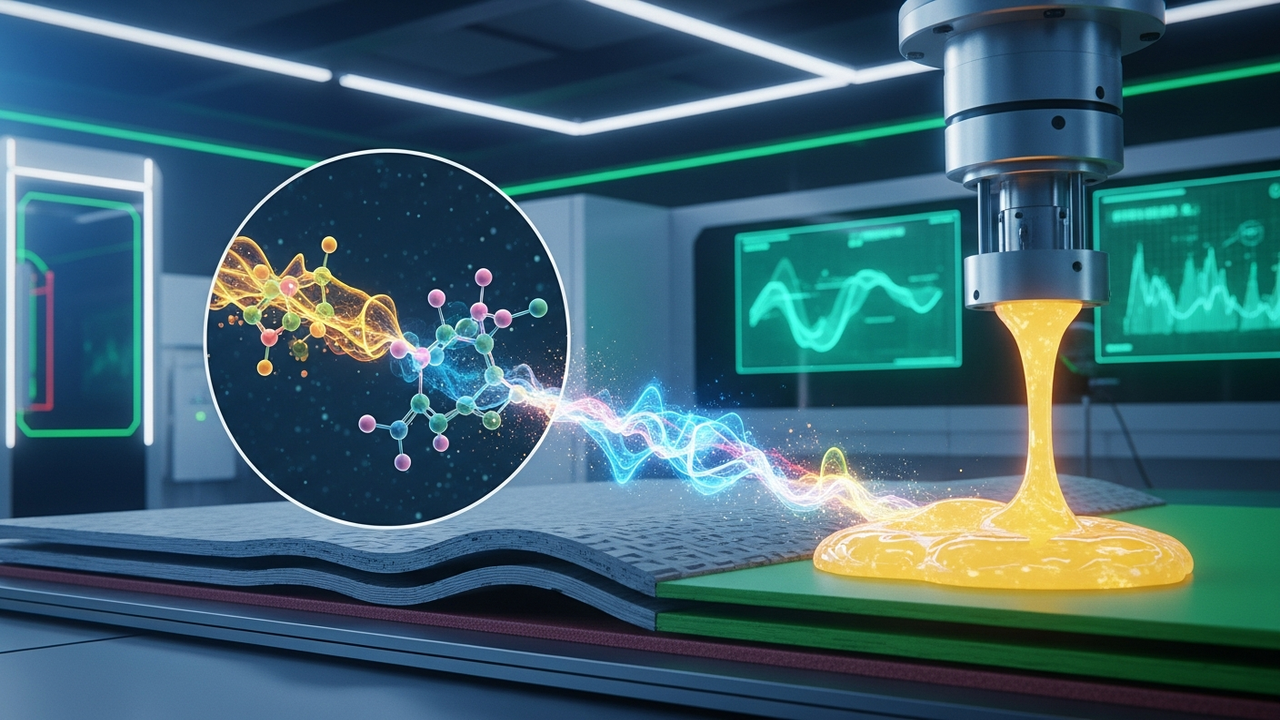
Adhesive Materials Science Enters “Smart Bonding” Era: Innovations in High-Strength, Recyclable Polyurethanes and Bio-Based Hot Melt Adhesives
The year 2026 marks a profound transformation in the adhesives industry, shifting from merely providing “functional materials” to offering comprehensive “system solutions.” At the forefront of this paradigm shift, a groundbreaking academic breakthrough has been achieved in polyurethane adhesives for structural bonding applications, successfully marrying high adhesive strength with superior recyclability. This represents a critical leap forward in developing next-generation adhesives that simultaneously pursue sustainability and high performance.
Technical and Clinical Details
Central to this breakthrough is a novel polyurethane adhesive characterized by specific molecular designs. Traditional structural adhesives, while offering high bonding strength, presented a significant challenge in terms of recyclability post-curing. However, the new polyurethane adhesive maintains high bond strengths (e.g., exceeding 20 MPa in shear strength) comparable to or surpassing conventional adhesives for metals and composites, while possessing properties that allow it to be re-softened and reshaped through heat or specific chemical treatments. This enables “design for recyclability,” where components can be easily separated at the end of a product’s life, and the adhesive itself can be recovered and reused. This innovation effectively bridges the gap between mechanical performance and environmental responsibility.
Furthermore, a research team from Colorado State University announced the development of bio-based multiblock polyesteramide hot melt adhesives. This innovation significantly reduces reliance on petroleum-derived raw materials by utilizing renewable resources, thereby contributing substantially to lowering environmental impact. These hot melt adhesives combine fast setting times, excellent adhesion performance, and properties such as biodegradability or compostability, making them particularly promising for applications in packaging and disposable products. Such technological advancements shatter the conventional notion of adhesives as “once bonded, always bonded,” instead offering value propositions that extend across the entire product lifecycle.
Background and Industry Context
The escalating global environmental concerns and the imperative transition towards a circular economy are profoundly impacting the adhesives industry. Major sectors like automotive, electronics, and construction are under increasing pressure to achieve lightweighting, enhance performance, and concurrently reduce environmental footprints and improve recyclability. Conventional adhesives, while essential for joining composite materials, often complicated product disassembly and segregation, posing significant barriers to efficient recycling processes. This latest breakthrough demonstrates how adhesive technology can actively contribute to solving sustainability challenges, positioning adhesives not merely as joining materials but as integral components of “smart bonding solutions” that optimize the entire product journey—from design and manufacturing to use, disposal, and recycling.
Strategic Significance and Outlook
The advent of polyurethane adhesives combining high strength with recyclability and bio-based hot melt adhesives is set to transform the future of the adhesives industry. These technologies will accelerate lightweighting in automobiles, enable circular design in electronic products, and foster the development of sustainable building materials. Industries are expected to rapidly adopt these innovative adhesives, integrating them into mass production processes to achieve environmental targets while simultaneously enhancing product performance and improving cost efficiency. Adhesive materials science is transcending mere physical bonding, entering an era where it plays a “smart” role in optimizing product functionality, environmental impact, and economic viability. This marks a pivotal shift towards more intelligent and responsible material engineering.
Get our weekly technology intelligence — free
Receive an infographic that lets you judge at a glance whether each field’s analysis report is worth reading.
Subscribe Free — Weekly Tech Intelligence
By subscribing, you’ll receive Troy-Technical’s weekly technology intelligence newsletter.
- Your email and selected fields are used only to deliver the newsletter.
- We never share your information with third parties.
- You can unsubscribe anytime via the link in each email.
See our Privacy Policy for details.
Takes about a minute · Unsubscribe anytime